
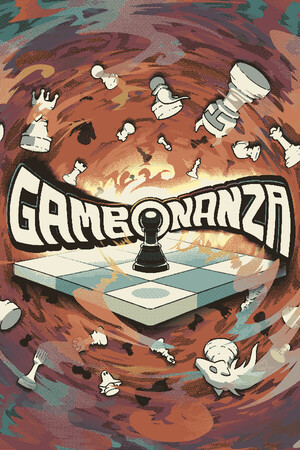
Gambonanza
Chess meets the Balatro school of roguelikes on a board so small every piece loss stings. Worth a look if you can tolerate Gambit RNG that occasionally overrules your best laid plans.
GamerScout Verdict
Solid chess roguelike with inventive bosses and deep Gambit builds, held back by weak standard AI and punishing Gambit RNG.
Compare Prices(6 stores)
Every store in this table quotes us in euros, so the EUR figure is the price the seller actually set, not our arithmetic — which is why EUR is also the currency we rank in. We only list an offer here when the store gives us its price in euros, so nothing in this table is a number we invented.
Pick USD, PLN, GBP, CAD or AUD in the header and we convert from EUR at the European Central Bank reference rate — converted amounts are prefixed with ~. Your bank or the store may apply a different rate at checkout. We never hide offers based on where you are: everyone sees this whole table.
We may earn a commission when you buy games through links on this page — at no extra cost to you. It never affects our rankings or verdicts.
Price History
Screenshots & Media
About Gambonanza
I went in expecting a Balatro clone with chess skins and came out three hours later genuinely surprised by how differently it plays from either of its obvious parents. Gambonanza strips chess down to its skeleton: a compact starting board, three pieces, and a single win condition of capturing every enemy unit rather than hunting a king. That one rule change restructures the entire decision tree. Checkmate instincts are useless here. Piece preservation and positional control across sequential boards is what actually wins runs. The run structure runs roughly 25 matches across five stages, with a boss encounter closing out each stage. Those bosses are legitimately the game's high point. Figures riffing on real chess grandmasters, like a mechanical take on Magnus Carlsen, arrive with mechanics that change the fight entirely rather than just throwing more pieces at you. One early boss applies a STASIS state to two of its own pieces per turn, blocking them from capture until you wait out the timer, which forces you to reconsider which upgrades you buy in the preceding shop. Knowing the incoming boss before you spend is a real skill expression, and the boss order shuffles between runs, so you cannot simply memorise a prep sequence. The between-match economy is the part that will hook strategy players. You spend currency on Gambits (over 150 passive modifiers that reshape piece behaviour or board geometry), new pieces, special tiles such as golden squares and blessing tiles, and reserve slots that let you hold pieces off-board and deploy them at critical moments. Stacking Gambits that synergise is where the game sings: pawn-promotion builds, queen-focused archetypes, and crumble-exploitation setups all feel meaningfully distinct. The collection system gradually expands the Gambit pool across runs via six tracked categories, which gives early sessions a learning curve rather than an RNG wall. Two problems keep Gambonanza out of the conversation alongside the best of its genre. First, the regular-match AI makes objectively weak moves with enough frequency to drain the satisfaction from good tactical setups. Bosses feel designed; standard opponents feel like placeholder logic. Second, with five Gambit slots and over 150 options, a meaningful portion of any given run's shop offerings will be near-useless depending on your current board composition and piece set. The game allows shop rerolls but no post-purchase upgrades on Gambits, so bad draws can quietly decide a run before you realise it. The community reaction that lands Gambonanza at 75 percent positive rather than higher is largely a response to these two friction points. For newcomers who find chess intimidating: this is actually a reasonable entry point. The small board forces you to learn piece movement one interaction at a time, hover tooltips show legal moves without punishing experimentation, and short match lengths mean failure loops are fast. By the time the board expands and enemy modifiers get complicated, the underlying piece logic is already muscle memory. That is not an accident; it is the game's best piece of quiet design. Just go in knowing the Gambit pool can sabotage a well-built run through no fault of your own, and budget accordingly for frustration.

Strategy & simulation
Tags
System Requirements
Minimum
- OS
- Microsoft® Windows® 10
- Processor
- Intel Core i3-3240 (2 * 3400); AMD FX-4300 (4 * 3800)
- Memory
- 4 GB RAM
- Graphics
- GeForce GTX 560 Ti (1024 VRAM); Radeon HD 7750 (1024 VRAM)
- DirectX
- Version 10
- Storage
- 450 MB avail…
Keep exploring
Community Discussion
Be the first to comment on Gambonanza.
Reviews & Ratings
Game Info
- Developer
- Blukulélé
- Publisher
- Sidekick Publishing, Stray Fawn Publishing
- Release Date
- May 1, 2026
