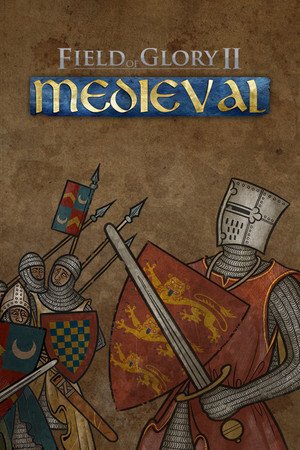
Field of Glory II: Medieval - Sublime Porte
For wargamers who read cohesion states before casualty counts: a superb morale model wrapped in a 2010-era interface, with a battle generator that quietly eats months.
GamerScout Verdict
Best for tactics players who want a deep morale model over modern menus; skip it if you need a campaign layer or spectacle.
Compare Prices(4 stores)
Every store in this table quotes us in euros, so the EUR figure is the price the seller actually set, not our arithmetic — which is why EUR is also the currency we rank in. We only list an offer here when the store gives us its price in euros, so nothing in this table is a number we invented.
Pick USD, PLN, GBP, CAD or AUD in the header and we convert from EUR at the European Central Bank reference rate — converted amounts are prefixed with ~. Your bank or the store may apply a different rate at checkout. We never hide offers based on where you are: everyone sees this whole table.
We may earn a commission when you buy games through links on this page — at no extra cost to you. It never affects our rankings or verdicts.
Screenshots & Media
About Field of Glory II: Medieval - Sublime Porte
This one is for the player who checks a unit's cohesion state before its casualty count, and it is a hard pass for anyone who wants a campaign map, a research tree, or menus designed this decade. That split is most of the review right there. Sublime Porte is pure battlefield tactics: two armies, one field, and a few dozen turns to prove your line held together better than theirs. No economy, no construction, no strategic layer sitting above the fighting. What you get instead is a combat model detailed enough that I have restarted the same deployment four times just to check whether committing the heavy cavalry one turn later changes the result. It does, and usually by more than you would guess. The engine underneath is a cohesion ladder, and you can learn it in about an hour. A unit starts steady, then slides down through disrupted and fragmented before it breaks entirely, pushed along by missile fire, flank contact, friendly units routing nearby, and its own quality rating. Almost nothing dies from raw damage. Things die because they lost their order first and then got charged by something heavy while they were still sorting themselves out. Once that clicks, every decision reframes itself. Skirmishers stop being chip damage and become a tax you levy on an enemy line before your own foot ever touches it. Terrain stops being cover and becomes a penalty applied to whoever fights in it wearing the wrong kit. The Turkish and Balkan rosters make the point loudest, since horse archers are less a damage dealer than a machine for degrading a formation over six or eight turns until one charge finishes the job. Facing a competent horse archer army for the first time is genuinely disorienting, because your instinct to close the distance is exactly what loses you the battle. Here is my case for it as a first historical wargame, which is not the reputation it carries. The tutorial material is functional rather than generous, so resist the urge to open with a big historical setup. Go to the random battle generator instead, set the smallest army size available, pick one faction, and fight the same matchup five times in a row with a different opening each time. Fifteen minutes a battle. By the fifth run you will have internalised more than any tooltip teaches, because the feedback loop is short and the failure states are legible: you can see precisely which unit wavered and what pushed it there. That generator is also why the hour counts run high. Every seed is a fresh tactical problem with an army you did not choose, which is a far better long-term proposition than a fixed scenario list you finish and shelve. Asynchronous multiplayer stretches it further still if you have a friend who does not mind a turn a day. What disappoints is mostly presentation and polish. The interface is parked somewhere around 2010, unit information sits in panels you will be squinting at, and army building takes noticeably more clicking than it should. Audio is thin. The AI manages its battle line respectably and will punish an exposed flank, but it handles reserves and awkward terrain poorly, and after thirty or forty hours you start reading its intentions early enough that higher difficulty settings feel like a numbers handicap rather than a smarter opponent. The wider catalogue is fragmented across a lot of separate releases too, which makes working out what you own and what you can field more confusing than it needs to be. Community output also skews toward custom army lists and scenarios rather than the sweeping total conversions you get in bigger strategy ecosystems. None of that undoes the core. Rated purely as a decision-making engine, this sits among the sharpest turn-based tactical models on PC, and the mostly positive standing it has held since its early 2021 release reads about right to me: excellent system, rough shell. If you want spectacle or a grand campaign to administrate, look elsewhere and do not feel bad about it. If you want a game where the correct answer to a bad matchup is patience, angles, and knowing exactly how much pressure a formation absorbs before it folds, put fifteen hours in and you will still be finding new answers at two hundred.

Strategy & simulation
Tags
System Requirements
Minimum
- Processor
- 2.0GHz i5/A8 or better
- Memory
- 6 GB RAM
- Graphics
- 1GB DirectX 9 Compatible Graphics Card
- DirectX
- Version 9.0c
- Storage
- 5 GB available space
- Sound Card
- DirectX compatible…
Recommended
- Processor
- 2.0GHz i5/A8 or better
- Memory
- 8 GB RAM
- Graphics
- Discrete 2GB DirectX 9 Compatible Graphics Card
- DirectX
- Version 9.0c
- Storage
- 6 GB available space
- Sound Card
- Direct…
Keep exploring
Community Discussion
Be the first to comment on Field of Glory II: Medieval - Sublime Porte.
Reviews & Ratings
Game Info
- Developer
- Byzantine Games
- Publisher
- Slitherine Ltd.
- Release Date
- Feb 4, 2021