
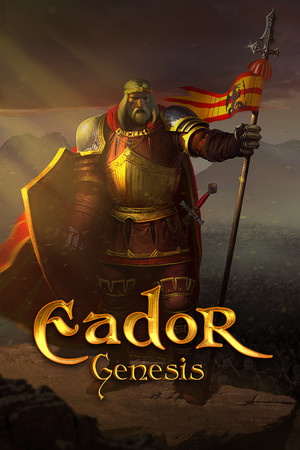
Eador: Genesis
One man built a grand-strategy RPG hybrid that out-depths most studio releases, then hid the difficulty setting behind a brutal early game. Proceed with patience and a notepad.
GamerScout Verdict
Best for HoMM veterans and grand-strategy obsessives who are willing to treat the first few shards as a steep but rewarding tutorial.
Compare Prices(4 stores)
Every store in this table quotes us in euros, so the EUR figure is the price the seller actually set, not our arithmetic — which is why EUR is also the currency we rank in. We only list an offer here when the store gives us its price in euros, so nothing in this table is a number we invented.
Pick USD, PLN, GBP, CAD or AUD in the header and we convert from EUR at the European Central Bank reference rate — converted amounts are prefixed with ~. Your bank or the store may apply a different rate at checkout. We never hide offers based on where you are: everyone sees this whole table.
We may earn a commission when you buy games through links on this page — at no extra cost to you. It never affects our rankings or verdicts.
Price History
Screenshots & Media
About Eador: Genesis
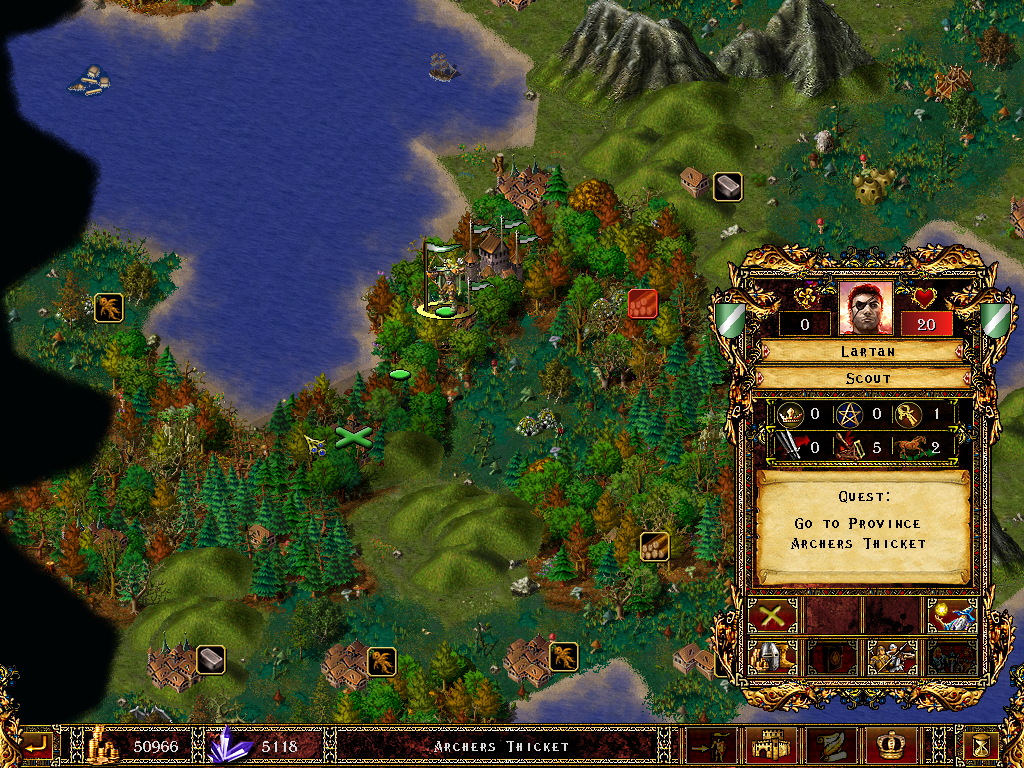
I keep a mental shortlist of indie games that punch so far above their budget they make big-studio strategy look lazy. Eador: Genesis sits near the top of that list. Solo developer Alexey Bokulev built what amounts to a layered hybrid of turn-based grand strategy, hex-grid tactical combat, and RPG hero progression, all wrapped in a persistent campaign where every conquered shard feeds your growing astral empire. The 2D presentation is spartan, the audio is barely adequate, and none of that matters once the systems start talking to each other. The structural loop is the thing to understand before you spend a single turn. On the astral layer you pick which shard to invade, spend Astral energy on pre-invasion bonuses, and watch your kingdom of conquered shards slowly accumulate new buildings, units, and spells. Drop down to a shard and you are running a province-by-province land grab with up to four heroes, each drawn from four base classes: Warrior, Scout, Wizard, and Commander. At level 10 every hero can dual-class, yielding sixteen asymmetric combinations. The Wizard into Necromancer path, for instance, plays nothing like a Warrior shading into Scout, and the community spends real effort mapping which dual-class works on which shard size and difficulty. Castle-building adds another axis: over 200 buildings are available, slots are limited and permanent, and race alliances (dark elves, orcs, and others) gate unique units behind alignment-specific quest chains. That is not complexity for its own sake. Every constraint forces a committed decision, and committed decisions are what strategy games exist to produce. Tactical combat runs on a small 8x8 hex grid that looks unambitious until you realize every non-basic unit carries a special ability that changes the engagement math. There are no chance-to-hit rolls, which means positioning and unit composition carry full weight. Experience is shared across the army including fallen troops, which actively discourages using units as disposable meat shields and rewards careful roster management. The save system enforces discipline in a way that modern games rarely dare: you can roll back one turn at a significant score penalty, or accept the loss and move on. Losing a shard is not a game-ender; the design explicitly accounts for it, and each defeat teaches you something the tutorial never will. Here is the honest warning that reviewers bury: the AI opponent receives compensation bonuses that the human player does not, and the corruption mechanic (which penalizes income as your domain expands) applies to you alone. The strategic AI will feel like it is cheating, because functionally it is. Veterans of Eastern European strategy games will shrug; players conditioned by modern difficulty sliders may not. The tutorial covers fundamentals but leaves the deeper build-tree interactions undocumented, which is where community guides and the New Horizons mod become near-essential reading for newcomers. Anyone prepared to treat the first two shards as a paid tutorial will find a game with twelve possible campaign endings and enough build variation to absorb a significant run of evenings. For HoMM veterans, Master of Magic alumni, or anyone who reads patch notes for fun, Genesis delivers the kind of tightly interlocked decision-making that the genre rarely produces. The graphics will not impress anyone, the AI cheats, and the save system demands respect. All of that is the point.

Strategy & simulation
Tags
System Requirements
Minimum
- OS
- Windows XP, Windows Vista or Windows 7
- Memory
- 1 GB RAM
- Storage
- 150 MB available space
- Graphics
- 3D graphics card compatible with DirectX 9.0c
- Processor
- 1 GHz Processor
Recommended
- OS
- Windows XP, Windows Vista or Windows 7
- Memory
- 2 GB RAM
- Storage
- 150 MB available space
- Graphics
- 3D graphics card compatible with DirectX 9.0c
- Processor
- 1 GHz Processor
Keep exploring
Community Discussion
Be the first to comment on Eador: Genesis.
Reviews & Ratings
No ratings available
Game Info
- Developer
- Alexey Bokulev
- Publisher
- Snowbird Games
- Release Date
- Oct 14, 2013