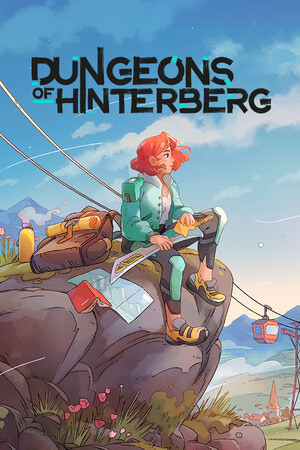
Dungeons of Hinterberg
Part burnout fantasy, part alpine dungeon-crawl: Microbird's debut confidently asks whether slaying monsters is actually better therapy than corporate life, and the answer feels surprisingly convincing.
GamerScout Verdict
Best for players who want their dungeon-crawling served with genuine character writing and a light hand on the difficulty dial.
Compare Prices(9 stores)
Every store in this table quotes us in euros, so the EUR figure is the price the seller actually set, not our arithmetic — which is why EUR is also the currency we rank in. We only list an offer here when the store gives us its price in euros, so nothing in this table is a number we invented.
Pick USD, PLN, GBP, CAD or AUD in the header and we convert from EUR at the European Central Bank reference rate — converted amounts are prefixed with ~. Your bank or the store may apply a different rate at checkout. We never hide offers based on where you are: everyone sees this whole table.
We may earn a commission when you buy games through links on this page — at no extra cost to you. It never affects our rankings or verdicts.
Price History
Screenshots & Media
About Dungeons of Hinterberg
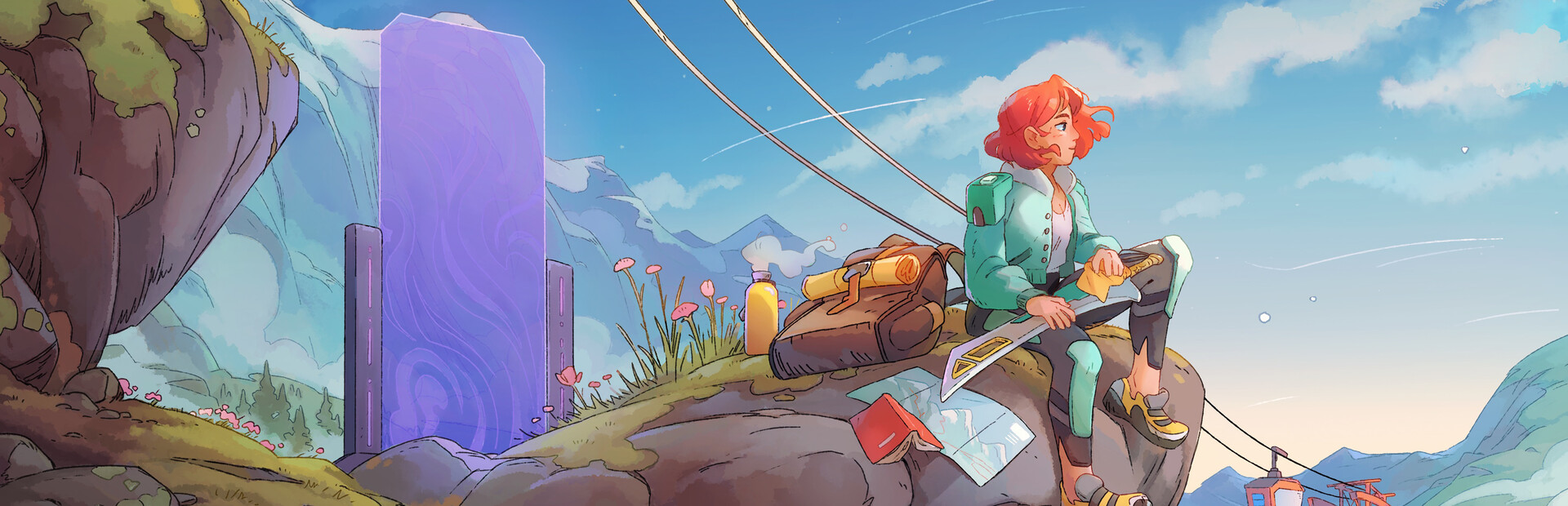
I went into Dungeons of Hinterberg expecting a pleasant but forgettable indie curio. What I found instead was one of the most quietly assured debut titles in recent memory, one that knows exactly what mood it wants to conjure and builds every system around protecting that mood. The premise is almost literary in its specificity: Luisa, a burned-out junior lawyer from Vienna, takes a vacation to the tiny Austrian mountain town of Hinterberg, where magical dungeons have erupted from the landscape and been immediately commercialized into a tourist industry. The satirical edge on that setup is sharper than the marketing implies, and the undercurrent of a village being slowly consumed by outside capital runs through every conversation you have between dungeon runs. The day structure is what makes it all cohere. Each morning you pick one of four distinct outdoor regions to explore: the sunny alpine meadows of Doberkogel, the pine-dense Hinterwald, the snow-blasted peak of Kolmstein, or the toxic marshland of Brunnelsumpf. Every region comes with its own pair of spells that only function within that zone, which is a quietly brilliant design choice. In Doberkogel you throw and detonate a massive iron ball; in Kolmstein you ride a tornado across hazardous ground. These region-locked abilities mean each of the 25 dungeons feels mechanically fresh without the developers having to juggle a sprawling persistent skill tree. The dungeons themselves are the clear star: a mix of real-time light-and-heavy sword combat, dodge-rolling against a stamina bar, magic abilities that pull double duty as puzzle tools, and room layouts that occasionally flip the camera to isometric or side-scrolling perspectives just to keep you on your toes. Combat won't satisfy anyone chasing precise soulslike feedback, but it's calibrated smartly as a rhythm-breaker between puzzles rather than the centerpiece, and three difficulty settings (including a Vacation Mode that softens combat entirely) mean you can tune it to exactly how much sword noise you want in your cozy game. The evenings belong to Hinterberg's social simulation layer, and this is where the game earns something beyond mere charm. You spend each night choosing one of 16 characters to hang out with: fellow dungeoneers, local shopkeepers, skeptical teenagers, and business interests with their own agendas. The mechanical incentive is real: befriending certain characters unlocks combat modifiers like the combo counter from slayer Renaud, extra dodge stamina slots, or entirely new crafting avenues through the local weaponsmith Hannah. But the writing treats these people as actual people rather than perk dispensaries. The conversations carry a genuine melancholy about modern life, ambition, and what it means to belong somewhere, which elevates the whole experience well above its Persona-inspired DNA. The catch is that 40 in-game days is nowhere near enough to max all 16 friendships, so your playthrough will feel genuinely personal, but a completionist first run is simply not possible. Whether that reads as replayability or FOMO depends entirely on your tolerance for systems that withhold. The weaknesses are real but modest. The opening couple of hours lean heavily on tutorials, and the base combat does show its ceiling before the credits roll, with late-game surprise encounters feeling more like an interruption than a challenge. A handful of reviewers flagged clunky climbing sections and some repetitive dungeon music, and there is a nagging sense that the social stakes never bite as hard as the narrative implies they will. The art style, a clean, slightly flat European postcard aesthetic, is striking in motion but may not land for everyone. None of this meaningfully dims what Microbird built here as a first game: a cohesive, intentional experience that knows when to let you breathe, when to push a puzzle hard, and how to make a cast of strangers feel worth returning to every evening. Steam user reviews sit at 94 percent positive across well over a thousand votes, and that number feels earned.

Indie & narrative
Tags
System Requirements
Minimum
- OS
- Windows 10 x64
- Memory
- 8 GB RAM
- Storage
- 8 GB available space
- Graphics
- GeForce GTX 960 (4096 MB) / Radeon RX 550 (4096 MB) or equivalent
- Processor
- Intel Core i5-4670K (4 * 3400) / AMD FX-4350 (4 * 4200) or equivalent
Recommended
- OS
- Windows 10 x64
- Memory
- 12 GB RAM
- Storage
- 8 GB available space
- Graphics
- GeForce GTX 970 (4096 MB) / Radeon R9 Fury (4096 MB) or equivalent
- Processor
- Intel Core i5-7600k (4 * 3800) / AMD FX-9590 (8*4700) or equivalent
DLC & Add-ons for Dungeons of Hinterberg1
Expansions, DLC packs and add-on content for this game. Click any item to see store offers.
Keep exploring
Community Discussion
Be the first to comment on Dungeons of Hinterberg.
Reviews & Ratings
Game Info
- Developer
- Microbird Games
- Publisher
- Curve Games
- Release Date
- Jul 18, 2024