Dark Sky
A compact, story-first deckbuilder that trades the roguelite grind for a single continuous campaign, but its mixed Steam reception signals you should know exactly what you're signing up for before committing.
GamerScout Verdict
Best for tactics fans who want a story-complete deckbuilder without roguelite resets, provided the mixed reception and potential bugs don't put you off.
Compare Prices(4 stores)
Every store in this table quotes us in euros, so the EUR figure is the price the seller actually set, not our arithmetic — which is why EUR is also the currency we rank in. We only list an offer here when the store gives us its price in euros, so nothing in this table is a number we invented.
Pick USD, PLN, GBP, CAD or AUD in the header and we convert from EUR at the European Central Bank reference rate — converted amounts are prefixed with ~. Your bank or the store may apply a different rate at checkout. We never hide offers based on where you are: everyone sees this whole table.
We may earn a commission when you buy games through links on this page — at no extra cost to you. It never affects our rankings or verdicts.
Price History
Screenshots & Media
About Dark Sky
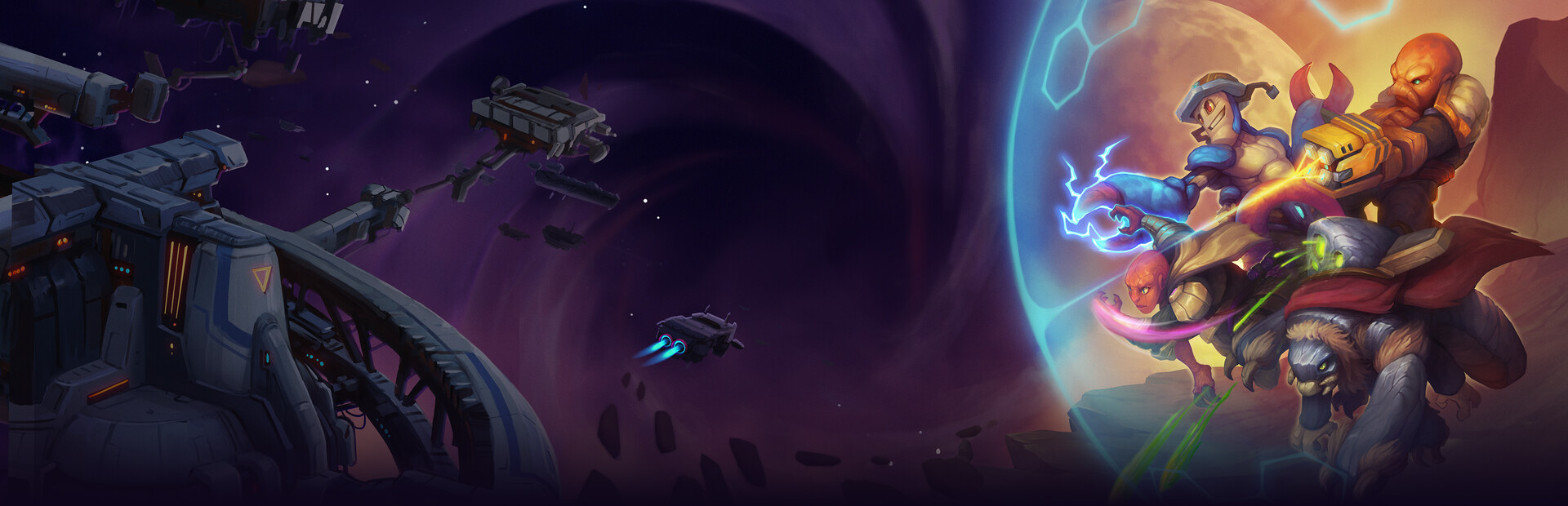
I've logged time with enough deckbuilders to fill a spreadsheet longer than most people's Steam libraries, so when a game ditches the roguelite loop entirely in favor of a persistent campaign deck, my ears perk up. Dark Sky makes that specific bet: you keep your cards between encounters, level up a roster of six distinct characters, and upgrade individual cards through a branching progression tree rather than hunting power spikes across throwaway runs. For a strategy player who actually wants to plan around late-game synergies rather than start over every thirty minutes, that premise has real appeal. The question is whether the execution earns the concept. The combat is where Dark Sky does its clearest work. Battles play out on a grid, meaning positioning matters as much as card selection. You pick three characters per fight, and that choice locks in the combined deck you're working with, so reading the enemy composition beforehand is not optional. The game shares a shared energy pool across your whole party, and you can swap a card for another from the deck each turn if the draw is cold. Status effects chain into reactions, characters like Squig can deploy barriers and holographic clones, Norton brings high-voltage electrical cards, and Agama throws poisonous grenades. Boss encounters in particular demand real forward planning, and reviewers flagged that normal fights can feel breezy right up until a boss walls you for an hour. That spike in difficulty is either satisfying or frustrating depending on how you feel about re-examining your whole build under pressure. Card transparency is a genuine strong point: keyword interactions are consistently explained on the card itself, so you are never guessing what a combo actually does. The narrative layer is more complicated. The opening hours land well, with tutorials woven into play rather than shoved into a separate menu, and the sci-fi setting on Wolf Prime carries genuinely interesting alien lore. Character writing ranges from likeable to quip-heavy in ways some reviewers found charming and others found exhausting. The story does front-load proper nouns and faction names without context, which disrupts early pacing even if the payoff eventually arrives. Exploration sits in an odd middle position: the isometric overworld is linear enough that hidden secrets are rare, and the environments exist more as set dressing than as interactive puzzle spaces. Resources scattered around the map feed into card crafting and upgrades, which at least gives scavenging a mechanical purpose. There is no voice acting, so bonding with Squig and Norton happens entirely through text. The hand-painted art style and environmental design hold up well as visual compensation. Two technical concerns are worth flagging before you spend money. A softlock bug was reported where players could draw only one card, could not play it, and could not end their turn, with no in-battle restart option to resolve it. Audio dropouts during combat were also observed in early builds. These are launch-window rough edges that may be patched, but a mixed Steam rating sitting around 65 percent at a small sample size suggests the game has not fully converted skeptics yet. At roughly ten hours for a full campaign playthrough, the scope is intentionally modest, and some players clearly feel the game was scaled back from its original, more ambitious design. Whether that reads as tight and focused or unfinished depends heavily on your prior expectations. For strategy players specifically, the pitch is a tactical card-combat system with meaningful build decisions, no run resets, and a complete narrative arc in a single weekend. That is a shorter, lower-stakes commitment than most genre entries. If you want Slay the Spire-style replayability, look elsewhere. If you want a story to finish and a deck to actually grow into over the course of a campaign, Dark Sky is the rarer thing and worth a look at the right price.

Strategy & simulation
Tags
System Requirements
Minimum
- OS
- Windows 10
- Memory
- 4 GB RAM
- DirectX
- Version 12
- Storage
- 3 GB available space
- Graphics
- NVIDIA GeForce GTX 750Ti / AMD Radeon RX570 4GB
- Processor
- Intel Core i3 - 2nd Gen / AMD FX-4100 Quad-Core Processor 3.6GHz
Recommended
- OS
- Windows 10
- Memory
- 8 GB RAM
- DirectX
- Version 12
- Storage
- 3 GB available space
- Graphics
- NVIDIA GeForce GTX 1050 Ti / AMD Radeon RX570 4GB
- Processor
- Intel Core i5 - 3rd Gen / AMD FX-9370 8-Core 4.4GHz
Keep exploring
Community Discussion
Be the first to comment on Dark Sky.
Reviews & Ratings
No ratings available
Game Info
- Developer
- Ganymede Games
- Publisher
- Midwest Games
- Release Date
- Sep 24, 2024