Cities: Skylines - Mass Transit
If traffic congestion is the thing quietly destroying your Cities: Skylines save, Mass Transit hands you four new tools to fix it - and two of them float.
GamerScout Verdict
Best for Skylines players who have hit the ceiling of road-based solutions and want transit puzzles with real geographic teeth.
Compare Prices(3 stores)
Every store in this table quotes us in euros, so the EUR figure is the price the seller actually set, not our arithmetic — which is why EUR is also the currency we rank in. We only list an offer here when the store gives us its price in euros, so nothing in this table is a number we invented.
Pick USD, PLN, GBP, CAD or AUD in the header and we convert from EUR at the European Central Bank reference rate — converted amounts are prefixed with ~. Your bank or the store may apply a different rate at checkout. We never hide offers based on where you are: everyone sees this whole table.
We may earn a commission when you buy games through links on this page — at no extra cost to you. It never affects our rankings or verdicts.
Screenshots & Media
About Cities: Skylines - Mass Transit
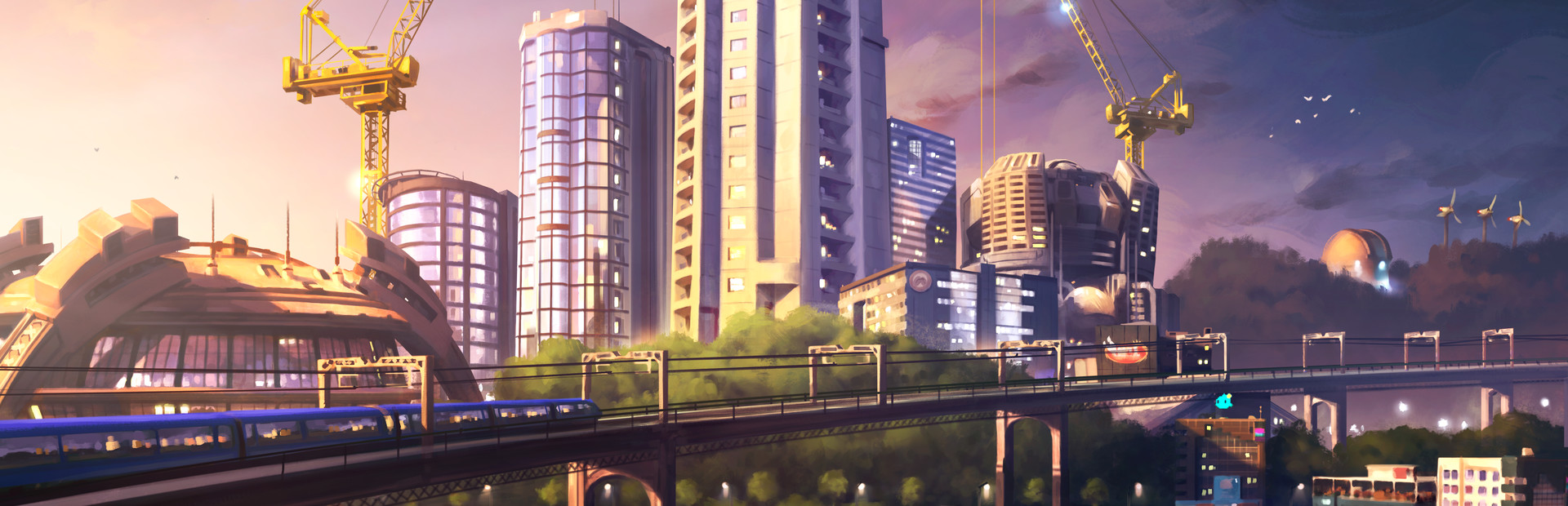
I've logged more hours untangling city traffic in Cities: Skylines than I care to admit, and Mass Transit is the expansion that finally made me feel like I was doing urban planning rather than just placing roads and hoping for the best. It arrives as the fourth major expansion for Colossal Order's city builder, and it ships with a scope that is narrower than something like Industries or Green Cities but considerably more focused. The whole thing is built around one question: how do your citizens actually get around, and can you make that interesting? The headline additions are four new transit types - monorail, ferries, cable cars, and blimps - each carved into a distinct functional niche rather than just reskinning what already existed. The monorail is the workhorse of the bunch. It behaves like an overground metro in terms of capacity and throughput, runs on elevated colonnades over roads and water, and gives dense mid-city corridors a visual identity they previously lacked. Ferries slot into coastal and riverside maps with real elegance, turning bodies of water from dead space into commuter corridors. Cable cars solve the steep-terrain problem that had no clean answer before: mountain districts that were previously accessible only via switchback roads now get a low-infrastructure transit link. Blimps are the quirkiest addition - low capacity by design, with boarding speed acting as the hard ceiling on passenger throughput - and honest players will admit they are more aesthetic than functional for serious commuter routing. Do not wire your main transit spine through a blimp stop and expect it to hold. The more quietly important addition is the transit hub system. Five interchange buildings let you consolidate multiple transit modes under one roof - trains, metros, and monorails sharing a single station, or buses feeding directly into a ferry dock. For anyone who has spent time watching Cims make absurd pathfinding detours because transfer points were 200 metres apart, this alone justifies the expansion. The same patch also shipped a free traffic management overhaul that gave players granular lane and intersection controls, so the paid content and the free update are deeply intertwined. Three new maps and three scenarios round out the content list, with the scenarios specifically designed around geography-constrained transport puzzles rather than general city growth. The criticisms that circulated at launch still hold. The new transit types are not high-capacity solutions - if your city is already maxed on metro and train lines, ferries and cable cars will not replace them, and the game never pretends they will. The pathfinding AI, a long-standing base game limitation, does not get meaningfully smarter here. And some of the free patch content bleeds into territory that makes the paid DLC feel thinner than its price tag suggests on paper. That said, the Steam community voted Very Positive at 93% across a very large sample, which is a number that holds up years post-launch and reflects genuine staying power rather than launch-week enthusiasm. The mod ecosystem on Steam Workshop has also extended every transit type with custom assets, which stretches the value further if you are comfortable adding mods. For strategy and sim players who care about decision depth, Mass Transit earns its place because it changes the geometry of problems. A coastal map with ferries is a fundamentally different traffic puzzle than the same map without them. A mountainous district with cable cars opens residential zoning that was previously unfeasible. That is the kind of lateral expansion that rewards players who have already exhausted the base game's toolkit and want new constraints to solve, not just new assets to place.

Strategy & simulation
Tags
System Requirements
Minimum
- Processor
- Intel® Core™ I7 930 | AMD® FX 6350
- Memory
- 8 GB RAM
- Graphics
- Nvidia…
Recommended
- OS
- Windows® 10 Home 64 bit
- Processor
- Intel® Core™ I7 2700K | AMD® Ryzen 7 2700X
- Memory
- 16 GB RAM
- Graphics
- Nvidia® GeForce™ GTX 580 (1.5 GB) | A…
Keep exploring
Community Discussion
Be the first to comment on Cities: Skylines - Mass Transit.
Reviews & Ratings
Game Info
- Developer
- Colossal Order
- Publisher
- Paradox Interactive
- Release Date
- Mar 10, 2015