
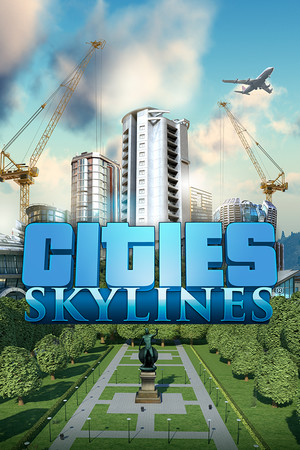
Cities: Skylines - Campus
If your city's education tab has always felt like an afterthought, Campus is the DLC that finally makes higher learning worth planning your whole urban layout around.
GamerScout Verdict
Best for Cities: Skylines veterans ready to redesign their city layout around a living, level-able university district rather than passive education buildings.
Compare Prices(2 stores)
Every store in this table quotes us in euros, so the EUR figure is the price the seller actually set, not our arithmetic — which is why EUR is also the currency we rank in. We only list an offer here when the store gives us its price in euros, so nothing in this table is a number we invented.
Pick USD, PLN, GBP, CAD or AUD in the header and we convert from EUR at the European Central Bank reference rate — converted amounts are prefixed with ~. Your bank or the store may apply a different rate at checkout. We never hide offers based on where you are: everyone sees this whole table.
We may earn a commission when you buy games through links on this page — at no extra cost to you. It never affects our rankings or verdicts.
Price History
Screenshots & Media
About Cities: Skylines - Campus
I've spent more hours than I care to admit zoning university buildings as a late-game checkbox rather than an actual design decision. Campus changes that calculus completely. This expansion replaces the old passive drop-a-building-and-forget approach with a proper progression system built around three distinct campus types: Trade School, Liberal Arts College, and University. Each carries its own visual identity, its own faculty options, and its own strategic tradeoffs in terms of which city bonuses you want to prioritise. The core loop will feel immediately legible to anyone who has touched the Parklife or Industries expansions. You paint a campus area using the same district tool, drop an administration building, and start unlocking structures as your institution's reputation grows. Dormitories, study halls, clubhouses, and unique faculty buildings come online incrementally, which means land planning matters far more than it did before. You need to reserve room for future growth from day one, because a campus that runs out of space to expand becomes a permanent bottleneck against your city's residential sprawl. That tension, between city growth and campus growth, is where the real decision-making lives. A well-connected transit network feeding students from residential zones is no longer optional; it is load-bearing infrastructure. Varsity sports is the wildcard mechanic that either delights or overwhelms depending on your tolerance for micromanagement. Five arena types cover football, basketball, baseball, track and field, and swimming. You hire coaches, set ticket prices, customise team jerseys, and watch match results feed back into your campus attractiveness score. It is a mini-management layer sitting inside an already complex simulation, and some players will find it a fun distraction while others will wish there were a "sim it automatically" toggle. The reputation system also bites in both directions: let student numbers slip below the threshold and your campus loses a level at the end of the academic year, which means this is not a set-and-forget expansion. Public libraries (added via the accompanying 1.12 patch, free to all) also now contribute meaningfully to citizen education levels, adding another city-wide variable to track. The honest criticism is that Campus lands with a lighter systemic footprint than the Industries expansion did. Producing highly educated citizens is the end goal, but that outcome was already achievable by scattering base-game university buildings around a large city. What Campus sells is the craft of building a beautiful, functional academic district and the satisfaction of watching it level from freshman status up to Prestigious rank, requiring 1,800 students, 1,800 attractiveness, and 16 academic works to hit the ceiling. If you find meaning in that kind of long-arc progression, the depth is genuinely there. If you are buying this expecting Industries-level ripple effects on your entire city economy, calibrate expectations accordingly. The Steam Workshop also means the asset library for campus buildings is already extensive, which helps fill any gaps in Colossal Order's base roster.

Strategy & simulation
Tags
System Requirements
Minimum
- Processor
- Intel® Core™ I7 930 | AMD® FX 6350
- Memory
- 8 GB RAM
- Graphics
- Nvidia…
Recommended
- OS
- Windows® 10 Home 64 bit
- Processor
- Intel® Core™ I7 2700K | AMD® Ryzen 7 2700X
- Memory
- 16 GB RAM
- Graphics
- Nvidia® GeForce™ GTX 580 (1.5 GB) | A…
Keep exploring
Community Discussion
Be the first to comment on Cities: Skylines - Campus.
Reviews & Ratings
Game Info
- Developer
- Colossal Order
- Publisher
- Paradox Interactive
- Release Date
- Mar 10, 2015