
Braid
Four hours of systems puzzling where the rewind button deletes failure and leaves only the thinking. Superb if you like being stuck on purpose, wrong for you if value means hours per dollar.
GamerScout Verdict
Best for players who want tutorial-free puzzle density in one weekend sitting and don't measure value in hours per dollar.
Compare Prices(2 stores)
Every store in this table quotes us in euros, so the EUR figure is the price the seller actually set, not our arithmetic — which is why EUR is also the currency we rank in. We only list an offer here when the store gives us its price in euros, so nothing in this table is a number we invented.
Pick USD, PLN, GBP, CAD or AUD in the header and we convert from EUR at the European Central Bank reference rate — converted amounts are prefixed with ~. Your bank or the store may apply a different rate at checkout. We never hide offers based on where you are: everyone sees this whole table.
We may earn a commission when you buy games through links on this page — at no extra cost to you. It never affects our rankings or verdicts.
Price History
Screenshots & Media
About Braid
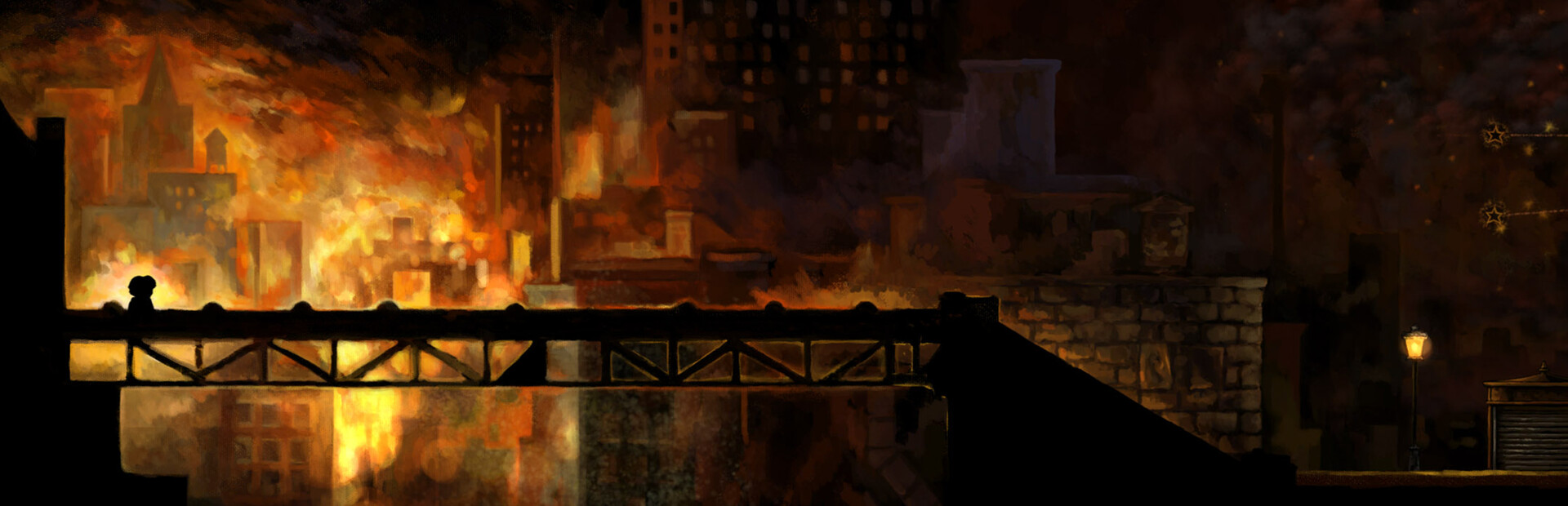
Before it gives you anything, Braid wants four uninterrupted hours, a notepad you will probably not need but will reach for anyway, and the discipline to stay in a room you cannot solve. I plan build orders three turns deep for fun, so I assumed the puzzle-platformer label meant this was not my kind of game. It is. Strip away the jumping and what remains is a systems puzzler where every level hands you one rule and asks you to find its edge cases. The strategy tag on the store page is not a mislabel. The rewind is the whole design thesis. Death is not a state here. Fall on spikes or walk into an enemy and you hold a button, time runs backwards at whatever speed you like, and you take the line again. That removes failure from the equation entirely and leaves the thinking exposed. Each world then bolts a second rule on top of that. One world paints certain objects green, and green things ignore your rewind, so you end up running two timelines in the same room. Another ties time to your horizontal movement: walk right and the world plays forward, walk left and it plays back, stand still and everything freezes. Later you get a shadow that replays your previous attempt while you do something else, and a ring you drop on the floor to slow everything near it. Solving a level is rarely about reflexes. It is about ordering operations correctly, which is the same muscle a turn-based player uses every day. What impresses me most is the teaching. No tutorial pop-up, no tooltip, no character explaining the mechanic. Each world opens with a trivial room that demonstrates the new rule in about eight seconds, then a room that shows the obvious consequence, then it starts asking real questions. That is better onboarding than most 200-hour grand strategy games manage with three nested layers of hand-holding. The jigsaw pieces you collect assemble into paintings, the paintings gate progress, and you can walk away from a puzzle that has beaten you and come back later, so you are never hard-stuck on one bad idea. The finale reverses the frame in a way I will not spoil, and it reinterprets the core mechanic rather than just landing a twist. The hand-painted backgrounds and the string-heavy licensed soundtrack have aged better than most 2009 art. The complaints are real. The campaign is four to six hours, and there is no replay layer beyond a speedrun mode and achievements. No procedural generation, no mods, no sandbox, nothing to optimise on a second pass except execution. Once you know the solutions, they are known forever. The story arrives through books of prose between worlds and it is deliberately vague; some players read it as a wrecked relationship, some as a parable about the bomb, plenty read it as a designer admiring his own reflection. If ambiguity irritates you, skip the books and lose nothing mechanically. The eight hidden stars are the worst thing in the package, hostile in a way the main game never is, and one of them famously asks you to stand on a slow-drifting cloud for something like two real hours. That is not difficulty, that is a toll booth. A few solutions also demand tighter jump timing than the puzzle deserves, which is the one place where the platformer skin fights the systems design underneath it. So, the practical read. This is a strong purchase for newcomers to the genre precisely because the no-fail structure makes experimentation free: you cannot waste resources, lose progress, or ruin a run, so the only cost of a bad idea is thirty seconds. It is also a strong purchase for veterans who want density instead of duration, since almost every room contains exactly one idea and no filler. It is a bad purchase if you need progression bars, loot, or something to fill a month. Play it in one or two sittings, phone in another room, and let yourself sit on the hard rooms overnight. More than fifteen years on, it still makes a tighter argument per minute than almost anything in its genre.

Strategy & simulation
Tags
System Requirements
Minimum
- Processor
- 1.4GHz or faster
- Memory
- 768 MB or more Hard Disk Space: 200 MB or more Video Card: Pixel Shader 2.0 DirectX® Version: DirectX® 9.0c Controller Support: Microsoft Xbox 360 C…
Keep exploring
Community Discussion
Be the first to comment on Braid.
Reviews & Ratings
Game Info
- Developer
- Number None
- Publisher
- Number None
- Release Date
- Apr 10, 2009