

BioShock 2: Minerva’s Den
Rapture in one sitting: a four-hour side story that's tighter, better written, and more confident than the campaign it's attached to. Ideal if you liked BioShock 2 but not its length.
GamerScout Verdict
Best for BioShock 2 veterans who want one last, sharply written Rapture story they can finish in two sittings.
Compare Prices(3 stores)
Every store in this table quotes us in euros, so the EUR figure is the price the seller actually set, not our arithmetic — which is why EUR is also the currency we rank in. We only list an offer here when the store gives us its price in euros, so nothing in this table is a number we invented.
Pick USD, PLN, GBP, CAD or AUD in the header and we convert from EUR at the European Central Bank reference rate — converted amounts are prefixed with ~. Your bank or the store may apply a different rate at checkout. We never hide offers based on where you are: everyone sees this whole table.
We may earn a commission when you buy games through links on this page — at no extra cost to you. It never affects our rankings or verdicts.
Screenshots & Media
About BioShock 2: Minerva’s Den
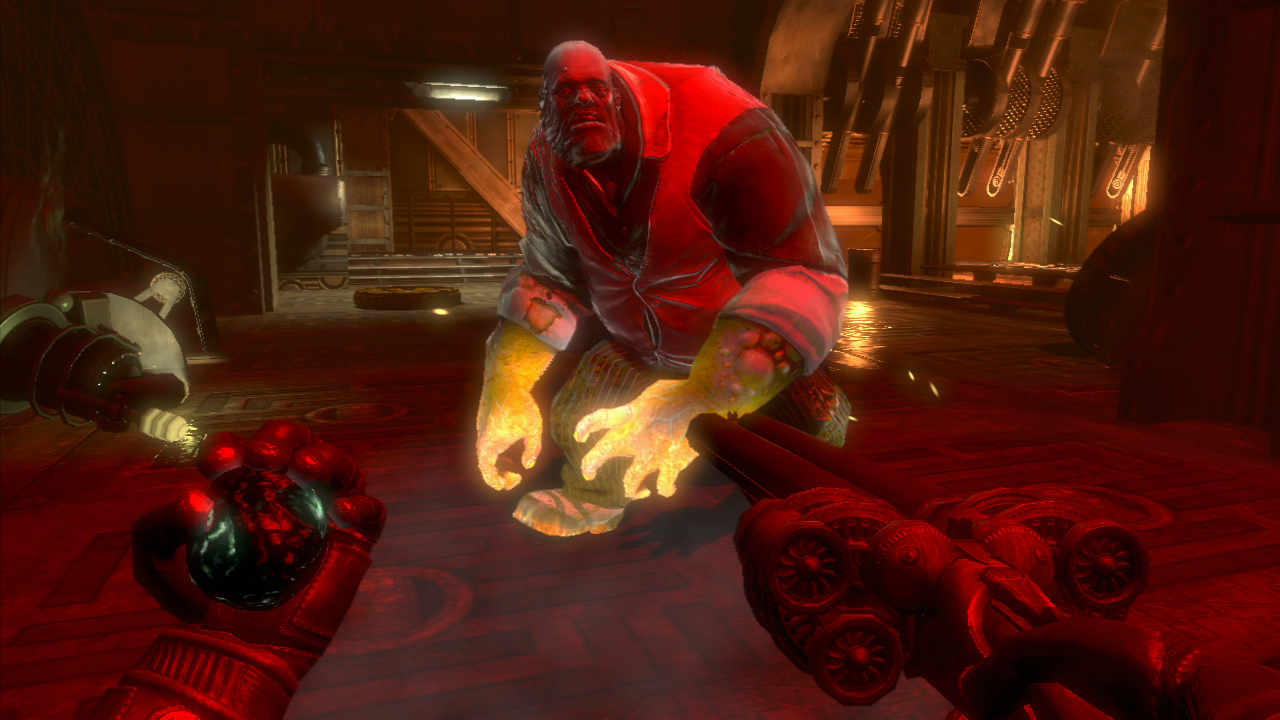
Buy this for the player who wants one more trip to Rapture and can finish it across two evenings, and skip it if you've never played BioShock 2, because it hands you a drill and a plasmid on minute one and assumes you already know what to do with them. That's the honest framing. Minerva's Den is a self-contained campaign built on BioShock 2's systems, sold and launched separately on PC, and it does not spend a second teaching you the fundamentals. If you know how to freeze a splicer and swing at him, you're up to speed. If you don't, the base game is the door you should walk through first. What you get is a new district of the city, the computing wing where Rapture's automation was designed, and a new protagonist in a Big Daddy suit who is not the one from the main game. Structurally it follows the same loop: explore a hub, hack the vending machines and turrets, hoover up ammo and audio logs, get ambushed, decide what to do with the Little Sisters you rescue or harvest. Two additions matter. The Ion Laser is a beam weapon that melts crowds and eats ammo at a frightening rate, so it functions as a panic button rather than a default. Gravity Well is the better toy, a plasmid that yanks loose objects and enemies into a single point, which turns hallway fights into physics puzzles you can set up in advance. Pair it with proximity mines or a well-placed trap rivet and you get the game's best moments, the ones where you win a fight before it starts. The new enemy, a Big Daddy variant armed with a machine gun, exists specifically to punish players who camp behind cover, and it works. The writing is why this thing has the reputation it does. It's a small, contained story about two men who built something together and disagreed about what it was for, told mostly through recordings you find lying around and through the geometry of the place itself. There's no attempt to relitigate the philosophy of the first game, no lecture about objectivism, no cameo parade. It commits to one idea and lands it, and the final stretch reframes what you've been doing in a way that a lot of full-priced campaigns never manage. I won't spoil the specifics. I'll just say that if you've heard people call this the best-written thing in the series, they're not being contrarian. Where it disappoints: it is short, roughly four hours if you read everything and poke at every desk, and it is unmistakably made of BioShock 2 parts. The splicer roster is the same, the audio diary loop is the same, and the mid-game escort sequences where you guard a Little Sister while she drains a corpse are as tedious here as they were the first time, arguably worse because a tight campaign has less room to absorb padding. Combat is not the reason to be here either. The sandbox is capable but you'll finish before your build gets genuinely interesting, and the difficulty is forgiving enough on default that the deeper trap and tonic combinations stay optional. There's also a version question: the purchase includes both the original release and the later remaster, and the two have different quirks around resolution handling, controller support, and mod compatibility, so if one build misbehaves on your machine, try the other before assuming the game is broken. Who should actually buy it: anyone who liked the atmosphere of Rapture more than the shooting, anyone who wants a complete story arc that respects a weeknight, and anyone building a case that games can do focused, character-driven narrative without a forty-hour runtime. Who shouldn't: newcomers, players who want new mechanics rather than a smart remix of old ones, and anyone allergic to escort missions. It's doing one thing exceptionally well, which is telling a small story with total control of its own pacing, and it's content to be ordinary at everything else. That trade is worth making.

Catch-all
Tags
System Requirements
Minimum
- Processor
- AMD Athlon 64 Processor 3800+ 2.4Ghz or better, Intel Pentium 4 530 3.0Ghz Processor or better
- Memory
- 2 GB RAM
- Graphics
- NVIDIA 7800GT 256MB graphics card or be…
Recommended
- Processor
- AMD Athlon 64 X2 5200+ Dual Core 2.60Ghz, Intel Core 2 Duo E6420 Dual Core 2.13Ghz
- Memory
- 3 GB RAM
- Graphics
- NVIDIA 8800GT 512MB graphics card or better, ATI Radeon HD4830 512MB graphics card…
Keep exploring
Community Discussion
Be the first to comment on BioShock 2: Minerva’s Den.
Reviews & Ratings
Game Info
- Developer
- 2K Marin, 2K China, Digital Extremes, 2K Australia
- Publisher
- 2K
- Release Date
- Oct 2, 2013