
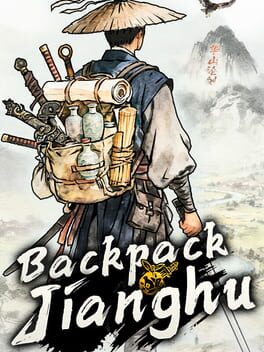
Backpack Jianghu
If your idea of a good run is optimising a martial arts loadout across 200-plus items while outwitting asynchronous opponents, Backpack Jianghu will eat your afternoon. Treat it like a puzzle competition, not a twitch fighter, and it clicks hard.
GamerScout Verdict
Worth it for build-obsessed strategy players who enjoy preparation over reflexes, provided they survive the opaque early hours.
Compare Prices(3 stores)
Every store in this table quotes us in euros, so the EUR figure is the price the seller actually set, not our arithmetic — which is why EUR is also the currency we rank in. We only list an offer here when the store gives us its price in euros, so nothing in this table is a number we invented.
Pick USD, PLN, GBP, CAD or AUD in the header and we convert from EUR at the European Central Bank reference rate — converted amounts are prefixed with ~. Your bank or the store may apply a different rate at checkout. We never hide offers based on where you are: everyone sees this whole table.
We may earn a commission when you buy games through links on this page — at no extra cost to you. It never affects our rankings or verdicts.
Price History
Screenshots & Media
About Backpack Jianghu
I went in expecting a novelty mash-up and came out with a spreadsheet of sect-item synergies. Backpack Jianghu takes the inventory-puzzler format that Backpack Battles popularised and rebuilds it around a Wuxia skeleton, adding layers of internal cultivation, item synthesis, and a battle-royale elimination structure that gives every run a concrete finish line: survive the showdown at the peak of Mount Hua. The core loop works like this. You pick a starting sect, each of which grants a distinct starting backpack, spawn location, and event pool. Shaolin, Wudang, Huashan, and Five Poisons play noticeably differently from one another, and with 12 sub-classes and 10 talent skills in the mix, character identity is locked in early and rewarded if you commit. The inventory grid is your actual combat engine. Item placement matters spatially, weapon-skill pairings trigger bonus effects, and synthesising lower-tier gear into higher-tier upgrades is the mid-game decision you will agonise over most. Do you hold cheap filler to maintain fight-readiness now, or burn it into a synthesis chain and go temporarily underpowered? That constant trade-off is where the real strategy lives. Combat resolves automatically when two fighters meet, which means preparation is everything. You can scout opponent backpacks on the map before engaging, which adds a genuine read-and-react layer. Spot a Lonely Nine Swords bleed stack build bearing down on you and you adjust your defensive item layout before the fight resolves. The asymmetric matchmaking is asynchronous rather than live, so the pace stays measured. You are never rushed into a bad decision by real-time pressure, which is a design call that will suit the Slay-the-Spire crowd far more than it will satisfy anyone hoping for reactive combat. The rough edges are real. New players will find the synthesis trees opaque without outside reading, and the tutorial moves quickly past the spatial rules that govern item adjacency bonuses. The item pool is wide at 200-plus entries, but balance at the high end is still clearly a work in progress; certain Dragon Strike one-hit builds feel more like exploits than intended design. The player count per lobby is modest by battle-royale standards and the recent review score trending slightly lower than the all-time figure suggests the honeymoon period may be fading, though the community remains active enough for consistent matchmaking. For a strategy player who can tolerate some early-game confusion, the onboarding path actually exists if you approach it correctly: start with Shaolin or Wudang, stick to single-core equipment builds for your first five runs, and resist the urge to synthesise everything the moment you can. The decision density once you hit mid-game fluency is the kind of thing that keeps a sim-strategy fan running the numbers in their head between sessions. That is the audience this game is squarely built for.

Strategy & simulation
Tags
System Requirements
Minimum
- OS
- Windows 10\11
- Processor
- 2 GHz
- Memory
- 16 GB RAM
- Graphics
- GTX 1060 3G
- Network
- Broadband Internet connection
- Storage
- 1 GB available space
Recommended
Requires a 64-bit processor and operating system
Keep exploring
Community Discussion
Be the first to comment on Backpack Jianghu.
Reviews & Ratings
Game Info
- Developer
- 背包工作室
- Publisher
- 背包工作室
- Release Date
- Apr 2, 2026