A Plague Tale - Bundle
Two linear stealth adventures about a sister, her plague-touched brother, and an ocean of rats. Great if you want story over systems, rough if you want combat with real depth.
GamerScout Verdict
Best for players who want two grim, linear stealth adventures where the story, not the systems, does the heavy lifting.
Compare Prices(5 stores)
Every store in this table quotes us in euros, so the EUR figure is the price the seller actually set, not our arithmetic — which is why EUR is also the currency we rank in. We only list an offer here when the store gives us its price in euros, so nothing in this table is a number we invented.
Pick USD, PLN, GBP, CAD or AUD in the header and we convert from EUR at the European Central Bank reference rate — converted amounts are prefixed with ~. Your bank or the store may apply a different rate at checkout. We never hide offers based on where you are: everyone sees this whole table.
We may earn a commission when you buy games through links on this page — at no extra cost to you. It never affects our rankings or verdicts.
Price History
Screenshots & Media
About A Plague Tale - Bundle
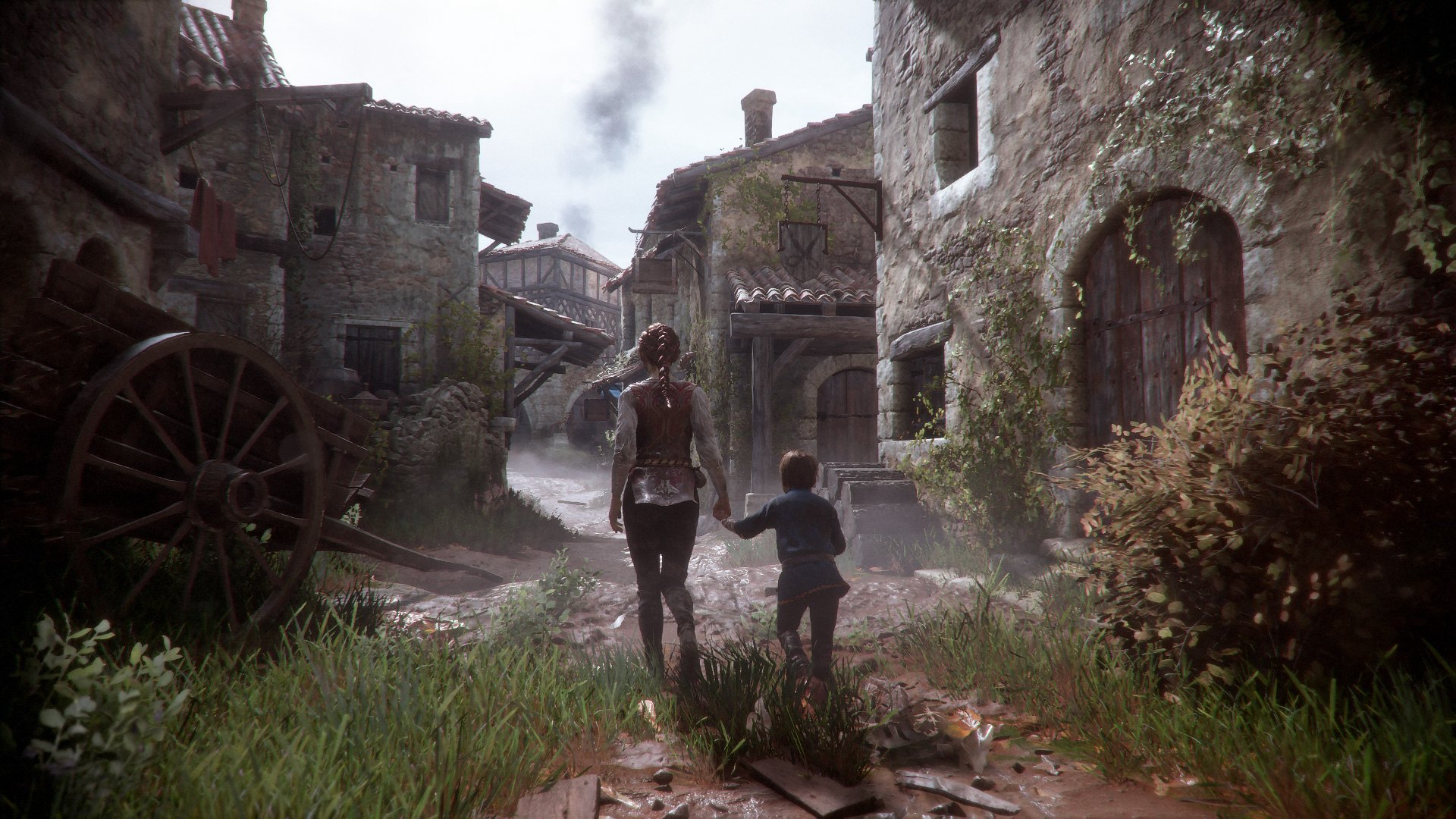
Buy this pair if you want two tightly authored stealth adventures with a story that actually lands, and walk away if you need loose systems, big maps, or combat you can master. A Plague Tale: Innocence and its sequel Requiem are linear, cinematic and heavily scripted, and Asobo Studio never pretends otherwise. Both games are built around a single relationship, Amicia de Rune and her younger brother Hugo, hauled across a 14th century France coming apart under the Inquisition and a plague of rats. Every mechanic serves that relationship. If the words escort mission make you flinch, understand that Hugo is the escort and that the design is honest enough to make him the whole point rather than a tax on the fun. That framing grabs you in the first hour or it never will. Innocence is the smaller, scrappier half, and it is the one to play first. You spend roughly ten to twelve hours creeping through mud, ruins and burning villages with a sling, a pouch of stones and a handful of alchemy recipes. Rocks crack pots or knock a helmet loose. Ignifer lights a brazier from range, Extinguis snuffs one out, Odoris drags a rat tide onto a soldier who was standing in the wrong patch of shadow. Light is the real weapon here. Rats flood any space you cannot illuminate, so most chapters become a moving puzzle about carrying, throwing and rationing fire while human patrols walk lanes you also have to read. Components you scavenge feed workbench upgrades to your sling and pouch, and the upgrade tree is shallow enough that you will finish most of it in one run. Requiem is the bigger, glossier, more confident version of the same idea. Amicia has hardened, and so has the toolkit: a crossbow with limited bolts, knives that let you drop armoured soldiers who used to be unkillable, tar that spreads fire across a courtyard, and Hugo's growing power to sense people through walls and, eventually, steer the swarm himself. Environments open up too. The Provence stretch and the harbour chapters give you multi-route arenas instead of corridors, and the rat sequences scale into something genuinely unnerving, with tides that fill entire screens. The art direction and the score are the standout technical achievements in both games, and the performances carry scenes that would collapse with weaker voice work. Where it disappoints is consistent across both titles. Combat is rigid. Detection usually means a short, panicky scramble that ends in a checkpoint reload, and the games quietly want you to solve encounters their way rather than yours. Requiem's middle act sags, repeating the sneak-through-the-camp beat a few times too many before the last third finds its nerve again. Neither game rewards replay much, because once you know where the guards stand and which brazier matters, the puzzle evaporates. Requiem is also heavy on hardware, and its console launch shipped locked at 30fps before a later patch added higher frame rate options, which is worth knowing if you are playing on a modest PC. And the tone is unrelenting. Child in peril, dead bodies, misery on a slow escalating curve, with the sequel leaning much harder into it than the first. This is not a wind-down-after-work bundle. As a package, though, buying them together makes sense in a way most publisher bundles do not. Requiem opens assuming you carry Innocence's losses with you, and it pays off setups the first game plants early. Play them back to back in order and you get somewhere around twenty five to thirty hours of a single continuous story, which is a rare thing outside of long-running series. Come for a story-driven stealth game where the systems are simple on purpose and the writing does the heavy lifting. Skip it if you want tactical freedom, difficulty options that reward mastery, or anything resembling a sandbox. I would rank Innocence as the tighter game and Requiem as the more impressive one, and I would not want to have played either without the other.

Catch-all
Tags
System Requirements
Keep exploring
Community Discussion
Be the first to comment on A Plague Tale - Bundle.
Reviews & Ratings
No ratings available
Game Info
- Developer
- Unknown
- Publisher
- Unknown
- Release Date
- TBA