Compare TUNIC prices across trusted key stores and find the best deal. Developed by TUNIC Team. Published by Finji. Released on 3/16/2022. Available on PC, Xbox. Genres: Action, Adventure, RPG. Metacritic score: 85/100.

A storybook fox adventure that quietly becomes a cryptic puzzle box about learning to read. Charming for the first two hours, genuinely demanding for the twenty after that.

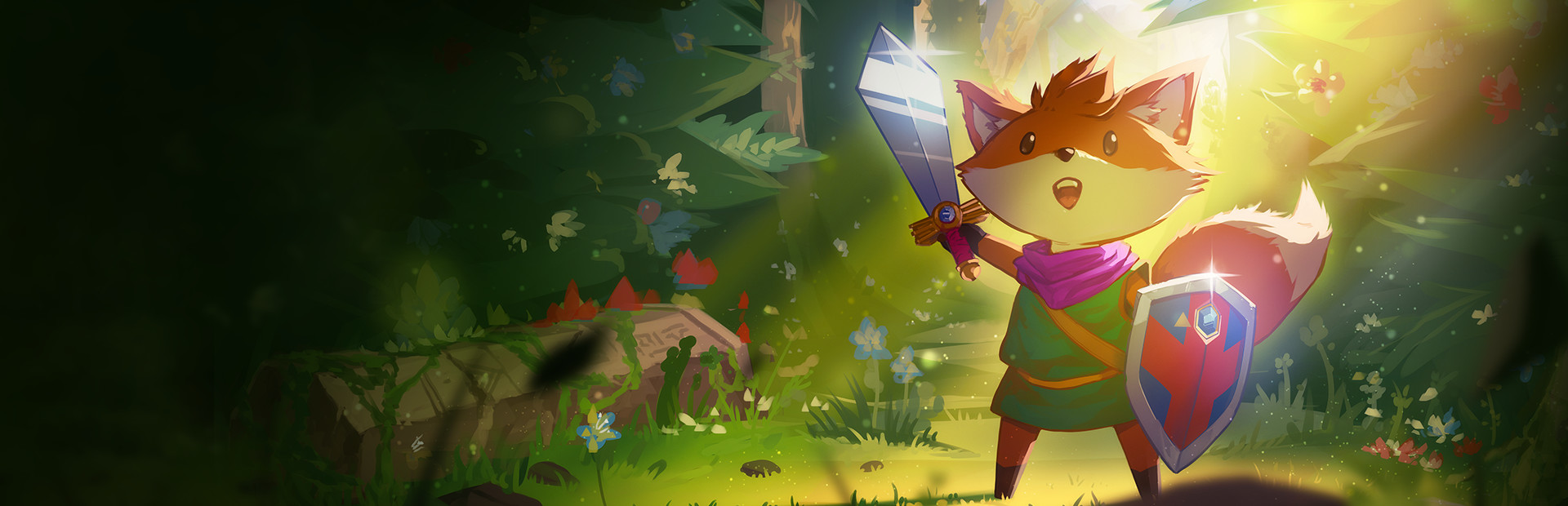
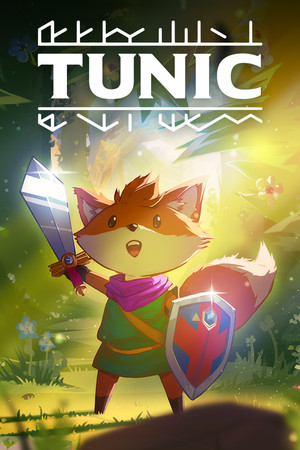
The store page sells a tiny fox in a green tunic wandering a pretty isometric world with a sword, and for the first ninety minutes that is precisely what you get. Then the hand comes off your shoulder and the thing turns into the most demanding comprehension puzzle I have played in years. The cuteness is honest. The gentleness is a bait. Most of the text in TUNIC is written in an invented alphabet you cannot read, and working out what the game is trying to tell you is not flavor, it is the actual progression system. I went in expecting a Zelda tribute with a mascot. I came out with three pages of handwritten notes and a diagram. The central conceit is the instruction manual. Scattered across the world are folded pages of a 1990s-style console booklet, illustrated, cross-referenced, hand-annotated, mostly in runes. Collecting them teaches you the game: that a dash exists, that you can hold attack for a heavier swing, that a mechanic you had no idea about has been available since the opening beach. Occasionally a scribbled arrow in a margin points at a spot on a map you walked past six hours earlier, and the resulting sprint back across the map is one of the best feelings in the medium. Progression here is knowledge, not stats. You do not get stronger so much as you get less ignorant. Fans of Outer Wilds will recognize the shape immediately, though this version has teeth. Combat is straight Souls grammar in miniature. Stamina bar, roll with invincibility frames, sword and shield, lock-on, checkpoint shrines that restore you and respawn everything, dropped currency you scramble back to recover. Offerings at those shrines let you raise attack, defense, stamina and magic, and the item kit (bombs, firecracker, a magic dagger, an ice wand, the lantern) opens routes as much as it wins fights. The Garden Knight is a wall for a lot of players, the Librarian is a genuine skill check, and the Siege Engine is where the fixed camera starts working against you rather than for you. Worth knowing before you commit: the accessibility menu includes a no-fail toggle, and I think using it is completely defensible. The puzzle layer is the real content, and gating it behind boss execution serves nobody who is here for the secrets. Where it disappoints depends on what you want from an adventure. That gorgeous fixed isometric angle deliberately conceals things, which is delightful when it hides a staircase and maddening when it hides the archer plinking you from off-screen. The late secret hunting, particularly the directional-input puzzles, slides from clever into obtuse, and I would be lying if I said the community had nothing to do with my clean run. And as the RPG person on this team, I have to flag the obvious: there is nobody to talk to. No dialogue trees, no companions, no branching arcs, no character who changes because of a choice you made. The worldbuilding is genuinely deep, told through ruins, environmental staging and that untranslated manual, but it is archaeology rather than drama. If your favorite part of an RPG is a well-written argument with a party member, this will feel cold. Build variety is thin by design, which matters less than it sounds because the mainline run lands around ten to twelve hours and the full completion, second ending included, runs past twenty. Nothing here has to hold up at hour forty. Structurally it sits between Death's Door and Fez, with the melee weight of the former and the secret-language obsession of the latter, and it commits harder to the second half than either. The Very Positive standing is deserved, and so is the specific shape of the complaints inside it. Play it undocumented, with a notebook, offline if you can manage the discipline. Look things up and you have not made it easier, you have removed the game. Monika, Scout Team

TUNIC

TUNIC

Mar 16, 2022TUNIC TeamFinji
GamerScout Says

A storybook fox adventure that quietly becomes a cryptic puzzle box about learning to read. Charming for the first two hours, genuinely demanding for the twenty after that.

PCXbox
Best Price Available
€3.92
at Kinguin
Lowest tracked: €3.89
Track this price

GamerScout Verdict

Best for players who keep a notebook and treat an unreadable manual as the reward rather than the obstacle.

Compare Prices(4 stores)

KinguinBest price
StandardGlobalSteam KeyKey
€3.92
Priced in EUR by the store
Buy
StandardGlobalSteam KeyKey
€3.99-86%
Priced in EUR by the store
Buy
StandardEurope (EU)Steam KeyKey
€4.17
Priced in EUR by the store
Buy
StandardEurope (EU)Steam KeyKey
€4.30-85%
Priced in EUR by the store
Buy
StandardGlobalGOG KeyKey
€17.49
Priced in EUR by the store
Buy
StandardEurope (EU)Steam KeyKey
€28.99
Priced in EUR by the store
Buy

Every store in this table quotes us in euros, so the EUR figure is the price the seller actually set, not our arithmetic — which is why EUR is also the currency we rank in. We only list an offer here when the store gives us its price in euros, so nothing in this table is a number we invented.

Pick USD, PLN, GBP, CAD or AUD in the header and we convert from EUR at the European Central Bank reference rate — converted amounts are prefixed with ~. Your bank or the store may apply a different rate at checkout. We never hide offers based on where you are: everyone sees this whole table.

We may earn a commission when you buy games through links on this page — at no extra cost to you. It never affects our rankings or verdicts.

Price History

Lowest tracked
€3.8925 Aug 2026
Current best
€3.92
Keyshops
€3.62€3.83€4.05€4.2625 Aug28 Aug1 Sept4 Sept7 Sept
Tracking prices since 25 Aug 2026
Create alert

Screenshots & Media

About TUNIC

The store page sells a tiny fox in a green tunic wandering a pretty isometric world with a sword, and for the first ninety minutes that is precisely what you get. Then the hand comes off your shoulder and the thing turns into the most demanding comprehension puzzle I have played in years. The cuteness is honest. The gentleness is a bait. Most of the text in TUNIC is written in an invented alphabet you cannot read, and working out what the game is trying to tell you is not flavor, it is the actual progression system. I went in expecting a Zelda tribute with a mascot. I came out with three pages of handwritten notes and a diagram. The central conceit is the instruction manual. Scattered across the world are folded pages of a 1990s-style console booklet, illustrated, cross-referenced, hand-annotated, mostly in runes. Collecting them teaches you the game: that a dash exists, that you can hold attack for a heavier swing, that a mechanic you had no idea about has been available since the opening beach. Occasionally a scribbled arrow in a margin points at a spot on a map you walked past six hours earlier, and the resulting sprint back across the map is one of the best feelings in the medium. Progression here is knowledge, not stats. You do not get stronger so much as you get less ignorant. Fans of Outer Wilds will recognize the shape immediately, though this version has teeth. Combat is straight Souls grammar in miniature. Stamina bar, roll with invincibility frames, sword and shield, lock-on, checkpoint shrines that restore you and respawn everything, dropped currency you scramble back to recover. Offerings at those shrines let you raise attack, defense, stamina and magic, and the item kit (bombs, firecracker, a magic dagger, an ice wand, the lantern) opens routes as much as it wins fights. The Garden Knight is a wall for a lot of players, the Librarian is a genuine skill check, and the Siege Engine is where the fixed camera starts working against you rather than for you. Worth knowing before you commit: the accessibility menu includes a no-fail toggle, and I think using it is completely defensible. The puzzle layer is the real content, and gating it behind boss execution serves nobody who is here for the secrets. Where it disappoints depends on what you want from an adventure. That gorgeous fixed isometric angle deliberately conceals things, which is delightful when it hides a staircase and maddening when it hides the archer plinking you from off-screen. The late secret hunting, particularly the directional-input puzzles, slides from clever into obtuse, and I would be lying if I said the community had nothing to do with my clean run. And as the RPG person on this team, I have to flag the obvious: there is nobody to talk to. No dialogue trees, no companions, no branching arcs, no character who changes because of a choice you made. The worldbuilding is genuinely deep, told through ruins, environmental staging and that untranslated manual, but it is archaeology rather than drama. If your favorite part of an RPG is a well-written argument with a party member, this will feel cold. Build variety is thin by design, which matters less than it sounds because the mainline run lands around ten to twelve hours and the full completion, second ending included, runs past twenty. Nothing here has to hold up at hour forty. Structurally it sits between Death's Door and Fez, with the melee weight of the former and the secret-language obsession of the latter, and it commits harder to the second half than either. The Very Positive standing is deserved, and so is the specific shape of the complaints inside it. Play it undocumented, with a notebook, offline if you can manage the discipline. Look things up and you have not made it easier, you have removed the game.

Monika
Monika · Scout Team

RPGs

Tags

auto-admittedZelda-likeKnowledge-as-ProgressionIn-Game ManualSecret HuntingStamina CombatIsometric ExplorationInvented LanguageNote-Taking PuzzlesMultiple EndingsAccessibility Toggles

System Requirements

Minimum

OS
Windows 10
Processor
Intel i5 Quad-Core, 2.7 GHz
Memory
8 GB RAM
Graphics
GTX 660 / RX 460
Storage
2 GB available space

Recommended

OS
Windows 10
Processor
Intel i5 Quad-Core, 3 GHz
Memory
8 GB RAM
Graphics
GTX 1080 Ti / RX Vega 64
Storage
2 GB available space

Keep exploring

Community Discussion

Be the first to comment on TUNIC.

Reviews & Ratings

Metacritic
85
Steam
91%(18,266)

Game Info

Developer
TUNIC Team
Publisher
Finji
Release Date
Mar 16, 2022

Features

Single-playerSteam AchievementsFull controller supportSteam CloudFamily Sharing

Price Alert

Get notified when the price drops below your target!

Create Alert
Best price€3.92
See offer

Across the 24,405 games we track, a verified key was cheaper than the official store 90% of the time. See the method and the full numbers in our game price report.

No card? Pay another way

Top up your Steam Wallet or buy crypto with any card — instant delivery, no bank account needed.

Buy smarter: helpful guides

TUNIC live on Twitch

Looking for more? See games like TUNIC →

Frequently asked questions about TUNIC

How much does TUNIC cost?

As of 7 September 2026, the cheapest in-stock offer for TUNIC is €3.92 at Kinguin, out of 8 live offers we track across verified key stores. Prices change daily — the table on this page is refreshed continuously.

Where can I buy TUNIC cheapest?

The lowest in-stock price we track for TUNIC is €3.92 at Kinguin (7 September 2026). We compare 8 live offers from verified key stores — the full table with every store and its trust score is on this page.

What platforms is TUNIC available on?

TUNIC is available on PC, Xbox.

When was TUNIC released?

TUNIC was released on 16 March 2022.

Who developed TUNIC?

TUNIC was developed by TUNIC Team and published by Finji.

Is TUNIC worth buying?

TUNIC holds a Metacritic score of 85/100, making it one of the standout Action titles. See the full reviews, ratings and how-long-to-beat times on this page to decide.