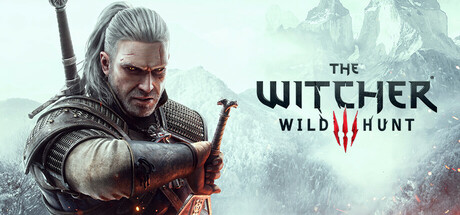
The Witcher 3: Wild Hunt
Somewhere between hour three and hour thirty, Geralt's search for Ciri quietly becomes the best argument for story-driven RPGs ever committed to a hard drive. Clear your calendar before you install.
GamerScout Verdict
9.3/10The benchmark open-world RPG for anyone who cares about writing and choices mattering, even if combat takes a few hours to click.
Compare Prices(5 stores)
Every store in this table quotes us in euros, so the EUR figure is the price the seller actually set, not our arithmetic — which is why EUR is also the currency we rank in. We only list an offer here when the store gives us its price in euros, so nothing in this table is a number we invented.
Pick USD, PLN, GBP, CAD or AUD in the header and we convert from EUR at the European Central Bank reference rate — converted amounts are prefixed with ~. Your bank or the store may apply a different rate at checkout. We never hide offers based on where you are: everyone sees this whole table.
We may earn a commission when you buy games through links on this page — at no extra cost to you. It never affects our rankings or verdicts.
Price History
Screenshots & Media
About The Witcher 3: Wild Hunt
I have put well over a hundred hours into The Witcher 3: Wild Hunt across multiple playthroughs and I still find new dialogue branches, new wrinkles in the morality of a contract, new reasons to resent the Skellige Smuggler's Caches. That kind of density is not an accident. CD Projekt Red built a world rooted in Andrzej Sapkowski's Slavic-flavored fantasy fiction, and they did not let go of the source material's willingness to be genuinely bleak. War-scorched Velen, the sprawling criminal politics of Novigrad, the Viking-adjacent islands of Skellige, and the sun-drenched vineyards of Toussaint (in the Blood and Wine expansion) each feel like distinct, lived-in countries rather than reskinned biome zones. The combat works on a satisfying triangle of steel sword for humans, silver for monsters, five castable Signs (Quen for shielding, Igni for fire, Aard for knockback, Axii for crowd control, Yrden for traps), alchemical potions, and monster-specific bomb types like Grapeshot or Dancing Star. The next-gen update added Quick Sign Casting, letting you switch and fire Signs without ever touching a radial menu, which makes fights against wraiths, griffins, and higher vampires feel genuinely fluid once the muscle memory locks in. Build variety is real but not infinite: combat, Alchemy, and Signs trees each support distinct playstyles, and a well-cooked Alchemy build that stacks Euphoria and resurrects on adrenaline is as close to breaking the game as it gets. Critics who call the combat clunky are not entirely wrong about early hours, but the ceiling is much higher than the floor suggests. The writing is where Wild Hunt separates itself from the pack. Almost every quest, including the side contracts, carries the weight of actual consequence. You investigate a haunting, reconstruct events using Geralt's Witcher Senses, and arrive at a decision that the game refuses to resolve cleanly. The central story driving Geralt toward Ciri threads political intrigue, a trans-dimensional apocalypse, and a quietly devastating father-daughter relationship across roughly fifty main-story hours. Multiple endings branch from choices scattered across questlines hours before the finale, so the game rewards players who read every dialogue option, and gently punishes those who skip cutscenes to get to the next question mark on the map. Gwent, the in-game card game, is either a beloved obsession or a very loud sideshow depending on your tolerance for collectible minigames. The honest criticisms are worth naming. The first ten hours move slowly and the tutorial hand-holding is light, which filters out players who want combat to feel responsive from minute one. Enemy level scaling is inconsistent enough that completionists will outpace the main story and trivialize late encounters. The map question marks in Skellige are relentless padding, the kind of filler content that makes me wince for what those development hours could have built instead. Controller feel, especially on older versions before the next-gen patch brought Quick Sign Casting and the closer camera option, divided players sharply. On PC with mods, these friction points nearly vanish; on console, they remain a real consideration. What tips the scale is that the side quests here are better written than most games' main stories. A questline about a cursed village baron, a search for an old friend through a burning orphanage, a werewolf mystery with no clean resolution: these are the moments players cite a decade later. The two paid expansions, Hearts of Stone and Blood and Wine, add another forty-plus hours and are widely regarded as among the best expansion content ever shipped for any RPG. CD Projekt Red also released the REDkit modding tool post-launch, meaning the community now has the means to build new quests and campaigns directly into the game's engine, extending its lifespan well beyond what the base content provides.

RPGs
Tags
System Requirements
Minimum
- Processor
- Intel CPU Core i5-2500K 3.3GHz / AMD A10-5800K APU (3.8GHz)
- Memory
- 6 GB RAM
- Graphics
- Nvidia GPU GeForce GTX 660 / AMD GPU Radeon HD 7870 DirectX…
Recommended
- OS
- 64-bit Windows 10/11
- Processor
- Intel Core i5-7400 / Ryzen 5 1600
- Memory
- 8 GB RAM
- Graphics
- Nvidia GTX 1070 / Radeon RX 480
- DirectX
- Version 12
- Storage
- 50 GB available space
DLC & Add-ons for The Witcher 3: Wild Hunt2
Expansions, DLC packs and add-on content for this game. Click any item to see store offers.
Keep exploring
Community Discussion
Be the first to comment on The Witcher 3: Wild Hunt.
Reviews & Ratings
How Long to Beat
Game Info
- Developer
- CD Projekt Red
- Publisher
- CD Projekt
- Release Date
- May 19, 2015
- Age Rating
- PEGI 18M
![✨FIRST Playthru Cont. [Death March] ✨ || !chaiclaimer [18+]](https://static-cdn.jtvnw.net/previews-ttv/live_user_thechachachai-440x248.jpg)

![Isekai-ing my brain within the world of... [ The Witcher 3]](https://static-cdn.jtvnw.net/previews-ttv/live_user_satohirai-440x248.jpg)