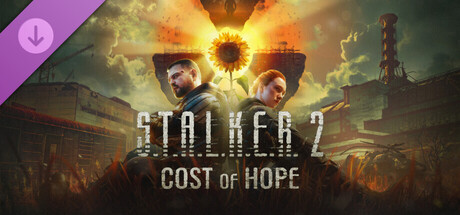
S.T.A.L.K.E.R. 2: Cost of Hope
Come for a Zone that never notices you, not for a skill tree. A nonlinear survival trek where hoarding gets you killed and the best stories arrive with no quest marker on screen.
GamerScout Verdict
For survival-sim veterans who want atmosphere over build-craft. RPG players chasing skill trees and respecs should skip it.
Compare Prices(4 stores)
Every store in this table quotes us in euros, so the EUR figure is the price the seller actually set, not our arithmetic — which is why EUR is also the currency we rank in. We only list an offer here when the store gives us its price in euros, so nothing in this table is a number we invented.
Pick USD, PLN, GBP, CAD or AUD in the header and we convert from EUR at the European Central Bank reference rate — converted amounts are prefixed with ~. Your bank or the store may apply a different rate at checkout. We never hide offers based on where you are: everyone sees this whole table.
We may earn a commission when you buy games through links on this page — at no extra cost to you. It never affects our rankings or verdicts.
Price History
Screenshots & Media
About S.T.A.L.K.E.R. 2: Cost of Hope
This one is for players who want a world that does not care whether they show up, and it is not for RPG readers like me who arrive expecting a skill tree to solve their problems. GSC Game World shipped this follow-up in August 2026 on PC, and the first thing it does is take away the crutches I lean on in a normal RPG. There is no respec screen to fix a bad hour. There is no build that turns a firefight into a formality. What you get instead is a nonlinear expedition into the Zone where preparation, route choice and whatever you decided to leave behind in a stash matter far more than any number on a character sheet. Steam sits at Very Positive across roughly a thousand reviews, and having played it I understand both the enthusiasm and the eighteen percent who bounced off hard. The loop is survival sim first, adventure second. You pick a direction, you carry what your back can handle, and you accept that the walk back out is the difficult half. Artifact hunting is the clearest example of how the game thinks: the valuable things sit inside anomalies that will happily kill you for a sloppy approach, and extracting one means burning consumables, tolerating radiation and reading terrain instead of a waypoint. Weapon degradation is the other pressure valve. Guns wear down fast enough that it changed how I fight, pushing me toward short bursts and scavenged replacements rather than babying one beloved rifle across the whole map. Hoarding, my default sin in any game with an inventory grid, gets punished directly. Weight slows you, slow gets you shot, and the stash you fill obsessively is always a long walk from wherever the interesting trouble is. Where it genuinely won me over is writing that never announces itself. Ambient storytelling here means a camp with three bedrolls and two bodies, a note that only lands once you have met the person who wrote it, a radio exchange you catch half of while crouched in a ditch. Faction politics work the same way. Allegiances shift based on who you helped, who you shot at, and who happened to see it, and the moral ambiguity is real in the sense that most decisions are between two defensible bad options rather than a paragon button and a renegade button. I care enormously about whether choices matter, and they do, though not in the CRPG ledger sense of an epilogue slideshow tallying your impact. The consequence shows up as which roads are survivable next week. The disappointments deserve naming. Build variety is thin, which for something tagged RPG is what I would flag hardest. Progression is gear and player knowledge, not character identity, so the fantasy of a radically different second run is mostly cosmetic. Some of the connective tissue between regions is padding, long crossings through territory you already cleared, and the game leans on repeated ambushes to make empty ground feel threatening. That is filler wearing a gas mask. The mid-game also sags into an economy chore where a real chunk of your hours goes to hauling salvage to fund repairs, and I would trade several of those runs for one more hand-authored encounter. It is single-player only and PC only, with Steam Workshop support that will almost certainly sand down some of these edges within a year. Who should pick it up: anyone who wants an open world that treats a twenty minute walk as actual content rather than a loading screen with grass, and who reads environments the way I read dialogue trees. Who should walk away: players who want dragons, respecs, companion romances and a party to bicker with. Full controller and DualSense support, achievements, cloud saves and HDR are all present, so the hardware side is unfussy. Bring patience and a tolerance for losing an hour to your own bad routing, and the Zone will hand you stories no quest designer wrote for you.

RPGs
Tags
System Requirements
Minimum
Requires a 64-bit processor and operating system
Recommended
Requires a 64-bit processor and operating system
Keep exploring
Community Discussion
Be the first to comment on S.T.A.L.K.E.R. 2: Cost of Hope.
Reviews & Ratings
Game Info
- Developer
- GSC Game World
- Publisher
- GSC Game World
- Release Date
- Aug 20, 2026