
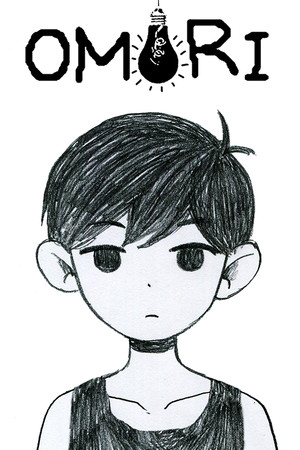
OMORI
Pastel sketchbook exteriors hiding a gut-punch story about grief, guilt, and four years of a locked bedroom door. One of the rare indie RPGs where the mechanics and the narrative are actually saying the same thing.
GamerScout Verdict
8.7/10Essential for story-first RPG fans who can endure pacing dips; skip if you need mechanical depth to stay engaged past hour 10.
Compare Prices(3 stores)
Every store in this table quotes us in euros, so the EUR figure is the price the seller actually set, not our arithmetic — which is why EUR is also the currency we rank in. We only list an offer here when the store gives us its price in euros, so nothing in this table is a number we invented.
Pick USD, PLN, GBP, CAD or AUD in the header and we convert from EUR at the European Central Bank reference rate — converted amounts are prefixed with ~. Your bank or the store may apply a different rate at checkout. We never hide offers based on where you are: everyone sees this whole table.
We may earn a commission when you buy games through links on this page — at no extra cost to you. It never affects our rankings or verdicts.
Price History
Screenshots & Media
About OMORI
I went into OMORI expecting something in the Undertale lane: charming pixel art, quirky humor, a light emotional undercurrent. What I did not expect was to sit motionless after the credits with that specific kind of hollowness you get when a story has genuinely rearranged something inside you. The game is that effective, and it earns it, mostly. The structure splits between two worlds. In Headspace, you play as Omori alongside friends Kel, Aubrey, and Hero, working through a pastel dream-logic landscape to find a missing Basil. In the waking world, a shut-in named Sunny has three days before he moves away, and old friends keep knocking on his door. The split is not just a narrative device. The Headspace is colorful, full of strange side quests, and functions as the RPG half of the experience. The real world is quiet, grounded, and almost entirely free of combat. Neither half makes complete sense without the other, and that deliberate gap is where the writing lives. The game has two full routes and several endings hinging on a decision that barely announces itself: whether Sunny opens the door when Kel knocks. Choices accumulate quietly. Watering Basil's flowers in Headspace, which looks like optional busywork, changes what happens at the very end. That design philosophy, asking players to act without explaining why it matters, mirrors how Sunny himself moves through his own story. The combat system deserves its own paragraph because it is smarter than it first appears. Battles use a four-person turn-based party with a rock-paper-scissors emotion triangle at its core: Happy beats Angry, Angry beats Sad, Sad beats Happy. Each party member has a dedicated emotion-inflicting role: Kel inflicts Angry, Aubrey inflicts Happy, Omori inflicts Sad. Emotions can stack up to three tiers, escalating from Angry to Enraged to Furious, with increasing stat shifts and vulnerabilities. Aubrey's Headbutt skill and Omori's Vertigo interact directly with the emotion state of the target, which means you are actively managing emotional triangles mid-fight rather than just pressing Attack. A shared Energy bar fills as characters take damage, enabling follow-up moves unique to each character and a full Energy Release when it maxes out. Boss fights like Space Ex-Boyfriend and the Sweetheart use the tier system as phase transitions, forcing mid-fight strategy pivots. It is not a deep combat system by JRPG standards, but it is coherent and thematically loaded in a way that few games manage. The honest caveat: OMORI's weaknesses all cluster in the same place. Random encounters drain their welcome fast once you pass around level 15, with common enemies offering little reward or challenge past that threshold. Several dungeon sections run noticeably long relative to the emotional payoff they deliver, and the overworld traversal abilities for each character, Omori cutting things, Aubrey smashing things, Hero smooth-talking NPCs, never evolve past their introduction. The pacing issues are real. Some players have bounced off the game during the Sweetheart's Castle section specifically, which is also the widest gap between emotional peaks. If you are the kind of player who values mechanical density and will tune out a story that asks for patience, OMORI will frustrate you. The game knows its best asset is its atmosphere and narrative, and the stretches where it forgets that and leans on dungeon padding lose their grip accordingly. For everyone else, specifically anyone who responds to games that use their mechanics as metaphor, who cared about the Undertale kids or has ever opened Disco Elysium's thought cabinet just to read the flavor text, OMORI is a serious investment that pays a serious return. The 179-track soundtrack does things with recurring motifs that most composers chase their whole careers. The sketchbook cutscene art shifts registers from warm to deeply unsettling in the same visual language. The content warnings for depression and suicide are genuine, not decorative, and the game handles those themes with more craft than the genre average. A mainline playthrough lands around 20-25 hours. A thorough run, with the Hikikomori route, hidden boss fights including a random tree that is secretly a boss, and all endings, can stretch past 40. The extra time is for people who want to be thorough. The credits-roll moment lands on any route.

RPGs
Tags
System Requirements
Minimum
- Processor
- Intel N4100 (or similar) or better
- Memory
- 4 GB RAM
- Graphics
- DirectX 9/OpenGL 4.1 capable GPU
- DirectX
- Version 9.0c
- Storage
- 2 GB available space
Recommended
- OS
- Microsoft Windows 10 (32bit/64bit)
- Processor
- Intel Core i3-6100 or better
- Memory
- 8 GB RAM
- Graphics
- OpenGL ES 2.0 hardware driver support required…
Keep exploring
Community Discussion
Be the first to comment on OMORI.
Reviews & Ratings
Game Info
- Developer
- OMOCAT, LLC
- Publisher
- OMOCAT, LLC
- Release Date
- Dec 25, 2020


