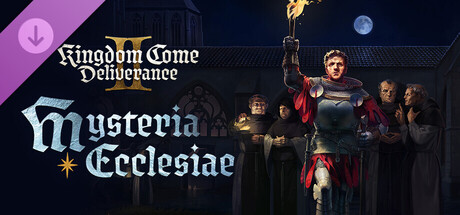
Kingdom Come: Deliverance II Mysteria Ecclesiae
Warhorse locks Henry inside a quarantined monastery and strips him of his sword for 6-12 hours of plague-tinged detective work. Stealth and alchemy builds will thrive; combat mains will sulk.
GamerScout Verdict
Essential for KCD2 narrative fans and stealth builds; a frustrating detour if your entire build is plate armor and aggression.
Compare Prices(3 stores)
Every store in this table quotes us in euros, so the EUR figure is the price the seller actually set, not our arithmetic — which is why EUR is also the currency we rank in. We only list an offer here when the store gives us its price in euros, so nothing in this table is a number we invented.
Pick USD, PLN, GBP, CAD or AUD in the header and we convert from EUR at the European Central Bank reference rate — converted amounts are prefixed with ~. Your bank or the store may apply a different rate at checkout. We never hide offers based on where you are: everyone sees this whole table.
We may earn a commission when you buy games through links on this page — at no extra cost to you. It never affects our rankings or verdicts.
Price History
Screenshots & Media
About Kingdom Come: Deliverance II Mysteria Ecclesiae
I went into Mysteria Ecclesiae expecting another rollicking Bohemian adventure and instead got a chamber mystery that smells of incense, paranoia, and medicinal herbs. That pivot is deliberate, and largely it works. Warhorse confiscates Henry's armor and weapons at the monastery gate, cuts off access to his horse and personal storage, and then imposes a curfew that tightens into a full quarantine as the story escalates. Suddenly, the same character I spent sixty-plus hours turning into an armored bruiser is scrounging for an improvised lockpick and sweet-talking terrified monks. That forced regression stings at first and then, quietly, becomes the whole point. The investigation mechanics lean on three pillars: dialogue-driven deduction, stealth exploration of restricted zones, and alchemy. Henry works alongside Sigismund Albicus, a physician with politically inconvenient ties to the deposed King Wenceslas, and together they pry confessions out of a monastery full of suspects who all have something to hide. Persuasion checks genuinely matter here. If you arrive with a silver-tongued Henry, conversations open up in ways that a brawler build simply cannot access. Lockpicking gets a quiet workout too, from a locked cemetery gate that separates the desperate from the well-prepared to off-limits scriptoria stuffed with incriminating manuscripts. Alchemy is less prominent but crops up when you need to keep the physician supplied and when a well-brewed tonic becomes more valuable than any sword you left at the gate. The DLC adds no new mechanics to KCD2's existing systems, which is a fair criticism, but the existing systems were good enough that the monastery setting finds fresh angles in them rather than just retreading familiar ground. The writing is the clearest reason to play this. Sedletz Monastery functions as a closed-room mystery with a cast of monks, novices, and visiting nobles who each carry a secret worth uncovering. The dialogue hits the same register of dry medieval wit and genuine human weight that made the base game so rewarding to read carefully. Side conversations reward the curious: stumble on monks playing dice in the cellar, piece together a grief subplot buried in an unremarkable room, find a nod to earlier quests in an easily missed corner of the graveyard. Choices carry real consequences too. A single misjudged conversation can lock an outcome, and the final quest branches into two distinct endings depending on the decisions you made across the whole arc. It is not a sprawling branching tree, but it is more consequential than most DLC wrap-ups bother to be. The mixed Steam score deserves context. Players who came for combat will bounce off this fast. Henry spends most of the runtime unarmed or equipped with something embarrassing, and the handful of fights that do occur feel deliberately uncomfortable, which is the narrative intent but a genuine frustration for anyone who built a melee tank. The location also functions as a self-contained loaded area, meaning the isolation from Kuttenberg and the wider world is total. For players who loved the monastery chapter in the original Kingdom Come: Deliverance, that claustrophobia is a selling point. For players who preferred the open roads of KCD2, it reads as restrictive. Neither reaction is wrong. Mysteria Ecclesiae also introduces no new gameplay systems, and the loot rewards are modest for the runtime, which is a reasonable gripe if you measure DLC by mechanical output rather than narrative density. If you are the kind of player who tracks every dialogue option to see what it unlocks, who actually reads the alchemical recipes, and who found the monastery section of the first game quietly compelling rather than maddening, this is the KCD2 farewell you wanted. If your Henry is a combat-specced wall of plate armor, come prepared for a different kind of challenge, or consider finishing this before you over-level into invincibility. Either way, Sedletz Monastery is beautifully realized and the story it tells, small in scope and quietly melancholic in tone, lands better than many games manage with triple the budget.

RPGs
Tags
System Requirements
Minimum
Requires a 64-bit processor and operating system
Recommended
Requires a 64-bit processor and operating system
Keep exploring
Community Discussion
Be the first to comment on Kingdom Come: Deliverance II Mysteria Ecclesiae.
Reviews & Ratings
Game Info
- Developer
- Warhorse Studios
- Publisher
- Warhorse Studios, Deep Silver
- Release Date
- Nov 11, 2025