Gloomhaven - Solo Scenarios: Mercenary Challenges
Two cards a turn, no undo button, and a hand of cards that doubles as your health bar. The first hour bounces people. Hour forty is the sharpest tactical puzzle box on PC.
GamerScout Verdict
Best for tactics players who want combat as a solvable puzzle, not a dice roll, and can forgive thin storytelling.
Compare Prices(2 stores)
Every store in this table quotes us in euros, so the EUR figure is the price the seller actually set, not our arithmetic — which is why EUR is also the currency we rank in. We only list an offer here when the store gives us its price in euros, so nothing in this table is a number we invented.
Pick USD, PLN, GBP, CAD or AUD in the header and we convert from EUR at the European Central Bank reference rate — converted amounts are prefixed with ~. Your bank or the store may apply a different rate at checkout. We never hide offers based on where you are: everyone sees this whole table.
We may earn a commission when you buy games through links on this page — at no extra cost to you. It never affects our rankings or verdicts.
Screenshots & Media
About Gloomhaven - Solo Scenarios: Mercenary Challenges
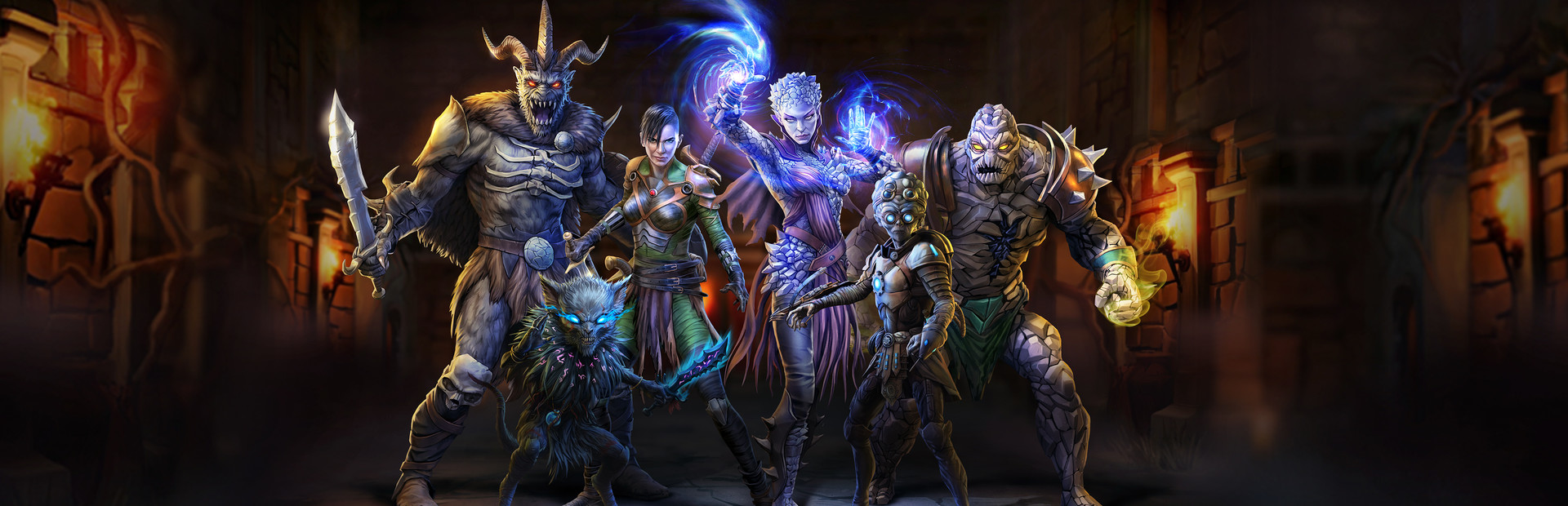
My first hour with Gloomhaven was mostly quiet panic, and I say that as someone who reads tooltips for fun. You get two cards per turn, a top action from one and a bottom action from the other, and whichever card you lead with also decides where you sit in the turn order. There is no undo. Worse, the hand you are holding is also your health bar, so every wound and every burned card is time being scraped off your clock in that room. If you arrived from RPGs where you mash abilities off a hotbar, this feels like being handed a chess clock and a rulebook in a language you only half remember. Push through it anyway. Somewhere in the third or fourth scenario the fog lifts and you see the machine underneath, and it is a mean, elegant thing. What makes it click is that the monsters do not cheat and they do not improvise. Enemy behavior is deterministic, driven by readable rules about who they focus and how they move, which means a turn is not a prayer to the dice gods. It is a solvable problem. You count hexes, you work out who will be standing where when initiative resolves, you decide whether to eat six damage now to set up a two-target sweep later. Combat on the grid stops being about damage numbers and starts being about tempo and attrition. The tension is never "will I win this fight", it is "can I win it before my hand runs dry", and that reframing is the single best thing about the design. Losing a scenario rarely feels unfair. It usually feels like you spent a card on turn two that you needed on turn nine. The RPG layer is where I expected to be disappointed and mostly was not. Mercenaries level up, take perks that reshape their odds, and eventually retire, which unlocks new classes with genuinely different verbs rather than the same kit in a new hat. That retirement loop is the closest thing here to a character arc, and mechanically it works beautifully: you are constantly rebuilding a party rather than babysitting one optimized brick for eighty hours. Build variety holds up well past hour forty because the classes are not balanced along a single power axis. Some want you standing in the middle of everything, some fall over if a skeleton breathes on them, and figuring out which cards to leave out of a hand is as much of a build decision as which to put in. There is also an online co-op campaign and a scenario editor with Workshop support, so the tail end of this thing is longer than most tactics games manage. Now the parts that annoyed me. The writing is functional and no more. Scenario intros and branching events deliver flavor and a bit of choice, but nobody in this mercenary company has an interior life worth quoting back at you, and I say that as the person on this team who will happily recite dialogue at a stranger. If you want prose that rewards a second read, this is not the shelf. There is repetition, too: retrying a scenario means replaying the whole setup, and the events you draw between missions start rhyming with each other before the campaign is done. The presentation carries a board game's pacing, which means turns can crawl when you are watching enemy activations resolve one at a time. The solo mercenary challenges are the sharpest expression of the whole design, single-character puzzle boxes that will expose exactly which parts of a class you never understood, but they are also the most brutal on-ramp imaginable if you try them before the systems have settled in your head. So: this is for tactics players, board game converts, and anyone who wants an RPG where the interesting decisions happen on the grid instead of in a dialogue tree. It is not for people who want a story to carry them, and it is genuinely not for people who bounce off rules text. Very Positive across sixteen thousand reviews and an 82 on Metacritic tracks with my experience, including the 18 percent who hit that first hour and understandably walked. Give it three scenarios before you decide. That is the honest ask.

RPGs
Tags
System Requirements
Minimum
- OS
- Win 10 64bits
- Processor
- Intel Core i5-3470, AMD Ryzen 3 1200, or above
- Memory
- 8 GB RAM
- Graphics
- GeForce GTX 760, Radeon R9 280, or above
- DirectX
- Ver…
Recommended
- OS
- Win 10 64bits
- Processor
- Intel Core i5-11400, AMD Ryzen 5 3600, or above
- Memory
- 16 GB RAM
- Graphics
- GeForce GTX 1070, Radeon RX Vega 64, or above D…
Keep exploring
Community Discussion
Be the first to comment on Gloomhaven - Solo Scenarios: Mercenary Challenges.
Reviews & Ratings
Game Info
- Developer
- Flaming Fowl Studios, Saber Interactive
- Publisher
- Twin Sails Interactive
- Release Date
- Oct 20, 2021