Compare Fallout: A Post Nuclear Role Playing Game prices across trusted key stores and find the best deal. Developed by Interplay Inc.. Published by Bethesda Softworks. Released on 11/1/2015. Available on PC. Genres: RPG. Metacritic score: 89/100.

The original wasteland RPG that broke the genre open in 1997 still holds up as a masterclass in player agency, branching dialogue, and choices that carry real weight, if you can forgive a UI that predates modern hand-holding.

I have a ritual with old CRPGs: play them without a wiki on the first run and see how long before the game humbles me. Fallout humbled me inside twenty minutes, and I loved every second of it. This is the isometric, turn-based RPG that effectively rebuilt the genre in the late 1990s, and playing it today still feels less like a museum visit and more like a reminder of what modern RPGs occasionally forget to do. You build a Vault Dweller using the SPECIAL system (Strength, Perception, Endurance, Charisma, Intelligence, Agility, Luck), tag three skills at character creation, and pick a set of traits that will define your entire approach to the wasteland. A high-Intelligence character opens up dialogue branches and skill point gains that a low-Int bruiser simply cannot touch. Conversely, drop your Intelligence low enough and NPCs will literally refuse to hold a conversation with you, which is still the single most committed piece of mechanical roleplay I have seen in any game I have covered for this team. The main quest gives you a ticking clock (150 in-game days to find a water chip for Vault 13), and that structure does double duty: it creates genuine urgency while still leaving enough breathing room to wander into Junktown, the Hub, Necropolis, and the Cathedral at your own pace. What the game nails, and what so many successors fumble, is that almost every objective has multiple resolution paths. Speech, lockpick, science, energy weapons, unarmed brawling, or plain old brute-force small guns all route through the same problems differently. You can speech-check your way past the main antagonist, or walk up to a raider camp with maxed Charisma and just talk a kidnap victim free. The game does not broadcast these options with quest markers or tooltip popups. You find them by reading dialogue carefully and experimenting, which is either the best thing about it or the first frustration, depending on your patience. There are real warts. Companion AI is effectively non-existent; Ian will cheerfully blast you in the back with his sub-machinegun during turn-based combat, and you have zero direct control over him. The UI is legitimately archaic, small item sprites blend into environments, and there is no in-game quest log worth trusting. Vanilla bug reports around the Boneyard area are well-documented, and first-time players will almost certainly want the fan-made restoration patches available in the community. The turn-based combat runs on action points and body-part targeting through the V.A.T.S. predecessor, which is satisfying in a statistical-crunch way once the system clicks, but dice-roll critical hits from random enemies can one-shot characters with no counterplay. Save often and manually. For players arriving here from the Bethesda-era games looking for the "real" Fallout, the tonal and structural shift is significant. This is not an open-world shooter. It is a compact, deliberately written RPG with roughly 12 major locations, a playtime that lands somewhere between 15 and 30 hours depending on how deeply you dig into side content, and an ending that wraps up in ways that still land a narrative punch nearly three decades later. Replayability is genuine: a pacifist Speech-and-Charisma build plays almost like a different game from a Sniper or an Energy Weapons specialist. Build variety does not overstay its welcome past the credits, but for a game this age and this size, it earns the multiple runs it invites. Monika, Scout Team

Fallout: A Post Nuclear Role Playing Game

Fallout: A Post Nuclear Role Playing Game

Nov 1, 2015Interplay Inc.Bethesda Softworks
GamerScout Says

The original wasteland RPG that broke the genre open in 1997 still holds up as a masterclass in player agency, branching dialogue, and choices that carry real weight, if you can forgive a UI that predates modern hand-holding.

PC
Steam Deck PlayableProtonDB Gold
Best Price Available
€0.00
at N/A
Historical low: €1.91

Compare Prices(0 stores)

Loading prices...

We may earn a commission when you buy games through links on this page — at no extra cost to you. It never affects our rankings or verdicts.

Price History

Historical low
€1.9126 Jun 2026
Keyshops
€1.79€1.90€2.00€2.115 Jun12 Jun19 Jun25 Jun2 Jul
Tracking prices since 5 Jun 2026
Create alert

Screenshots & Media

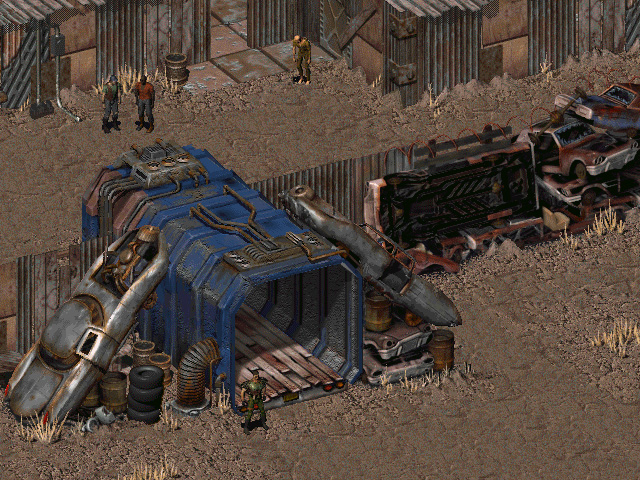
Screenshot

About Fallout: A Post Nuclear Role Playing Game

I have a ritual with old CRPGs: play them without a wiki on the first run and see how long before the game humbles me. Fallout humbled me inside twenty minutes, and I loved every second of it. This is the isometric, turn-based RPG that effectively rebuilt the genre in the late 1990s, and playing it today still feels less like a museum visit and more like a reminder of what modern RPGs occasionally forget to do. You build a Vault Dweller using the SPECIAL system (Strength, Perception, Endurance, Charisma, Intelligence, Agility, Luck), tag three skills at character creation, and pick a set of traits that will define your entire approach to the wasteland. A high-Intelligence character opens up dialogue branches and skill point gains that a low-Int bruiser simply cannot touch. Conversely, drop your Intelligence low enough and NPCs will literally refuse to hold a conversation with you, which is still the single most committed piece of mechanical roleplay I have seen in any game I have covered for this team. The main quest gives you a ticking clock (150 in-game days to find a water chip for Vault 13), and that structure does double duty: it creates genuine urgency while still leaving enough breathing room to wander into Junktown, the Hub, Necropolis, and the Cathedral at your own pace. What the game nails, and what so many successors fumble, is that almost every objective has multiple resolution paths. Speech, lockpick, science, energy weapons, unarmed brawling, or plain old brute-force small guns all route through the same problems differently. You can speech-check your way past the main antagonist, or walk up to a raider camp with maxed Charisma and just talk a kidnap victim free. The game does not broadcast these options with quest markers or tooltip popups. You find them by reading dialogue carefully and experimenting, which is either the best thing about it or the first frustration, depending on your patience. There are real warts. Companion AI is effectively non-existent; Ian will cheerfully blast you in the back with his sub-machinegun during turn-based combat, and you have zero direct control over him. The UI is legitimately archaic, small item sprites blend into environments, and there is no in-game quest log worth trusting. Vanilla bug reports around the Boneyard area are well-documented, and first-time players will almost certainly want the fan-made restoration patches available in the community. The turn-based combat runs on action points and body-part targeting through the V.A.T.S. predecessor, which is satisfying in a statistical-crunch way once the system clicks, but dice-roll critical hits from random enemies can one-shot characters with no counterplay. Save often and manually. For players arriving here from the Bethesda-era games looking for the "real" Fallout, the tonal and structural shift is significant. This is not an open-world shooter. It is a compact, deliberately written RPG with roughly 12 major locations, a playtime that lands somewhere between 15 and 30 hours depending on how deeply you dig into side content, and an ending that wraps up in ways that still land a narrative punch nearly three decades later. Replayability is genuine: a pacifist Speech-and-Charisma build plays almost like a different game from a Sniper or an Energy Weapons specialist. Build variety does not overstay its welcome past the credits, but for a game this age and this size, it earns the multiple runs it invites.

Monika
Monika · Scout Team

RPGs

Tags

Single-playerSteam CloudFamily SharingTurn-Based CombatSPECIAL SystemMulti-Path QuestsIsometric RPGMeaningful ChoicesNo Quest MarkersPacifist Build ViableTimed Main QuestClassic CRPG

System Requirements

Minimum

Processor
Pentium 90Mhz or faster
Memory
16 MB
Graphics
SVGA DirectX®: Any DirectX Hard Drive: 565 MB Sound: DirectSound or SoundBlaster Compatible

Keep exploring

Community Discussion

Be the first to comment on Fallout: A Post Nuclear Role Playing Game.

Reviews & Ratings

Metacritic
89
Steam
94%(24,738)

Game Info

Developer
Interplay Inc.
Publisher
Bethesda Softworks
Release Date
Nov 1, 2015
Age Rating
PEGI 15

Game Modes

singleplayer

Languages

Subtitles (4)
EnglishFrenchGermanSpanish - Spain

Features

Cloud Saves

Price Alert

Get notified when the price drops below your target!

Create Alert

No card? Pay another way

Top up your Steam Wallet or buy crypto with any card — instant delivery, no bank account needed.

Buy smarter: helpful guides

Fallout: A Post Nuclear Role Playing Game live on Twitch

Looking for more? See games like Fallout: A Post Nuclear Role Playing Game →

Frequently asked questions about Fallout: A Post Nuclear Role Playing Game

How much does Fallout: A Post Nuclear Role Playing Game cost?

Fallout: A Post Nuclear Role Playing Game pricing changes often and varies by store, edition and region. The live price table on this page compares the cheapest in-stock offers from trusted key stores like Eneba and Kinguin, so you always see the current lowest price before you buy.

Where can I buy Fallout: A Post Nuclear Role Playing Game cheapest?

Compare Fallout: A Post Nuclear Role Playing Game prices across every verified store in the price table on this page. We list the cheapest in-stock key and store offers, updated regularly, so you always see the best current deal before you buy.

What platforms is Fallout: A Post Nuclear Role Playing Game available on?

Fallout: A Post Nuclear Role Playing Game is available on PC.

When was Fallout: A Post Nuclear Role Playing Game released?

Fallout: A Post Nuclear Role Playing Game was released on 1 November 2015.

Who developed Fallout: A Post Nuclear Role Playing Game?

Fallout: A Post Nuclear Role Playing Game was developed by Interplay Inc. and published by Bethesda Softworks.

Is Fallout: A Post Nuclear Role Playing Game worth buying?

Fallout: A Post Nuclear Role Playing Game holds a Metacritic score of 89/100, making it one of the standout RPG titles. See the full reviews, ratings and how-long-to-beat times on this page to decide.