Empire of Sin - Hunt For Aurora
Push past a genuinely rough first hour and there is a sharp Prohibition racket sim underneath. The turn-based shootouts bolted onto it never earn their screen time.
GamerScout Verdict
For players who want a bootlegging economy to run, not a tactics game to master. Skip it if the firefights are your draw.
Compare Prices(2 stores)
Every store in this table quotes us in euros, so the EUR figure is the price the seller actually set, not our arithmetic — which is why EUR is also the currency we rank in. We only list an offer here when the store gives us its price in euros, so nothing in this table is a number we invented.
Pick USD, PLN, GBP, CAD or AUD in the header and we convert from EUR at the European Central Bank reference rate — converted amounts are prefixed with ~. Your bank or the store may apply a different rate at checkout. We never hide offers based on where you are: everyone sees this whole table.
We may earn a commission when you buy games through links on this page — at no extra cost to you. It never affects our rankings or verdicts.
Screenshots & Media
About Empire of Sin - Hunt For Aurora
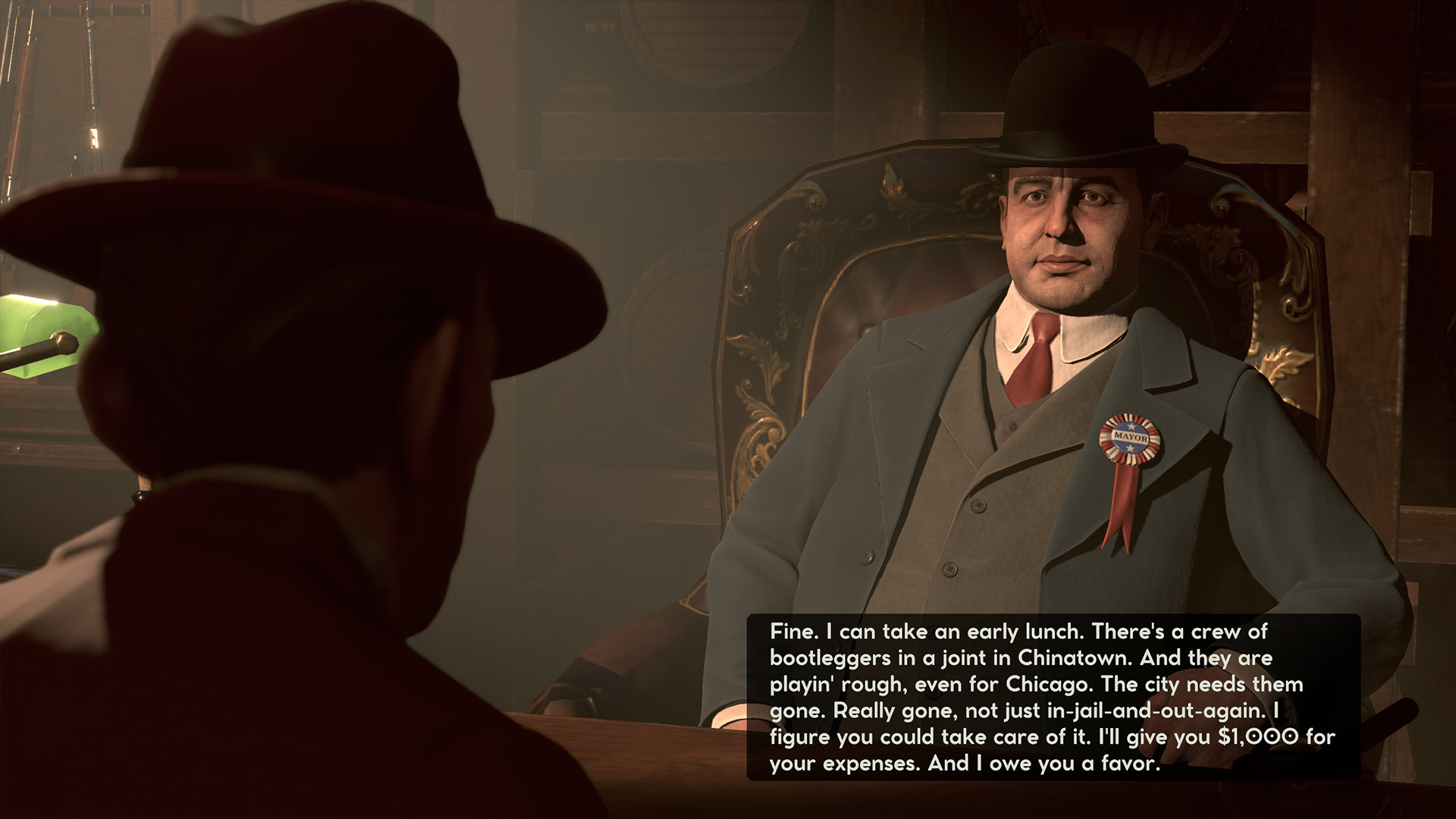
The first hour here is a wall of icons and a firefight you do not understand yet. You pick a boss, Chicago opens up, and the game hands you a hiring screen, a booze production chain, a map full of unclaimed rackets, and a turn-based shootout in a cramped back room before it has explained why any of that matters. I bounced off it the first time for exactly that reason. Pushing through to hour three is what changed my mind. Under the bad onboarding there is a Prohibition-era crime sim with real teeth, wearing a squad tactics game it never finished building. The good half is the empire. You run speakeasies, brothels, casinos and supper clubs across named Chicago neighborhoods, and every one of them is fed by a brewery pumping out booze of a specific quality. Cheap rotgut keeps your margins fat and your customers unhappy. Good product costs you and pulls the high rollers in. You set prices, pick what a venue serves, upgrade the decor and the muscle on the door, and then watch whether the numbers hold when a rival starts undercutting you two blocks over. Rival bosses do more than mark combat encounters, too. You can threaten, bribe, ally with and betray them, and the other families keep their own running opinion of what you have been up to. That whole layer, the slow squeeze of taking a neighborhood by owning its supply rather than shooting your way through it, is legitimately clever, and I have not played much else that does this exact setting justice. The crew layer is where I expected the RPG half to land, and it only half does. Your gangsters are individuals with traits, specialties and loyalty, they have opinions about each other, and a badly assembled crew will bleed morale and eventually walk out on you. Each playable boss brings a different signature perk and a different starting problem, so a Capone run and a run as one of the outsider bosses genuinely feel like different opening chapters. What is missing is authored payoff. The characters are colorful on the hiring screen and mostly silent afterward. There are no meaty arcs, no dialogue worth rereading, no moment where a lieutenant you have carried for thirty hours turns on you in a way the writing actually earned. The stories you remember are the ones the systems produce by accident, which is a fine thing for a sandbox to do and a thin thing for a game shipping with RPG on the genre line. Then there is the combat, and this is where that 48 percent Steam score lives. Almost every escalation resolves the same way. You walk a squad into a small interior, take cover, spend a turn or two waiting on overwatch, and clear the room. The layouts repeat, the enemy AI is not doing anything you have to answer, and the cover math is unreliable enough that losing a gangster reads as arbitrary rather than instructive. By the mid game you are running the tenth version of a raid whose outcome you already know, and the game still makes you sit through every turn of it. That is the padded grind I have the least patience for, the kind where the decision was made before the first shot and you are just paying the tax in minutes. Stability and bugs were rough at release and patches cleaned up a lot of that, but the encounter design itself never got more interesting. So who is this actually for. If you like management games where you are optimizing a supply chain and a protection racket at the same time, and you can treat the fights as a chore between the interesting decisions, there is a real thirty to forty hour campaign in here with almost no competition for the specific fantasy it sells. If you came for XCOM in fedoras, you will know by hour five, and you should not talk yourself out of that feeling. Set your expectations at economy sim first, tactics a distant second, forgive the tutorial for being terrible at its job, and Chicago is worth owning.

RPGs
Tags
System Requirements
Minimum
- Processor
- Intel® Core™ i3-530 or AMD® Phenom™ II X3 720
- Memory
- 4 GB RAM
- Graphics
- Nvidia® GeForce™ GTX 460 (1GB) or AMD® Radeon™ R7 250 (2GB), AMD® Rad…
Recommended
- OS
- Windows® 10 Home 64 bit
- Processor
- Intel® Core™ i5-4460 or AMD® Ryzen™ 5 3400G
- Memory
- 8 GB RAM
- Graphics
- Nvidia® GeForce™ GTX 770 (2GB) or AMD® Radeon™ RX 470 (4GB)
- DirectX
- Version 11
- Storage
- 10…
Keep exploring
Community Discussion
Be the first to comment on Empire of Sin - Hunt For Aurora.
Reviews & Ratings
Game Info
- Developer
- Romero Games
- Publisher
- Paradox Interactive
- Release Date
- Dec 1, 2020
