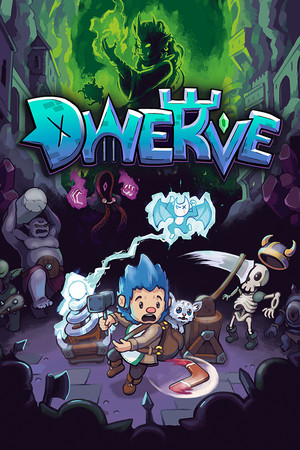
Dwerve
A dwarf who fights with turrets instead of an axe. Push past a rough first hour and it becomes one of the sharpest tower defense hybrids on PC, if a short one.
GamerScout Verdict
Best for strategy players who want an action game they can out-think, provided a weekend-length campaign is enough.
Compare Prices(4 stores)
Every store in this table quotes us in euros, so the EUR figure is the price the seller actually set, not our arithmetic — which is why EUR is also the currency we rank in. We only list an offer here when the store gives us its price in euros, so nothing in this table is a number we invented.
Pick USD, PLN, GBP, CAD or AUD in the header and we convert from EUR at the European Central Bank reference rate — converted amounts are prefixed with ~. Your bank or the store may apply a different rate at checkout. We never hide offers based on where you are: everyone sees this whole table.
We may earn a commission when you buy games through links on this page — at no extra cost to you. It never affects our rankings or verdicts.
Price History
Screenshots & Media
About Dwerve
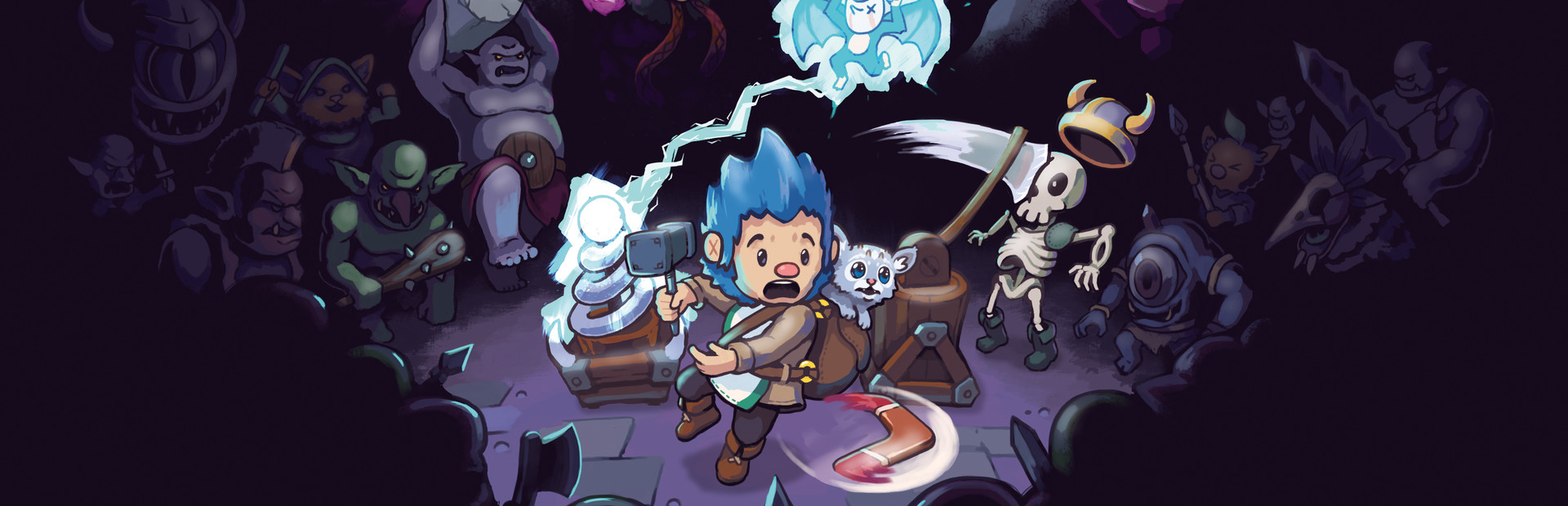
My first hour with Dwerve went badly, and I want to be upfront about why. You play a dwarf who does not swing anything. There is no sword arc, no dodge-roll-into-riposte rhythm, and if you walk into a room expecting to trade hits like an action RPG, you will get flattened by the third pack of enemies. What you get instead is a loadout of turrets and traps you drop on the floor and a resource meter that runs dry faster than you would like. For about sixty minutes that reads as a broken combat system. It is not broken. This is a tower defense game wearing a dungeon crawler's coat, and the second your hands stop reaching for an attack button, the whole thing snaps into focus. Once it clicks, the loop is genuinely clever. You enter a chamber, read the geometry, and decide where the choke points are before anything spawns. Then you spend your resource laying down the line: something that fires down a corridor, something that hurts anyone who steps on it, something that buys you a second when the flanking enemies arrive. Fights become a running argument between your plan and the room, because most encounters escalate in waves and force you to reposition mid-fight rather than admire your setup. The environment does real work too. Plenty of rooms are built so that the smart solution is shoving enemies into a hazard rather than out-damaging them. Boss encounters are where this pays off best. They are structured like multi-phase puzzles with a correct rhythm to find, and the satisfaction of finally reading a boss pattern and building the right answer around it is the reason to be here. As the person on this team who cares most about the RPG half of a genre label, I have to be straight about that half. Dwerve is tagged RPG and it is not one in the way I usually mean the word. The dwarven fantasy setting is warm and specific, with ruined halls and a sense of a kingdom that outlived its own engineering, and the art and creature design carry a lot of that on their own. But this is a linear march through a story that gets told at you between fights. There are no dialogue trees, no choices that fork, nothing that rewards a second read of a conversation. If you came looking for character arcs, you will finish the campaign remembering rooms and boss fights, not people. Your build, such as it is, is the set of traps and turrets you have unlocked plus their upgrades, and while swapping loadouts between encounter types is real decision-making, it is a tighter box than the tag suggests. Where it disappoints beyond that is length and rigidity. This is a weekend, not a campaign you settle into, and it ends right around the point where the systems have finished teaching themselves to you. I would have traded two story beats for one more tier of trap variety. Some encounters also cross the line from tactical to prescriptive, where there is clearly one intended arrangement and anything else is a slow death, which turns experimentation into trial and error. The difficulty spikes unevenly, and a couple of fights land more on pattern memorization than on planning. That mixed Steam consensus, sitting in the mid-seventies, is honest. A chunk of those negative reviews are from people who bounced in that first hour, and a chunk are from people who finished and wanted more game. So who is this actually for. Anyone who liked the puzzle-arena side of a good action game more than the reflex side. Anyone who has ever spent longer setting up an ambush than executing it. If you play strategy games and have been told repeatedly that you should try more action titles, this is a great compromise, and full controller support means it plays fine on a couch. If you want a sprawling fantasy RPG with a script worth quoting, this is not that game and never pretends to be. Go in treating every room as a small engineering problem, accept that the first hour is a tax, and you will get something smarter than most things at this scale. I just wish there had been another ten hours of it. Dragons not included, sadly.

RPGs
Tags
System Requirements
Minimum
- OS
- Windows 7 and above
- Processor
- 1.2 GHz
- Memory
- 1024 MB RAM
- Graphics
- 512 MB
- Storage
- 200 MB available space
Recommended
- Processor
- 2 GHz
- Memory
- 4 GB RAM
- Graphics
- 2 GB
- Storage
- 3 GB available space
Keep exploring
Community Discussion
Be the first to comment on Dwerve.
Reviews & Ratings
Game Info
- Developer
- Half Human Games
- Publisher
- Half Human Games, Electronic Sheep Games
- Release Date
- May 31, 2022