
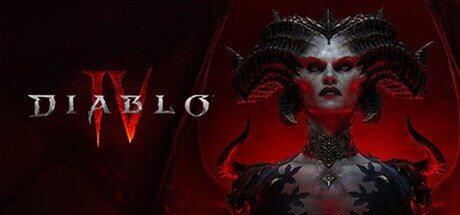
Diablo 4
A gorgeous gothic loot treadmill with a campaign worth finishing once and an endgame that lives or dies on the season you show up for. Bring a build plan, not a story appetite.
GamerScout Verdict
Best for loot-brained builders who treat each season as a fresh sprint, not for anyone hunting choices that reshape the story.
Compare Prices(4 stores)
Every store in this table quotes us in euros, so the EUR figure is the price the seller actually set, not our arithmetic — which is why EUR is also the currency we rank in. We only list an offer here when the store gives us its price in euros, so nothing in this table is a number we invented.
Pick USD, PLN, GBP, CAD or AUD in the header and we convert from EUR at the European Central Bank reference rate — converted amounts are prefixed with ~. Your bank or the store may apply a different rate at checkout. We never hide offers based on where you are: everyone sees this whole table.
We may earn a commission when you buy games through links on this page — at no extra cost to you. It never affects our rankings or verdicts.
Screenshots & Media
About Diablo 4
The mechanic that defines Diablo 4 for me is not the loot, it is the seasonal reset. Every few months Sanctuary wipes the slate, your hoarded gear gets parked on the eternal realm, and you roll a fresh character into a new set of temporary systems. Once you accept that rhythm, every build decision changes shape. You stop planning a character you will keep forever and start planning a sprint: what comes online around level 30, what carries you into the Paragon boards, what you will cheerfully abandon in eight weeks. I resisted that framing for a long time and enjoyed the game a great deal more once I stopped. Underneath the seasonal churn, this is Blizzard's big-budget action RPG, played from an isometric camera across a shared open world you can roam solo or with friends, with crossplay pulling PC and console players into the same zones. You pick a class, spend points down a skill tree, then graduate into Paragon boards that bolt on glyph sockets and stat clusters long after the credits roll. Necromancers raise a standing army, Druids shapeshift mid-combo, Rogues stack imbuements onto every arrow, and the expansion's Spiritborn brings a genuinely different animal-spirit tempo to the roster. The accessibility work deserves a mention too. Adjustable difficulty, adjustable text size, narrated menus, full controller support, and camera comfort settings make this an easy game to hand to someone who has never touched an ARPG before. What works best is the moment-to-moment feel and the campaign. Lilith is a properly good antagonist, written with enough conviction that I sat through cutscenes I would normally skip, and the art direction commits hard to grimy medieval horror rather than the cartoon palette the series drifted toward before. Combat has real weight. Once Legendary Aspects and a couple of Uniques land in the right slots, a build stops being a list of skills and becomes a machine, and clearing a Nightmare Dungeon or pushing a Pit tier at the point where everything finally clicks is the good stuff this genre exists to deliver. Helltides give the open world a reason to matter, world bosses pull strangers into brief chaotic scrums, and PvP zones are there if you want your loot to have stakes. Where it disappoints is everything between those peaks. The writing falls off a cliff once the campaign ends, and dialogue choices are decorative rather than branching, so if you came looking for decisions that reshape a story, this is the wrong shelf entirely. Side content is fetch-shaped: Whispers ask you to kill a number of things in a place, then ask again, then ask again. Dungeon layouts repeat often enough that you will start recognizing rooms by hour 30. And the grind is padded in ways that feel deliberate, with progress curves that stretch just far enough to keep you logged in another evening. The Steam consensus sits mixed at roughly two thirds positive across tens of thousands of reviews, and the reasons are consistent: a rocky launch balance state, seasons that swing wildly in quality from one to the next, an always online requirement that turns a server hiccup into a lost run, and a cosmetic storefront plus seasonal pass sitting permanently in your menu bar. Blizzard has patched a great deal of this, and the game today is meaningfully better built than the one that shipped, but the shape of the thing has not changed. So who is this for. If you like the ritual of theorycrafting a build, chasing a specific affix roll, and comparing notes with friends about which season is worth returning for, Diablo 4 will feed you well for years. If you want a narrative RPG where your choices leave marks, play the campaign once, enjoy Lilith, and expect nothing more from the story after that. And if you bounce off repetition, know that the endgame is repetition by design, dressed in excellent lighting. I keep coming back a few weeks per season, I hit my build wall, and I leave satisfied. That is a perfectly honest relationship to have with a game, just make sure it is the one you are signing up for.

RPGs
Tags
System Requirements
Minimum
- OS
- 64-bit Windows® 10 version 1909 or newer
- Processor
- Intel® Core™ i5-2500K or AMD™ FX-8350
- Memory
- 8 GB RAM
- Graphics
- NVIDIA® GeForce® GTX 660 or Intel® A…
Recommended
- OS
- 64-bit Windows® 10 version 1909 or newer
- Processor
- Intel® Core™ i5-4670K or AMD Ryzen™ 1300X
- Memory
- 16 GB RAM
- Graphics
- NVIDIA® GeForce® GTX 970 or…
Keep exploring
Community Discussion
Be the first to comment on Diablo 4.
Reviews & Ratings
Game Info
- Developer
- Blizzard Entertainment, Inc.
- Publisher
- Blizzard Entertainment, Inc.
- Release Date
- Oct 17, 2023


