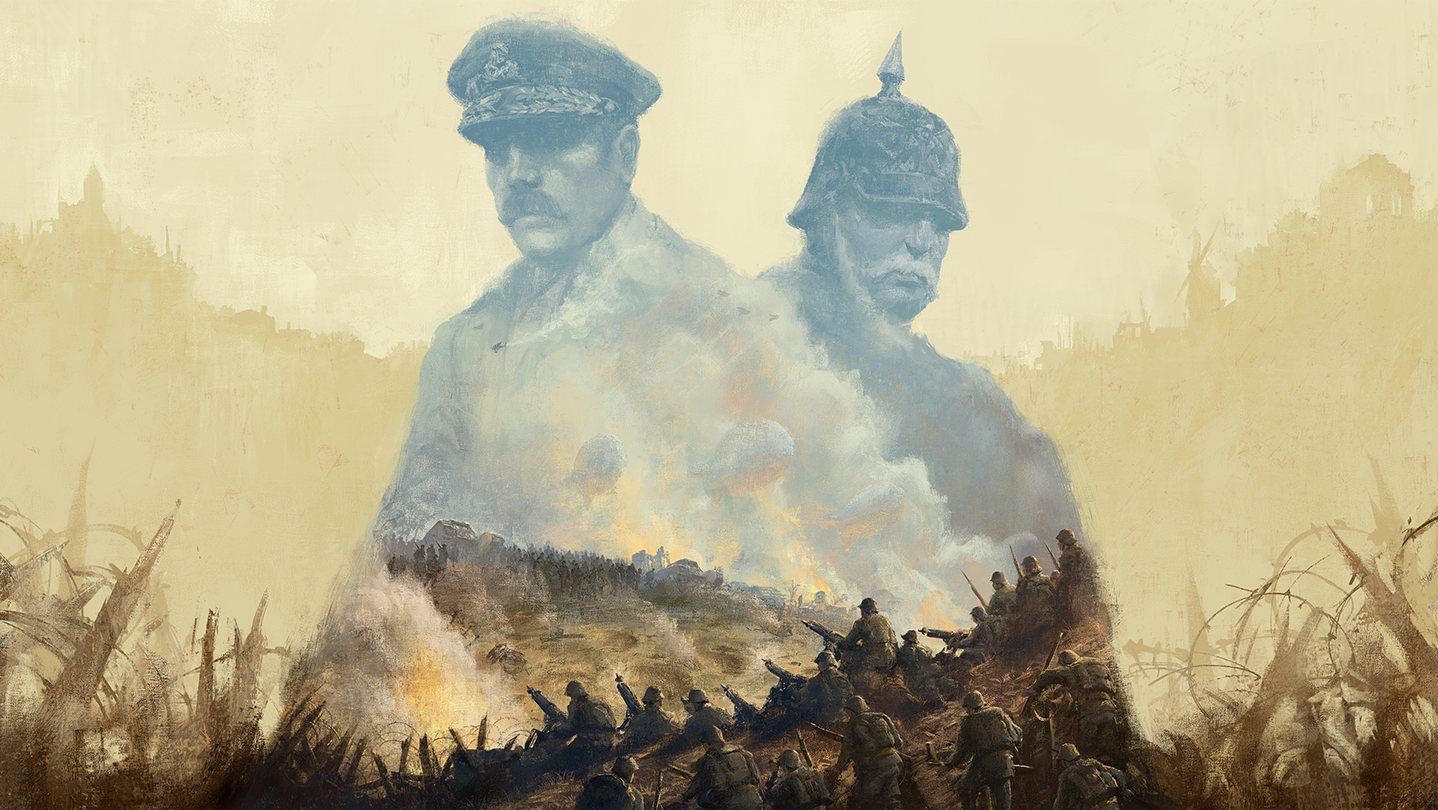
The Great War: Western Front - Victory Edition
Trench warfare is a nightmare to make fun, and Petroglyph mostly pulls it off, if you go in expecting attrition, not conquest, this hybrid wargame will get its hooks into you.
GamerScout Verdict
Best for strategy players who want historical weight and dual-layer command, not for anyone expecting fast-paced RTS action or a forgiving AI.
Compare Prices(6 stores)
Every store in this table quotes us in euros, so the EUR figure is the price the seller actually set, not our arithmetic — which is why EUR is also the currency we rank in. We only list an offer here when the store gives us its price in euros, so nothing in this table is a number we invented.
Pick USD, PLN, GBP, CAD or AUD in the header and we convert from EUR at the European Central Bank reference rate — converted amounts are prefixed with ~. Your bank or the store may apply a different rate at checkout. We never hide offers based on where you are: everyone sees this whole table.
We may earn a commission when you buy games through links on this page — at no extra cost to you. It never affects our rankings or verdicts.
Price History
Screenshots & Media
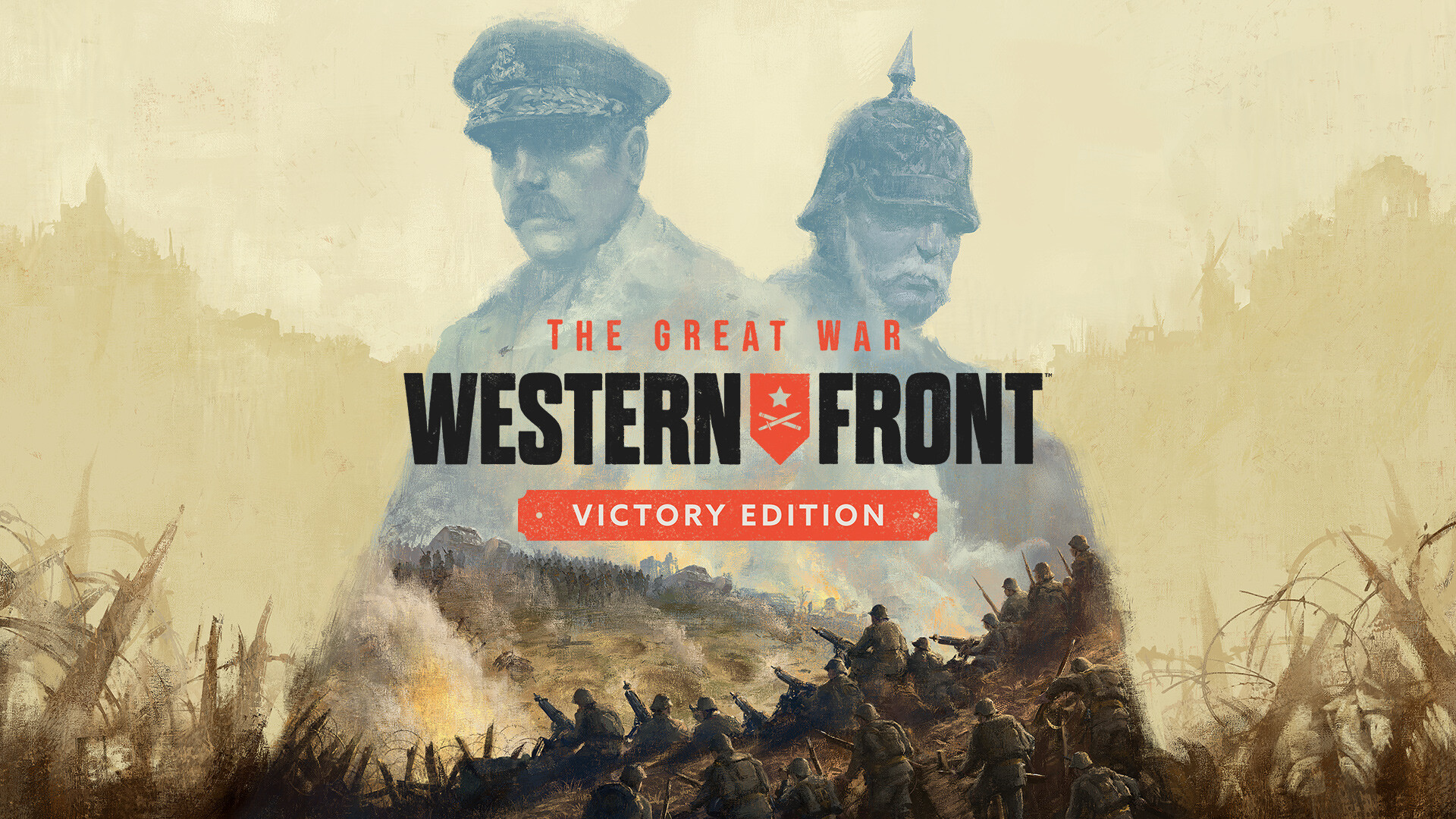
About The Great War: Western Front - Victory Edition
I've spent enough time colour-coding Paradox campaign spreadsheets to know that the best strategy games are the ones that make you feel the weight of your decisions, not just execute them. That's the honest pitch for The Great War: Western Front, a hybrid that pairs a turn-based theatre layer with real-time tactical battles across the Western Front from 1914 to 1919, and whose central design statement is: you will probably not feel good about winning. The structure will be familiar to Total War veterans. On the grand-strategy map, you manage a hex-based theatre of operations, allocating corps, ordering research into technologies like poison gas and tank battalions, and managing three core resources, money, supplies, and national will. National will is your life bar. Burn too many men in failed assaults and you lose the war outright, regardless of territory held. It's a tight, thematically appropriate leash. When you drop into a real-time battle as Field Commander, the pre-battle setup phase matters enormously: trench placement, machine-gun nest positioning, observation balloon deployment, artillery placement, barbed wire routing, all locked in before the whistle blows. You cannot dig a trench mid-engagement. That constraint, frustrating the first time it bites you, is actually the game's sharpest design choice. The persistent battlefield system deserves special mention: when you return to a hex, your old trenches and shell craters are still there. The terrain degrades over repeated fights. It's a systems-level detail that most wargames skip entirely, and here it quietly changes how you think about every engagement. The campaign also fires scripted events, the US entry, naval choices, Gallipoli news, that give the strategic layer some narrative pulse without turning it into a visual novel. Two faction options (Allies or Central Powers) and two campaign start dates (December 1914 and May 1916) give you enough permutations to justify multiple runs, and a skirmish mode plus map editor round out the package. Post-launch, the 2.0.0 update added new units, an air mission system, campaign objective events, and full mod and custom campaign support, which meaningfully extends the ceiling for invested players. The problems are real, though. The AI plays by slightly different rules: it seems immune to fog of war in practice, routes reinforcing troops through map edges where you cannot intercept them, and friendly unit pathfinding will occasionally walk your infantry out of a perfectly good trench into a machine gun's field of fire without any prompting. Steam reviews sit at a mixed 66%, and that gap between critical praise and player frustration mostly traces back to these AI issues and a genuine repetitiveness that the WW1 setting makes structurally unavoidable. Every attack involves finding the weakest point in the enemy firing line and pressing it repeatedly; every defence is a managed killing ground. That is historically accurate. It is also, at times, exhausting. The graphics are fine but lean toward budget-tier, and the campaign map can feel visually cluttered until you learn to read it. Here is the thing I would tell a newcomer: this game is not hard to learn. The tutorial covers the core mechanics and resource flows competently, and the systems, while numerous, are not Paradox-deep. The difficulty comes from the subject matter itself. Patience is the skill being tested. If you approach the first campaign as a study in managing attrition rather than a race to crush the enemy, the decision-making loop becomes genuinely absorbing. The Victory Edition bundles the base game with a digital field guide, the Frank Klepacki soundtrack (31 tracks, and Klepacki's WW1 work is appropriately sombre rather than bombastic), and five wallpapers, minor extras, but the field guide has actual reference value for newer players. The Denuvo DRM was also removed in early 2025, which is worth knowing for anyone who had reservations at launch.

Strategy & simulation
Tags
System Requirements
Minimum
- OS
- Windows 10 64bit
- Memory
- 8 GB RAM
- DirectX
- Version 11
- Storage
- 13 GB available space
- Graphics
- NVIDIA GeForce GTX 780 / AMD Radeon R9 390
- Processor
- Intel i5-4590 / AMD FX-8350
Recommended
- OS
- Windows 10/11 64bit
- Memory
- 16 GB RAM
- DirectX
- Version 11
- Storage
- 13 GB available space
- Graphics
- NVIDIA GeForce GTX 1060 / AMD Radeon RX 580
- Processor
- Intel i5-8600K / AMD Ryzen 5 2600
Keep exploring
Community Discussion
Be the first to comment on The Great War: Western Front - Victory Edition.
Reviews & Ratings
No ratings available
Game Info
- Developer
- Petroglyph
- Publisher
- Frontier Foundry
- Release Date
- Mar 30, 2023