Yomawari: Night Alone
Horror atmosphere done right, marred by late-game design that swaps earned tension for blind repetition. Worth it if you can stomach the friction.
GamerScout Verdict
Ideal for Japanese horror fans who can forgive a rocky back half; a hard sell for anyone who needs consistent, learnable difficulty.
Compare Prices(7 stores)
Every store in this table quotes us in euros, so the EUR figure is the price the seller actually set, not our arithmetic — which is why EUR is also the currency we rank in. We only list an offer here when the store gives us its price in euros, so nothing in this table is a number we invented.
Pick USD, PLN, GBP, CAD or AUD in the header and we convert from EUR at the European Central Bank reference rate — converted amounts are prefixed with ~. Your bank or the store may apply a different rate at checkout. We never hide offers based on where you are: everyone sees this whole table.
We may earn a commission when you buy games through links on this page — at no extra cost to you. It never affects our rankings or verdicts.
Price History
Screenshots & Media
About Yomawari: Night Alone
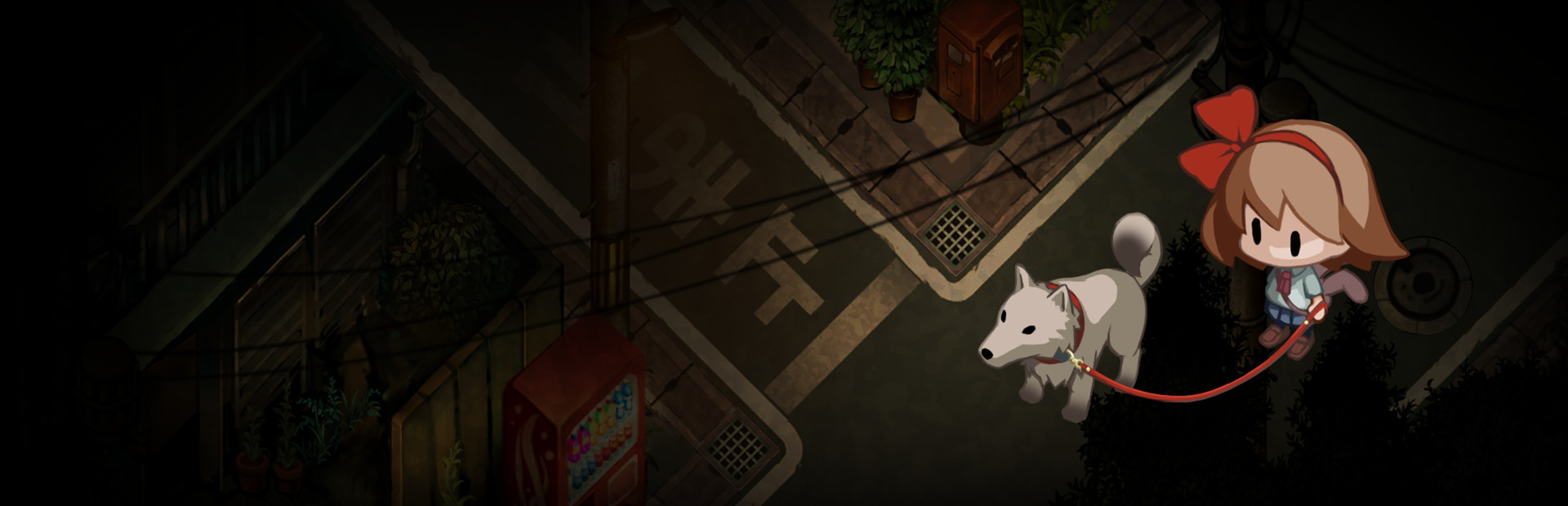
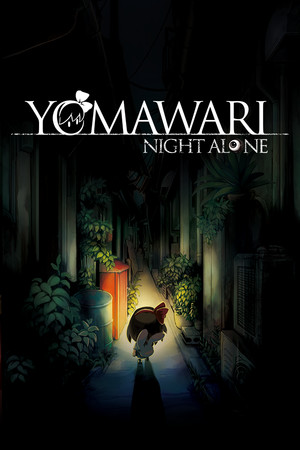
My first instinct, sitting down with Yomawari: Night Alone, was to map it mentally against something like Corpse Party or Yume Nikki: Japanese folklore horror, minimal UI, deliberate pacing, all atmosphere. That framing holds for roughly the first half, and during those chapters the game is genuinely one of the more unsettling things Nippon Ichi Software has put out. The setup is lean. A nameless girl. A lost dog named Poro. A sister who goes looking and never comes back. From that point you are dropped into a quiet Japanese town after dark with a flashlight, a stamina bar, and zero combat options whatsoever. The mechanical loop is simpler than it sounds on paper but rewards careful reading of the environment. Spirits inspired by Japanese urban legends roam every district - rice fields, school grounds, a factory, Shinto shrines, parking lots - and your only tools are a flashlight to reveal hidden threats, throwable stones and coins to distract pursuers, a shovel for digging up specific spots, and the terrain itself for hiding. Bushes and signs break line-of-sight for most enemies. Your stamina bar doubles as a heartbeat monitor: the closer a spirit gets, the faster it pulses, giving you a mechanical proximity warning with no music to lean on. That heartbeat-as-radar design is genuinely clever and creates a specific brand of dread that jump-scare heavy games rarely manage. The chapter structure uses Jizo shrines as save points and fast-travel nodes, which softens the open-world traversal without trivializing the risk. Items persist through death, so you are not re-running errands, only re-running routes. Here is where I have to be straight with you: the back half of the game largely abandons that methodical intelligence. Several late chapters lean hard into trial-and-error scenarios where death comes from arbitrary positioning rather than a pattern you can learn. Checkpoints spread out frustratingly far, and the shrine fast-travel that felt generous early on stops compensating for the design gaps. Reviewers and players across the board flag the same inflection point: the first half earns your patience, the second half spends it carelessly. If you are the kind of player who bounces off repeated deaths with no feedback loop - think Dark Souls without the legible tells - the final few chapters will test you hard. What keeps Yomawari worth discussing is the presentation and the texture of the world. The art style uses chibi character designs against hand-drawn environments and that deliberate aesthetic clash, cute figures against genuinely grotesque spirit designs, creates unease more effectively than realism would. The in-game map and menus are rendered as if sketched in a child's notebook, which is a small detail that holds the fiction together over a playthrough that runs roughly five to eight hours depending on exploration depth. Completionists chasing the full spirit roster and side-event collection can push that to twenty hours, since some spirits only appear under specific conditions or locations and the item description system layers in quiet narrative through the protagonist's own handwriting. The sound design carries enormous weight; there is almost no music across the entire run, just ambient environmental audio, footsteps changing with terrain, distant traffic, humming streetlights. It is the right call and it makes headphone play strongly advisable. For a strategy-minded player used to systems that compound and reward optimization, Yomawari is unusual territory. There is no build, no resource escalation, no meta-progression. What it offers instead is a tight atmospheric experiment that works best consumed in a single sitting, or two at most, before the late-game friction has time to calcify into resentment. If you have any affection for Japanese horror media and can accept that the difficulty curve inverts unpleasantly near the end, the early chapters alone justify the time. If friction without feedback is your hard limit, watch a playthrough instead.

Strategy & simulation
Tags
System Requirements
Minimum
- OS
- Windows 10/8.1/7
- Memory
- 2 GB RAM
- DirectX
- Version 10
- Storage
- 2 GB available space
- Graphics
- Intel HD Graphics Family (HD 4000)
- Processor
- Intel Core i3-2310M 2.10 GHz
- Sound Card
- Realtek High Definition Audio
Recommended
- OS
- Windows 10/8.1/7
- Memory
- 2 GB RAM
- DirectX
- Version 10
- Storage
- 2 GB available space
- Graphics
- NVIDIA GeForce GTX 560 Ti
- Processor
- AMD A10-5800K APU with Radeon™ HD Graphics
- Sound Card
- Realtek High Definition Audio
DLC & Add-ons for Yomawari: Night Alone1
Expansions, DLC packs and add-on content for this game. Click any item to see store offers.
Keep exploring
Community Discussion
Be the first to comment on Yomawari: Night Alone.
Reviews & Ratings
No ratings available
Game Info
- Developer
- Nippon Ichi Software, Inc.
- Publisher
- NIS America, Inc.
- Release Date
- Oct 25, 2016