Yomawari: Lost in the Dark
A chibi-cute horror game with real bite: close your eyes, hold your breath, and pray the next spirit is one you've already memorised. Newcomers are welcome, but franchise fans will notice the formula creaking.
GamerScout Verdict
Best for patient horror fans drawn to Japanese folklore aesthetics who can tolerate a repetitive second half and sparse saves.
Compare Prices(6 stores)
Every store in this table quotes us in euros, so the EUR figure is the price the seller actually set, not our arithmetic — which is why EUR is also the currency we rank in. We only list an offer here when the store gives us its price in euros, so nothing in this table is a number we invented.
Pick USD, PLN, GBP, CAD or AUD in the header and we convert from EUR at the European Central Bank reference rate — converted amounts are prefixed with ~. Your bank or the store may apply a different rate at checkout. We never hide offers based on where you are: everyone sees this whole table.
We may earn a commission when you buy games through links on this page — at no extra cost to you. It never affects our rankings or verdicts.
Price History
Screenshots & Media
About Yomawari: Lost in the Dark
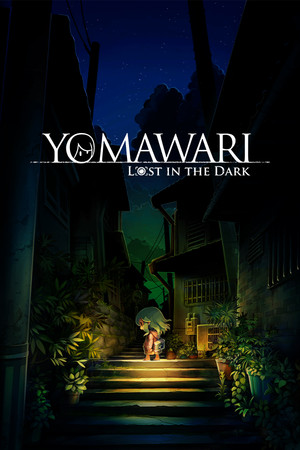
My usual genre is grand strategy and city builders, so when I put serious hours into a top-down survival horror about a cursed schoolgirl, I wanted to understand exactly what kind of decision-making it asks of you. The answer, for better and worse, is patience over tactics. Yomawari: Lost in the Dark is the third entry in Nippon Ichi's series, and it drops you into a nocturnal Japanese town as Yuzu, a young girl who wakes up cursed and amnesiac with only until sunrise to recover her lost memories. Your tools are minimal: a flashlight to spot collectibles, throwable rocks and paper planes to create distractions, and a coin-based save system at Jizo statues scattered across the map. The headline mechanical addition is the eye-closing system. Where earlier games had you ducking behind bushes and signs to hide from spirits, here you simply hold a button to shut Yuzu's eyes. The screen goes dark and red mist replaces the enemies, while your heartbeat thumps loudly to signal proximity to danger. It is a clever idea that solves the old problem of not finding a hiding spot in an open stretch of road, and the tension of creeping through that red mist is genuinely effective. Not every spirit is fooled by the closed-eyes trick, though, so frantic sprinting and careful route planning still matter. The boss-like encounters at the end of each memory are chase sequences that ramp up hazards and require quick reading of the environment. These are the game's mechanical high points: distinct enough from each other to stay interesting, demanding enough to keep one-hit-kill stakes real. The structure is more open than the previous entries. Finding specific key items around the town unlocks memory areas in a fairly freeform order, which gives the experience a slightly puzzle-box quality. Clues point toward locations, inventory items gate progress, and the map gradually opens up. From a systems perspective the loop is simple, closer to a light adventure game with horror dressing than anything with deep build options. That is fine, the problem is repetition. Roughly halfway through, once the spirit placement becomes predictable and the close-eyes routine is second nature, the fear dial dials back sharply. The final few hours lean on backtracking through familiar areas and a bloated item inventory that asks you to rifle through dozens of objects to find the one that moves things forward. A sparse save-point distribution in the early game means failed encounters can cost several minutes of progress, which edges into frustrating rather than tense. What holds everything together is presentation. The hand-drawn chibi aesthetic looks deliberately innocent, and the contrast with the genuinely disturbing spirit designs and heavy thematic content, including bullying, loss, and grief drawn from Japanese folklore and social anxiety, gives the game a tonal identity that is hard to find elsewhere. The sound design does most of the atmospheric work: near-silence punctuated by footsteps, distant wails, and that escalating heartbeat. The music is sparse but effective when it appears. For newcomers to the series there is no required context, the story is self-contained, though series veterans will recognise returning spirits and feel the pull of comparison to Midnight Shadows, which set a high bar the third entry does not quite clear. Playtime sits around ten to twenty hours depending on how much exploring you do, and achievements push completionists toward optional side stories and collectibles, some of which are worth the effort.

Strategy & simulation
Tags
System Requirements
Minimum
- OS
- Windows 10/11
- Memory
- 4 GB RAM
- DirectX
- Version 11
- Storage
- 4 GB available space
- Graphics
- Intel HD Graphics Family(HD 4000)
- Processor
- Intel(R) Core(TM) i3-3225 3.30GHz
Recommended
- OS
- Windows 10/11
- Memory
- 4 GB RAM
- DirectX
- Version 11
- Storage
- 4 GB available space
- Graphics
- GeForce GTX 570
- Processor
- Intel(R) Core(TM) i5-4670 3.40GHz
- Sound Card
- HD Audio
DLC & Add-ons for Yomawari: Lost in the Dark1
Expansions, DLC packs and add-on content for this game. Click any item to see store offers.
Keep exploring
Community Discussion
Be the first to comment on Yomawari: Lost in the Dark.
Reviews & Ratings
Game Info
- Developer
- Nippon Ichi Software, Inc.
- Publisher
- NIS America, Inc.
- Release Date
- Oct 25, 2022