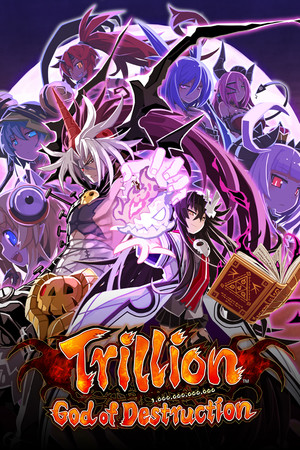
Compare Trillion: God of Destruction prices across 50+ stores and find the best deal. Developed by IDEA FACTORY. Published by Idea Factory International. Released on 11/7/2016. Available on PC. Genres: RPG, Strategy.

Train demon girls modeled on the Seven Deadly Sins, watch them die, pass their stats to the next, and grind toward a boss with 1,000,000,000,000 HP. Niche, punishing, oddly emotional.

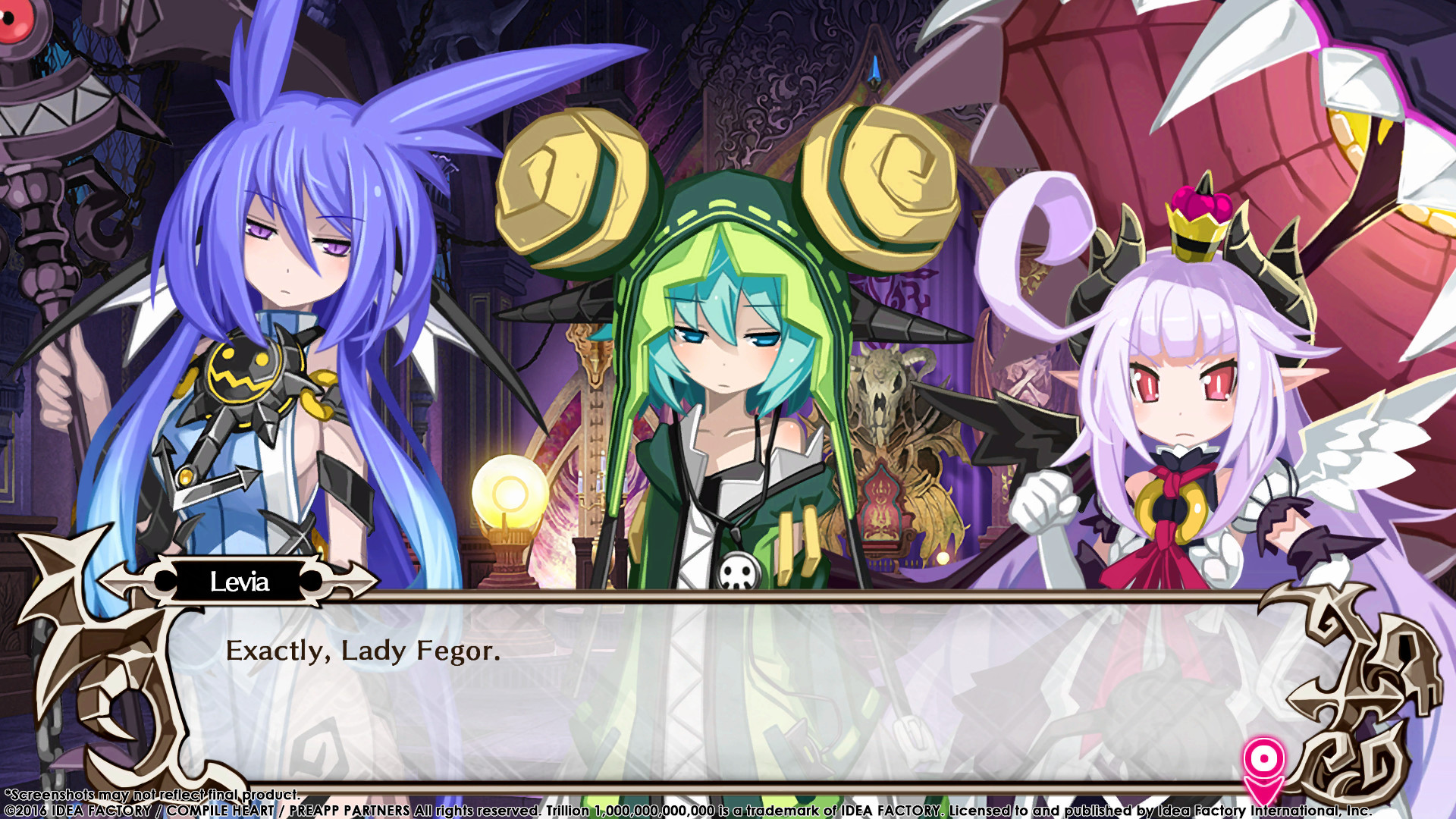
I pulled up a blank spreadsheet before my first real attempt at Trillion and that instinct turned out to be exactly right. The core loop here is resource management dressed in anime clothing: you get a fixed number of seven-day cycles while the eponymous god sleeps, and every single day you spend is a decision with downstream consequences. Train Attack? That costs Fatigue. Too much Fatigue without rest means injury, and an injury can erase a full week of progress. The time pressure is constant and real, and anyone who has min-maxed a Paradox title will feel the familiar itch of optimizing within tight constraints. The system has two distinct halves that pull in different directions. The training and preparation side is almost entirely menu-driven: selecting regimens tied to stats like Attack, Defense, Speed, and Charm, spending earned points to unlock active and passive skills, visiting the Blacksmith to socket weapon relics, or dropping training medals to enter the Valley of Swords, a procedurally generated dungeon that yields items and bonus experience. The combat side is a grid-based, turn-simultaneous affair closer to Mystery Dungeon than to Fire Emblem. Trillion telegraphs its attacks with color-coded grid tiles that shift hue as the countdown ticks, which gives fights a puzzle quality: read the pattern, stay out of the danger zones, position for rear criticals, spend MP on special skills at the right moment. The problem reviewers almost universally flag is proportionality: actual combat represents roughly ten to fifteen percent of your total playtime, and the menu work can feel like administering a spreadsheet rather than playing a game. That criticism is fair, but it is also the exact tradeoff the design is built around. What rescues the whole structure from pure tedium is the emotional toll baked into the mechanics. Each of the six Overlords represents one of the Seven Deadly Sins, and you build a genuine relationship with whichever one you select through visual-novel conversation sequences and gift-giving that raises Affection points, which function as a third defensive resource in battle alongside HP and MP. When she dies and her accumulated stats partially transfer to the next candidate, the loss lands differently than a typical permadeath. The Disgaea DNA is visible in the underworld setting and the escalating numbers, but the tone here is consistently darker and more earnest than Nippon Ichi's comedy-first approach. There are close to a dozen different endings, and the New Game Plus system carries stat progress forward so that subsequent runs become about story completion rather than pure survival. For the right player this is a deeply satisfying loop. If you enjoy watching numbers compound, planning a training sequence several cycles ahead, and being emotionally manipulated into caring about characters you know are going to be devoured, the game delivers on every one of those fronts. The PC version is the sharpest looking release and controller support works well, though scattered reports of soft locks on loading screens suggest the port is not entirely clean. The repetition is genuine and the combat is shallower than the raising sim framing deserves, but the central question the game keeps asking, namely how much damage can you scrape off a trillion HP before this Overlord falls, turns out to have a compelling answer across fifteen to thirty hours of play. Diego, Scout Team

Trillion: God of Destruction
RPGStrategy

Trillion: God of Destruction

Nov 7, 2016IDEA FACTORYIdea Factory International
GamerScout Says

Train demon girls modeled on the Seven Deadly Sins, watch them die, pass their stats to the next, and grind toward a boss with 1,000,000,000,000 HP. Niche, punishing, oddly emotional.

PC
Best Price Available
0.00
at N/A
Historical low: $2.15

Compare Prices(0 stores)

Loading prices...

We may earn a commission when you buy games through links on this page — at no extra cost to you. It never affects our rankings or verdicts.

Screenshots & Media

Screenshot

About Trillion: God of Destruction

I pulled up a blank spreadsheet before my first real attempt at Trillion and that instinct turned out to be exactly right. The core loop here is resource management dressed in anime clothing: you get a fixed number of seven-day cycles while the eponymous god sleeps, and every single day you spend is a decision with downstream consequences. Train Attack? That costs Fatigue. Too much Fatigue without rest means injury, and an injury can erase a full week of progress. The time pressure is constant and real, and anyone who has min-maxed a Paradox title will feel the familiar itch of optimizing within tight constraints. The system has two distinct halves that pull in different directions. The training and preparation side is almost entirely menu-driven: selecting regimens tied to stats like Attack, Defense, Speed, and Charm, spending earned points to unlock active and passive skills, visiting the Blacksmith to socket weapon relics, or dropping training medals to enter the Valley of Swords, a procedurally generated dungeon that yields items and bonus experience. The combat side is a grid-based, turn-simultaneous affair closer to Mystery Dungeon than to Fire Emblem. Trillion telegraphs its attacks with color-coded grid tiles that shift hue as the countdown ticks, which gives fights a puzzle quality: read the pattern, stay out of the danger zones, position for rear criticals, spend MP on special skills at the right moment. The problem reviewers almost universally flag is proportionality: actual combat represents roughly ten to fifteen percent of your total playtime, and the menu work can feel like administering a spreadsheet rather than playing a game. That criticism is fair, but it is also the exact tradeoff the design is built around. What rescues the whole structure from pure tedium is the emotional toll baked into the mechanics. Each of the six Overlords represents one of the Seven Deadly Sins, and you build a genuine relationship with whichever one you select through visual-novel conversation sequences and gift-giving that raises Affection points, which function as a third defensive resource in battle alongside HP and MP. When she dies and her accumulated stats partially transfer to the next candidate, the loss lands differently than a typical permadeath. The Disgaea DNA is visible in the underworld setting and the escalating numbers, but the tone here is consistently darker and more earnest than Nippon Ichi's comedy-first approach. There are close to a dozen different endings, and the New Game Plus system carries stat progress forward so that subsequent runs become about story completion rather than pure survival. For the right player this is a deeply satisfying loop. If you enjoy watching numbers compound, planning a training sequence several cycles ahead, and being emotionally manipulated into caring about characters you know are going to be devoured, the game delivers on every one of those fronts. The PC version is the sharpest looking release and controller support works well, though scattered reports of soft locks on loading screens suggest the port is not entirely clean. The repetition is genuine and the combat is shallower than the raising sim framing deserves, but the central question the game keeps asking, namely how much damage can you scrape off a trillion HP before this Overlord falls, turns out to have a compelling answer across fifteen to thirty hours of play. Diego, Scout Team

Tags

singleplayerachievementscontroller-supporttrading-cardscloud-savestier:sub-5Raising SimPermadeath-ChainAffection MechanicMenu-DrivenGrind-HeavyVisual Novel ElementsMystery Dungeon CombatMulti-EndingNew Game Plus

Steam Deck & Linux

Steam Deck UnsupportedProtonDB Silver

Valve rates this game Steam Deck Unsupported. Playable on Linux with some workarounds. Based on 18 ProtonDB community reports.

System Requirements

Minimum

OS
Windows 7 (64-bit)
Memory
4 GB RAM
DirectX
Version 10
Storage
10 GB available space
Graphics
3 GHz Intel i3 or equivalent
Processor
3 GHz Intel i3 or equivalent
Sound Card
DirectX 9.0c compatible sound card
Additional Notes
DirectX 9.0c compatible sound card

Recommended

OS
Windows 10 Home (64-bit)
Memory
8 GB RAM
DirectX
Version 10
Storage
10 GB available space
Graphics
NVIDIA GeForce GTX 960
Processor
Intel(R) Core(TM) i5-4460 CPU @ 3.20GHz
Sound Card
DirectX 9.0c compatible sound card
Additional Notes
Caution: ATI Mobility Radeon HD 5xxx, 1GB VRAM 5000 series, AMD processor may not work properly with this game.

DLC & Add-ons for Trillion: God of Destruction1

Expansions, DLC packs and add-on content for this game. Click any item to see store offers.

Community Discussion

Be the first to comment on Trillion: God of Destruction.

Reviews & Ratings

No ratings available

Game Info

Developer
IDEA FACTORY
Publisher
Idea Factory International
Release Date
Nov 7, 2016

Price Alert

Get notified when the price drops below your target!

Create Alert

Price History

2026-06-102.15(lowest)

More from IDEA FACTORY

Buy smarter: helpful guides

Looking for more? See games like Trillion: God of Destruction

Frequently asked questions about Trillion: God of Destruction

How much does Trillion: God of Destruction cost?

Trillion: God of Destruction pricing changes often and varies by store, edition and region. The live price table on this page compares the cheapest in-stock key and store offers across 50+ verified shops, so you always see the current lowest price before you buy.

Where can I buy Trillion: God of Destruction cheapest?

Compare Trillion: God of Destruction prices across every verified store in the price table on this page. We list the cheapest in-stock key and store offers, updated regularly, so you always see the best current deal before you buy.

What platforms is Trillion: God of Destruction available on?

Trillion: God of Destruction is available on PC.

When was Trillion: God of Destruction released?

Trillion: God of Destruction was released on 7 November 2016.

Who developed Trillion: God of Destruction?

Trillion: God of Destruction was developed by IDEA FACTORY and published by Idea Factory International.