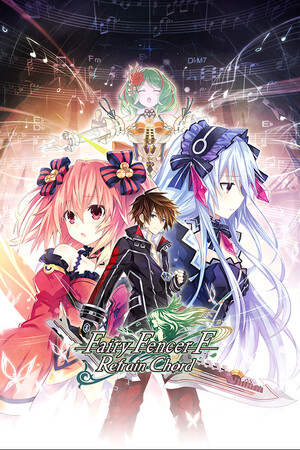
Fairy Fencer F: Refrain Chord
A 35-40 hour grid tactics spin-off for Fairy Fencer fans first, casual SRPG tourists second, and Fire Emblem die-hards basically never.
GamerScout Verdict
Solid comfort-food SRPG for existing Fairy Fencer fans; newcomers should play Advent Dark Force first or skip entirely.
Compare Prices(7 stores)
Every store in this table quotes us in euros, so the EUR figure is the price the seller actually set, not our arithmetic — which is why EUR is also the currency we rank in. We only list an offer here when the store gives us its price in euros, so nothing in this table is a number we invented.
Pick USD, PLN, GBP, CAD or AUD in the header and we convert from EUR at the European Central Bank reference rate — converted amounts are prefixed with ~. Your bank or the store may apply a different rate at checkout. We never hide offers based on where you are: everyone sees this whole table.
We may earn a commission when you buy games through links on this page — at no extra cost to you. It never affects our rankings or verdicts.
Price History
Screenshots & Media
About Fairy Fencer F: Refrain Chord
My first instinct when I saw Sting credited as co-developer was cautious optimism. Sting built Yggdra Union, so they know how to design a grid. What they delivered here lands somewhere between a solid genre exercise and a missed opportunity, depending heavily on whether you have prior Fairy Fencer F mileage logged. Let me break down what actually matters mechanically before you hand over your money. The combat is grid-based, small-party tactical RPG fare across multi-terrain maps where height and flanking genuinely influence damage output. Attacking from elevated ground hits harder, tall grass clips your accuracy, and positioning around the side or rear of an enemy rewards good unit placement. That is all table-stakes stuff for the genre. The wrinkle that separates Refrain Chord from a straight Disgaea clone is the Fairy Aria system: your Muse unit Fleur can activate area-of-effect song buffs that strengthen any allies inside the radius. The enemy Muse Glace does the same for her side. When both songs are active simultaneously, the overlapping field creates a risk-reward decision about whether to chase the amplified bonus while also feeding buffs to your opponents. Layered on top of that are the returning Fairize mechanic, where landing hits charges a gauge that lets your Fencer merge with their fairy weapon into a temporary super-form, and the Avalanche system, which can chain into Avalanche Harmonics for a nastier combo when triggered inside an active Fairy Aria. The interactions between these systems are genuinely clever on paper, even if the AI rarely forces you to exploit them at a high level. Between battles, town acts as a hub for quests, item synthesis, and fairy leveling via a Fencer Points spend. Location Shaping, the world-map minigame where you plant Furies to excavate materials in a loose minesweeper format, breaks up the pace and feeds your synthesis queue, though critics are split on whether it adds texture or just chews up time. Here is the honest audit of the ceiling and the floor. The ceiling: the music direction is exceptional. ZIZZ Studio handled the vocal tracks, and the dynamic layering of Fleur and Glace's competing songs over the battle BGM is the most distinctive audio design in any Compile Heart game I can recall. The character customization loop, managing main fairies, sub-fairy equips, FP allocation, and skill unlocks across a roster of around fourteen possible party members, has enough variables to keep a tinkerer occupied. The floor: individual battles run long. Multiple players across outlets noted they could only sustain two to three maps per session before the repetition wore them down. The game spans 25 chapters across roughly 35-40 hours, and the back half drags because the combat system, while pleasant, does not grow complex enough to keep the late-game maps from feeling like reruns. The story occupies a strange timeline position relative to Advent Dark Force, technically a spin-off in an alternate setting but written to assume you know all of Fang's crowd cold. New players will miss context that the game never stops to explain. A word specifically for tactics newcomers who might be considering this as a genre entry point: the difficulty curve is forgiving, the tutorial paces its introductions well enough that you are still unlocking new mechanics eight hours in, and the production never throws a gear-check wall at you without preparation. OpenCritic has it sitting at an average of 69 from 18 critics, Steam user reviews land at around 81 percent positive from a small sample. That spread tells the real story: fans of the series who get what this is find a comfortable, charming 35-hour outing with a genuinely novel musical twist. Anyone expecting Fire Emblem depth or a standalone narrative will bounce off. If you skipped Fairy Fencer F: Advent Dark Force, play that first. If you liked it, Refrain Chord delivers more of that cast in a format that suits portable or short-session play better than marathon sittings.

Strategy & simulation
Tags
System Requirements
Minimum
- OS
- Windows 8 (64-bit)
- Memory
- 4 GB RAM
- DirectX
- Version 11
- Graphics
- Dedicated GPU with 2GB of VRAM
- Processor
- Intel i5 2.3GHz or AMD A9 2.9GHz
- Sound Card
- DirectSound (DirectX) compatible sound card
Recommended
- OS
- Windows 10 (64-bit) / Windows 11 (64-bit)
- Memory
- 8 GB RAM
- DirectX
- Version 11
- Graphics
- GeForce GTX 970 or AMD RX 560 2GB equivalent
- Processor
- Intel CPU Core i7 3770 or above
- Sound Card
- DirectSound (DirectX) compatible sound card
Keep exploring
Community Discussion
Be the first to comment on Fairy Fencer F: Refrain Chord.
Reviews & Ratings
No ratings available
Game Info
- Developer
- IDEA FACTORY
- Publisher
- Idea Factory International
- Release Date
- May 23, 2023