The Warlock of Firetop Mountain
If you ever dog-eared a Fighting Fantasy paperback as a kid, Tin Man Games built this one specifically for you. Everyone else should know exactly what they're walking into before they descend.
GamerScout Verdict
Built for Fighting Fantasy nostalgics and patient solo players; newcomers to gamebook logic may bounce off the instant-death old-school design.
Compare Prices(7 stores)
Every store in this table quotes us in euros, so the EUR figure is the price the seller actually set, not our arithmetic — which is why EUR is also the currency we rank in. We only list an offer here when the store gives us its price in euros, so nothing in this table is a number we invented.
Pick USD, PLN, GBP, CAD or AUD in the header and we convert from EUR at the European Central Bank reference rate — converted amounts are prefixed with ~. Your bank or the store may apply a different rate at checkout. We never hide offers based on where you are: everyone sees this whole table.
We may earn a commission when you buy games through links on this page — at no extra cost to you. It never affects our rankings or verdicts.
Price History
Screenshots & Media
About The Warlock of Firetop Mountain
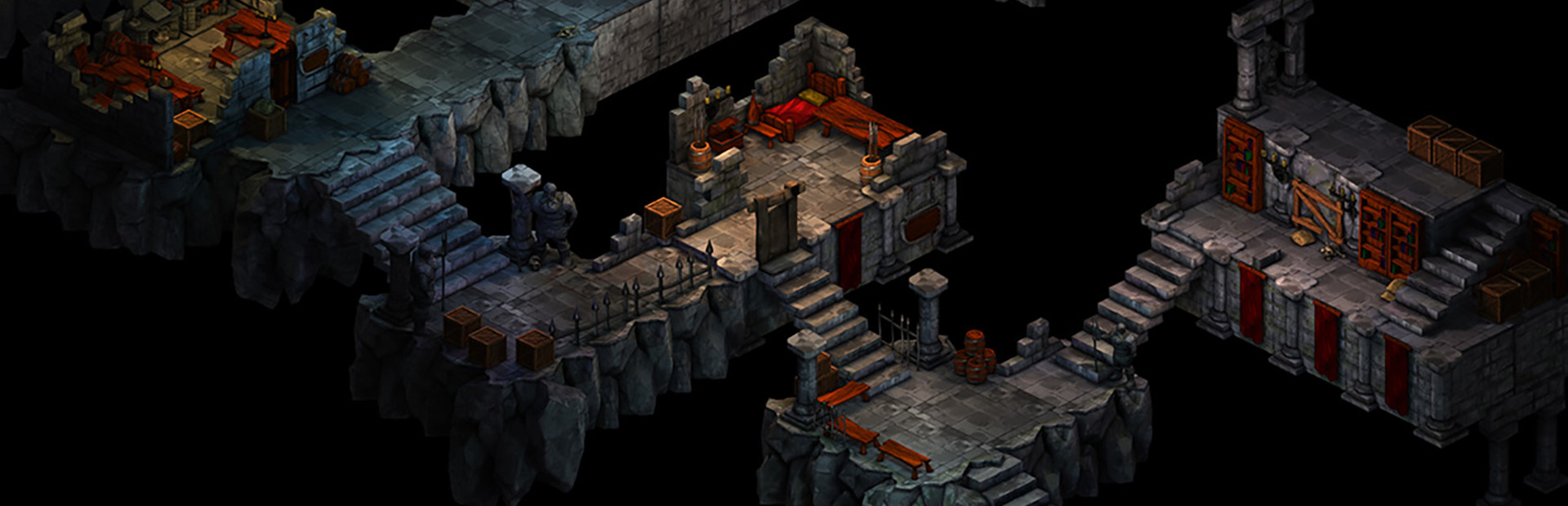
My first run through Firetop Mountain ended about forty minutes in when I opened a chest that a slightly smarter hero would have heard hissing. That's this game in miniature: a faithful, sometimes gleefully cruel adaptation of the 1982 Fighting Fantasy gamebook that rewards pattern memory and punishes the impatient. Tin Man Games took the original Ian Livingstone and Steve Jackson source material and did something genuinely unexpected with it, building what plays less like a video game RPG and more like a solo tabletop session rendered in 3D. The dungeon rooms assemble themselves before your eyes, set piece by set piece, as though an invisible hand is placing painted scenery. Your character hops around the board on its circular base, stiff-limbed and miniature-perfect. The whole presentation is one of the most considered aesthetic choices in recent indie adaptations. It commits fully to the physical-toy illusion, and for the right player, that commitment is quietly magical. The combat system, called GridBluff, sits at the game's most divisive intersection. Battles play out on a small grid where your figurine and the enemies all act simultaneously. You read attack directions, time your moves to flank or dodge, and when both sides clash head-on, six-sided dice roll to resolve it. Critics split roughly down the middle here: some found the grid positioning clever and satisfying once the enemy patterns clicked; others called it repetitive by the third room of goblins. Both camps are right, depending on how much tolerance you have for light tactical puzzles that never dramatically escalate in complexity. What helps is that each of the starting heroes, from the experienced adventurer Alexandra of Blacksand to the sleep-bomb-tossing Krea Datura to the hard-hitting rhino-man Twenty-Three, approaches those same rooms with different stat profiles, different character-specific story beats, and occasionally different dialogue from NPCs who recognize them. The dungeon layout does not change, but who you are inside it genuinely does. The replayability argument hinges entirely on that character variety. Slaying monsters earns souls, and souls unlock additional figurines, eventually reaching a roster of over 100 heroes and monsters across the full experience. The loop of running the mountain again with a new figurine, pushing slightly deeper than last time, learning where the Potion of Invisibility is hidden and which corridors to avoid, has a particular low-pressure rhythm to it. Sessions feel short and self-contained in the best way. The friction comes from the single save slot and checkpoint-only saving, meaning a mid-dungeon switch of heroes wipes the current run. For players who want to sample the full roster quickly, that stings. The no-backtracking rule, faithful to the gamebook format, will also frustrate anyone expecting the agency of a traditional CRPG. Certain dead-ends and instant-death choices feel opaque on a first pass and simply punishing rather than instructive. The game wears its old-school origins proudly, which is either charming or maddening based on your history with the format. A note worth flagging for Mac users: compatibility with macOS Catalina and above is broken, and Tin Man Games shifted its development focus toward other Fighting Fantasy titles after launch, so content updates for this one are no longer forthcoming. On Windows and Linux the experience is stable, and the atmosphere holds up well: the ambient sound design in particular is quietly lovely, with caverns sighing with moving air and spider dens chittering at the edge of hearing. There is no voice acting, and the combat animations are deliberately minimal, but neither feels like a budget cut. They feel like choices made by people who understood what kind of object they were building.

Indie & narrative
Tags
System Requirements
Minimum
- OS
- Windows 7
- Memory
- 4 GB RAM
- Storage
- 3 GB available space
- Graphics
- Hardware Accelerated Graphics with 1GB memory
- Processor
- 1.5 GHz
Recommended
- OS
- Windows 8
- Memory
- 4 GB RAM
- Storage
- 3 GB available space
- Graphics
- Hardware Accelerated Graphics with 2GB memory
DLC & Add-ons for The Warlock of Firetop Mountain1
Expansions, DLC packs and add-on content for this game. Click any item to see store offers.

Keep exploring
Community Discussion
Be the first to comment on The Warlock of Firetop Mountain.
Reviews & Ratings
Game Info
- Developer
- Tin Man Games
- Publisher
- Tin Man Games
- Release Date
- Aug 30, 2016