Catacombs of the Undercity
Stripped of gear, thrown into a sewer, and hunted by a criminal brotherhood - if that opening hook lands for you, Tin Man's dungeon-crawl gamebook rewards every replay.
GamerScout Verdict
Worth it for gamebook fans who want a punishing but fair dungeon crawl with genuine atmosphere and branching replay value.
Compare Prices(6 stores)
Every store in this table quotes us in euros, so the EUR figure is the price the seller actually set, not our arithmetic — which is why EUR is also the currency we rank in. We only list an offer here when the store gives us its price in euros, so nothing in this table is a number we invented.
Pick USD, PLN, GBP, CAD or AUD in the header and we convert from EUR at the European Central Bank reference rate — converted amounts are prefixed with ~. Your bank or the store may apply a different rate at checkout. We never hide offers based on where you are: everyone sees this whole table.
We may earn a commission when you buy games through links on this page — at no extra cost to you. It never affects our rankings or verdicts.
Price History
Screenshots & Media
About Catacombs of the Undercity
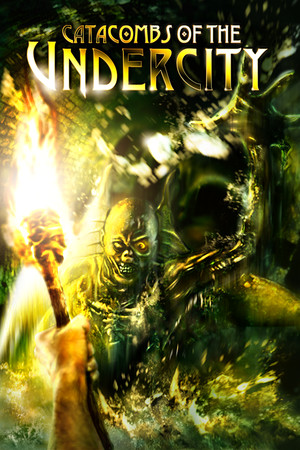
My relationship with digital gamebooks is complicated, but Catacombs of the Undercity is the kind of title that quietly dissolves that skepticism. You start with nothing - no equipment, no allies, no map - dumped into the underbelly of Orlandes City by the Red Hand Guild and told, essentially, to figure it out. That stripped-down premise is precisely what makes this work as a gamebook. It does not ease you in. It trusts the format. The mechanics run on three stats rolled at the start: vitality, fitness, and luck. Those three numbers govern everything from combat resolution to whether a particular tunnel branch is even accessible. Combat is dice-driven and, on the Adventurer difficulty setting, genuinely punishing - the damage tables can swing wildly, and a bad streak of rolls early on will end runs fast. The game does offer three difficulty levels, including a Casual mode that allows free movement and post-death retreats, so players who are here for the story rather than the suffering have a clean path to the ending. That flexibility feels intentional and is worth calling out. The achievement system adds a separate layer of completionist incentive, with hidden outcomes and branching paths that players have reported finding across multiple runs. What holds all of this together is the writing and the atmosphere. The Undercity - a near-mythical city beneath the city, inhabited by outcasts, cultists, and worse - is rendered with a kind of grimy specificity that prose-forward games sometimes lack. Reviewer coverage from the time the original iOS version launched praised the descriptive writing for making it easy to mentally visualize spaces even without looking at the illustrations. And those illustrations, by Pirkka Harvala (who also worked on the Orlandes series entry An Assassin in Orlandes), are high-resolution and do genuine atmospheric work. The soundtrack by Adrian Watkins sits in that ambient-dark register that the best gamebook adaptations lean into - understated, a little unsettling, never intrusive. It is a soundscape that earns its place. The weaknesses are real and worth naming. The review pool on Steam is small - only a few dozen players have left scores - which makes this genuinely obscure territory even by indie gamebook standards. Community threads surface some minor bugs related to equipment stat tracking, and the game's age (originally published as a mobile title in 2011, ported to Steam in 2016) means do not expect modern UI polish. The map can feel opaque to first-timers unfamiliar with Tin Man's engine conventions. And if you hit a run of bad dice on Adventurer, the restart loop is abrupt enough to feel punitive rather than dramatic. These are friction points, not dealbreakers, but they are there. This one is for readers who grew up dog-earing Fighting Fantasy books and anyone who believes a tight, well-written dungeon crawl with branching paths is a complete experience on its own terms. It does not overstay its welcome. It knows what it is, builds something cohesive within those limits, and signs off before the atmosphere thins. That discipline is rarer than it should be.

Indie & narrative
Tags
System Requirements
Minimum
- OS
- Windows XP SP3
- Memory
- 2 GB RAM
- Storage
- 350 MB available space
- Graphics
- Hardware Accelerated Graphics with dedicated memory
- Processor
- 2 GHz dual core
Recommended
- OS
- Windows 7/8
- Memory
- 4 GB RAM
- Storage
- 350 MB available space
- Graphics
- Hardware Accelerated Graphics with 1GB memory
Keep exploring
Community Discussion
Be the first to comment on Catacombs of the Undercity.
Reviews & Ratings
No ratings available
Game Info
- Developer
- Tin Man Games
- Publisher
- Tin Man Games
- Release Date
- Jan 19, 2016