Compare Table of Tales: The Crooked Crown prices across 50+ stores and find the best deal. Developed by Tin Man Games. Published by Tin Man Games. Released on 9/14/2021. Available on PC. Genres: Adventure, RPG, Strategy.

A pirate-flavored tabletop RPG that skips the scheduling headache of actual D&D and puts a mechanical bird in charge - light on crunch, heavy on charm, and perfectly playable without a headset.

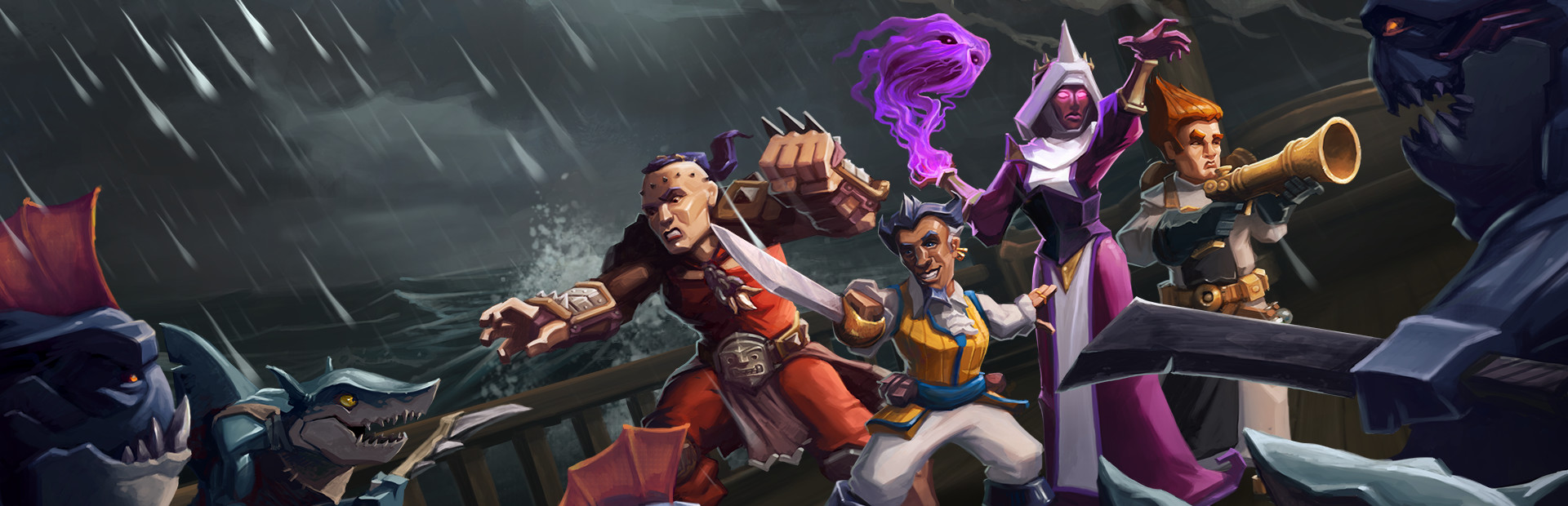
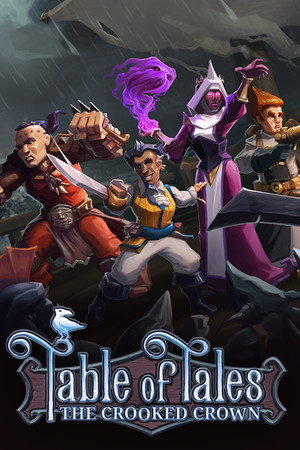
My spreadsheet instincts kept waiting for a depth wall that never fully arrived, and that tells you almost everything you need to know about Table of Tales: The Crooked Crown. What you get is a grid-based, action-point-driven tactics game dressed up as a living diorama, where environments physically rise and fall out of a magical table while a single voice actress named Arbitrix narrates and voices every character in the game. That conceit - one mechanical bird, one table, zero players rolling dice at someone's kitchen table - is either going to hook you in the first ten minutes or feel like a toy aimed at a younger audience. Probably both, simultaneously. The core loop is turn-based and card-driven. Each of your four scoundrel classes has a pool of action points per turn, which you spend to move across the square grid or play combat cards - attacks, buffs, rest options, context-sensitive trap interactions. Skill checks against character stats like Strength and Charm add a dice-roll variable to non-combat choices, which is where most of the interesting decision-making actually lives. The combat itself is streamlined to the point that attacks never miss; positioning and action-point economy matter, but veterans of Into the Breach or even XCOM will find the tactical ceiling a little low. On medium difficulty the game stays comfortable for most of its runtime, with a few enemy-swarm encounters that push back hard enough to feel earned. The hardest difficulty does add genuine pressure around character-ability choices and branching decisions. What Tin Man Games nailed is the branching structure. You are forced to leave one of your four starting classes behind early on, which changes your party composition for that entire run and locks off that character's story arc. Multiple routes through encounters - fight, charm, or sneak - produce meaningfully different scenes downstream. A full run sits around three to four hours depending on how much dialogue you let play out, and the achievement hunters in the community report needing roughly four distinct playthroughs to exhaust the main branches. That is a modest but honest content proposition. The non-VR flat-screen mode works, though the tactile magic of physically grabbing miniatures is replaced by mouse clicks; the game was clearly designed around VR first and the flat mode is a functional port, not a reimagining. The original local co-op mode from the PlayStation VR version did not make it into the Steam PC release, which is the sharpest single criticism from the community - playing the villain while friends control the heroes would have added real longevity. For strategy and sim players who define fun purely by decision-tree complexity, this sits closer to a narrative adventure than a proper tactics game. The card pool per character is small, the upgrade paths are story-gated rather than freeform, and there is no build theorycrafting to speak of between runs. But for someone who has always wanted to run a D&D session without corralling a group, or who wants an accessible entry point into grid-based tactics without reading a thirty-page rulebook, Table of Tales is a surprisingly complete pitch. The production values - voice acting, animated miniature art, the satisfying way the table reconstructs itself between scenes - punch above the game's modest scope. Just go in knowing you are buying a three-to-four-hour charming ride with replay incentives attached, not a 200-hour grand strategy sandbox. Diego, Scout Team

Table of Tales: The Crooked Crown
AdventureRPGStrategy

Table of Tales: The Crooked Crown

Sep 14, 2021Tin Man Games
GamerScout Says

A pirate-flavored tabletop RPG that skips the scheduling headache of actual D&D and puts a mechanical bird in charge - light on crunch, heavy on charm, and perfectly playable without a headset.

PC
Best Price Available
0.00
at N/A
Historical low: $4.14

Compare Prices(0 stores)

Loading prices...

We may earn a commission when you buy games through links on this page — at no extra cost to you. It never affects our rankings or verdicts.

Screenshots & Media

Screenshot

About Table of Tales: The Crooked Crown

My spreadsheet instincts kept waiting for a depth wall that never fully arrived, and that tells you almost everything you need to know about Table of Tales: The Crooked Crown. What you get is a grid-based, action-point-driven tactics game dressed up as a living diorama, where environments physically rise and fall out of a magical table while a single voice actress named Arbitrix narrates and voices every character in the game. That conceit - one mechanical bird, one table, zero players rolling dice at someone's kitchen table - is either going to hook you in the first ten minutes or feel like a toy aimed at a younger audience. Probably both, simultaneously. The core loop is turn-based and card-driven. Each of your four scoundrel classes has a pool of action points per turn, which you spend to move across the square grid or play combat cards - attacks, buffs, rest options, context-sensitive trap interactions. Skill checks against character stats like Strength and Charm add a dice-roll variable to non-combat choices, which is where most of the interesting decision-making actually lives. The combat itself is streamlined to the point that attacks never miss; positioning and action-point economy matter, but veterans of Into the Breach or even XCOM will find the tactical ceiling a little low. On medium difficulty the game stays comfortable for most of its runtime, with a few enemy-swarm encounters that push back hard enough to feel earned. The hardest difficulty does add genuine pressure around character-ability choices and branching decisions. What Tin Man Games nailed is the branching structure. You are forced to leave one of your four starting classes behind early on, which changes your party composition for that entire run and locks off that character's story arc. Multiple routes through encounters - fight, charm, or sneak - produce meaningfully different scenes downstream. A full run sits around three to four hours depending on how much dialogue you let play out, and the achievement hunters in the community report needing roughly four distinct playthroughs to exhaust the main branches. That is a modest but honest content proposition. The non-VR flat-screen mode works, though the tactile magic of physically grabbing miniatures is replaced by mouse clicks; the game was clearly designed around VR first and the flat mode is a functional port, not a reimagining. The original local co-op mode from the PlayStation VR version did not make it into the Steam PC release, which is the sharpest single criticism from the community - playing the villain while friends control the heroes would have added real longevity. For strategy and sim players who define fun purely by decision-tree complexity, this sits closer to a narrative adventure than a proper tactics game. The card pool per character is small, the upgrade paths are story-gated rather than freeform, and there is no build theorycrafting to speak of between runs. But for someone who has always wanted to run a D&D session without corralling a group, or who wants an accessible entry point into grid-based tactics without reading a thirty-page rulebook, Table of Tales is a surprisingly complete pitch. The production values - voice acting, animated miniature art, the satisfying way the table reconstructs itself between scenes - punch above the game's modest scope. Just go in knowing you are buying a three-to-four-hour charming ride with replay incentives attached, not a 200-hour grand strategy sandbox. Diego, Scout Team

Tags

singleplayerachievementstier:sub-5Tabletop SimCard-Based CombatBranching NarrativeAction Point SystemVR-OptionalSkill ChecksSingle NarratorPirate SettingShort-Run Replayability

System Requirements

Minimum

OS
Windows 10
Memory
8 GB RAM
DirectX
Version 11
Storage
2 GB available space
Graphics
NVIDIA GeForce® GTX 1050 Ti / Radeon™ RX 560 equivalent
Processor
Intel Core i5-4590 / AMD FX 8350
VR Support
SteamVR
Additional Notes
Requires a 64-bit processor and operating system

Recommended

Additional Notes
Requires a 64-bit processor and operating system

Community Discussion

Be the first to comment on Table of Tales: The Crooked Crown.

Reviews & Ratings

No ratings available

Game Info

Developer
Tin Man Games
Publisher
Tin Man Games
Release Date
Sep 14, 2021

Price Alert

Get notified when the price drops below your target!

Create Alert

Price History

2026-06-104.14(lowest)

More from Tin Man Games

Buy smarter: helpful guides

Looking for more? See games like Table of Tales: The Crooked Crown

Frequently asked questions about Table of Tales: The Crooked Crown

How much does Table of Tales: The Crooked Crown cost?

Table of Tales: The Crooked Crown pricing changes often and varies by store, edition and region. The live price table on this page compares the cheapest in-stock key and store offers across 50+ verified shops, so you always see the current lowest price before you buy.

Where can I buy Table of Tales: The Crooked Crown cheapest?

Compare Table of Tales: The Crooked Crown prices across every verified store in the price table on this page. We list the cheapest in-stock key and store offers, updated regularly, so you always see the best current deal before you buy.

What platforms is Table of Tales: The Crooked Crown available on?

Table of Tales: The Crooked Crown is available on PC.

When was Table of Tales: The Crooked Crown released?

Table of Tales: The Crooked Crown was released on 14 September 2021.

Who developed Table of Tales: The Crooked Crown?

Table of Tales: The Crooked Crown was developed by Tin Man Games.