Wars of Napoleon
A grand-strategy wargame that rewards players who think in corps, supply lines, and weekly turns, and punishes everyone else with the weight of 4,000 regions.
GamerScout Verdict
Built for dedicated wargamers who want supply lines and corps-level command, not casual strategists looking for a quick Waterloo.
Compare Prices(4 stores)
Every store in this table quotes us in euros, so the EUR figure is the price the seller actually set, not our arithmetic — which is why EUR is also the currency we rank in. We only list an offer here when the store gives us its price in euros, so nothing in this table is a number we invented.
Pick USD, PLN, GBP, CAD or AUD in the header and we convert from EUR at the European Central Bank reference rate — converted amounts are prefixed with ~. Your bank or the store may apply a different rate at checkout. We never hide offers based on where you are: everyone sees this whole table.
We may earn a commission when you buy games through links on this page — at no extra cost to you. It never affects our rankings or verdicts.
Price History
Screenshots & Media
About Wars of Napoleon
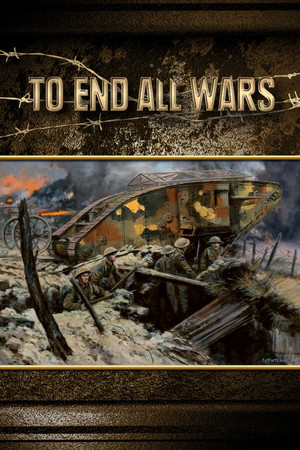
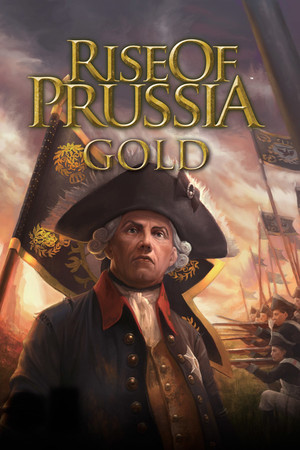
I have a soft spot for wargames that treat the player like an adult, and Wars of Napoleon by Ageod is almost aggressively committed to that philosophy. This is a simultaneously-resolved, WeGo grand-strategy title built on the Athena engine, where each turn simulates seven days of real campaign time and your core maneuver unit is the corps, not a lone regiment. If you have bounced off anything in the Ageod catalog before, understand what you are getting into before you commit. The scope is the first thing that lands. The map stretches from the British Isles to the Persian Gulf, from Morocco to the Urals, with insert panels covering the Americas and Asia. That is roughly 4,000 named regions across land, river, and sea zones, each tracked for supply flow, road quality, terrain, weather, and seasonal conditions. In the two grand campaigns spanning 1805 to 1815, you pick one of seven major powers, France, Great Britain, Spain, Russia, Prussia, Austria, or the Ottoman Empire, and you are immediately responsible for conscription, military reforms, fleet movements, blockades, diplomatic posturing, and the actual operational positioning of your armies. The three shorter scenarios (Waterloo at a complexity rating of 2 out of 5, plus Jena and Austerlitz) serve as structured entry points that strip out most of the new mechanics, which is smart design. Start there. The Waterloo scenario doubles as a working tutorial before the full 5-out-of-5 grand campaigns open up. Where the game genuinely earns its reputation is in the command hierarchy and logistics modeling. Each regiment requires command points that trickle down from superior officers, so stacking 40 units under a mediocre general is a fast way to watch your offensive momentum collapse. A 27-card regional decision system adds a layer of governance on top of the military, cards covering domestic surveillance, recruitment drives, and tactical gambits are dragged onto highlighted regions at a cost in gold, loyalty, and sometimes victory points. A well-timed card can accelerate a siege or quell a rebellion before it bleeds your rear-area supply. Battle resolution is automatic, but you submit a broad tactical stance, and there is real evidence that flanking maneuvers with a smaller force against a scouted enemy can tip outcomes, which captures something most wargames at this scale miss entirely. Now for the honest accounting. The Steam reception landed at Mixed, sitting around 46 percent positive, and the split is almost entirely explained by two things: a rocky launch with crash-to-desktop bugs, and the Athena engine's turn-resolution feedback being genuinely poor. The engine does not narrate what it is processing during turn resolution, and the movement playback scrolls too fast to follow your own operational story unfolding. Most of the CTDs were addressed through patching, and players writing reviews from 2024 onward broadly confirm the stability has improved, but a few lingering issues remain. Save every turn or two. The AI also draws some criticism in the coalition scenarios, where allied partners act independently with no coordination layer, though it is worth noting that historical coalition warfare was exactly that chaotic, so your mileage on calling this a flaw will depend on your tolerance for authentic friction. Post-launch DLC and mod support never expanded meaningfully, which is a recurring Ageod limitation. For the right player, none of that kills the experience. If you have put time into other Ageod titles using the same engine, Rise of Prussia, Alea Jacta Est, To End All Wars, the interface will feel familiar within an hour. If this is your first Ageod game, budget time for the manual, hit the YouTube tutorials the community has assembled, and lean on the Slitherine forums, where the developers and veteran players respond quickly to questions. The learning curve is steep but structured enough that a patient newcomer willing to start in the shorter scenarios can build up to the grand campaign without being thrown into the deep end.

Strategy & simulation
Tags
System Requirements
Minimum
- OS
- Vista/7/8/10
- Memory
- 2 GB RAM
- Network
- Broadband Internet connection
- Storage
- 1810 MB available space
- Graphics
- 1024 Mb video card
- Processor
- Pentium 4 or higher
Keep exploring
Community Discussion
Be the first to comment on Wars of Napoleon.
Reviews & Ratings
No ratings available
Game Info
- Developer
- Ageod
- Publisher
- Slitherine Ltd.
- Release Date
- May 6, 2016