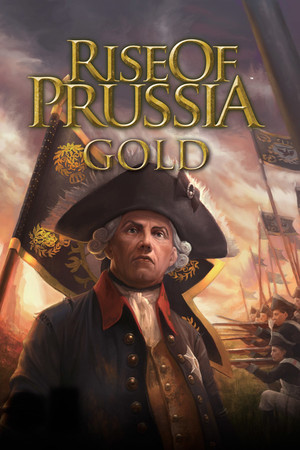
Rise of Prussia Gold
Frederick II's impossible war on five fronts, simulated with the kind of chain-of-command granularity that will break you before it hooks you - but once it hooks you, nothing else scratches this itch.
GamerScout Verdict
Worth it for dedicated wargamers who will read the manual; a frustrating dead end for anyone expecting a modern onboarding experience.
Compare Prices(6 stores)
Every store in this table quotes us in euros, so the EUR figure is the price the seller actually set, not our arithmetic — which is why EUR is also the currency we rank in. We only list an offer here when the store gives us its price in euros, so nothing in this table is a number we invented.
Pick USD, PLN, GBP, CAD or AUD in the header and we convert from EUR at the European Central Bank reference rate — converted amounts are prefixed with ~. Your bank or the store may apply a different rate at checkout. We never hide offers based on where you are: everyone sees this whole table.
We may earn a commission when you buy games through links on this page — at no extra cost to you. It never affects our rankings or verdicts.
Price History
Screenshots & Media
About Rise of Prussia Gold
I have a soft spot for wargames that punish overconfidence faster than any tutorial can warn you about, and Rise of Prussia Gold earns its place near the top of that list. This is a turn-based grand-strategy wargame built around the Seven Years War (1756-1763), putting you in command of Prussia and its allies against a coalition of Austria, France, Russia, Sweden, and the Empire, or the reverse. The map covers all of Germany and surrounding regions across more than 1,000 distinct areas, and the Grand Campaign runs 176 turns - enough time to truly feel the attrition of a war Frederick II historically had no business surviving. The mechanical core that makes this game worthwhile is the chain-of-command system. Armies are structured into a strict hierarchy: elements roll up into units, units into brigades, brigades into corps, corps into field armies. Get the structure wrong and your forces fight at a penalty you will feel immediately. More interesting is how the game handles leader seniority: promoting a more competent but junior officer over a senior one is allowed, but it drains National Morale, reflecting the genuine social friction of 18th-century military culture. National Morale is itself a pressure gauge that drives automatic victory or defeat - lose too many battles and key objectives and the game ends regardless of how many troops you still have in the field. Supply lines are simulated off-map but the consequences are very much on it; cut an army from its logistics and it bleeds cohesion and manpower every turn. Commanders also carry individual stance settings - assault, defensive, cautious - that shape how their forces engage without you issuing real-time orders, which is where a lot of the pre-turn planning tension lives. The Gold edition adds meaningful content on top of the original 2010 release. You get two War of Austrian Succession scenarios covering the First and Second Silesian Wars (1740-1748), a four-player Grand Campaign option for competitive multiplayer via PBEM, Regional Decision Cards that let you play event cards directly onto the map, expanded siege warfare unit types, and weather and terrain map filters that were frankly overdue. The scenario list at the base level already includes five annual campaigns (1757 through 1762), individual battle scenarios, and the full Grand Campaign, so a newcomer is not short of entry points. The annual campaigns in particular are the right starting point: they drop you into a specific year with a defined force structure, letting you learn the movement and command systems without the cognitive load of managing seven years of buildup. The weaknesses are real and worth knowing before you commit. The tutorial missions are sparse - three short text-heavy scenarios that cover the absolute minimum and have reportedly included jokes where straight instruction would help more. The 86-page manual is not optional reading; it is the actual tutorial. The UI clusters a lot of persistent data panels around the map edge, which makes the viewport feel cramped, and troop display markers can be hard to read at small zoom levels, especially against winter terrain. There is also a reported crash bug in the main Grand Campaign tied to specific UI interactions at late-war stages, and given that development is essentially frozen, it is unlikely to be patched. Performance carries a 25fps cap that some players find grating during map scrolling. The Metacritic score of 54 reflects critical frustration with accessibility and the dated presentation rather than a broken game - community reception among players who stuck with it runs considerably warmer, with Steam users sitting around 77 percent positive across a small but dedicated sample. For a player coming from Paradox grand strategy, the AGEOD engine will feel unfamiliar in the best way: less about numeric ledgers and more about operational positioning and logistics discipline. There is no tech tree, no economy micromanagement beyond managing conscript pools and war supplies. The entire decision space is about where to move, who commands what, and how to keep Frederick's army from being surrounded by three coalitions at once. That is a narrow but genuinely deep problem space, and for the right player it produces sessions that are hard to walk away from mid-turn.

Strategy & simulation
Tags
System Requirements
Minimum
- OS
- Vista/7/8/10
- Memory
- 1 GB RAM
- Storage
- 1 GB available space
- Graphics
- Min 256 Mb video card
- Processor
- Pentium 4 or equivalent
Keep exploring
Community Discussion
Be the first to comment on Rise of Prussia Gold.
Reviews & Ratings
Game Info
- Developer
- Ageod
- Publisher
- Slitherine Ltd.
- Release Date
- May 7, 2014