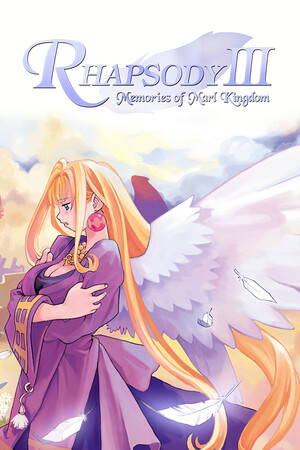
Rhapsody III: Memories of Marl Kingdom
After two decades locked out of the West, Marl Kingdom's finale is finally here, and it's a charming but uneven anthology that rewards series devotees far more than curious newcomers.
GamerScout Verdict
Worth finishing for dedicated Marl Kingdom fans who want closure; too niche and uneven to recommend as a series entry point.
Compare Prices(6 stores)
Every store in this table quotes us in euros, so the EUR figure is the price the seller actually set, not our arithmetic — which is why EUR is also the currency we rank in. We only list an offer here when the store gives us its price in euros, so nothing in this table is a number we invented.
Pick USD, PLN, GBP, CAD or AUD in the header and we convert from EUR at the European Central Bank reference rate — converted amounts are prefixed with ~. Your bank or the store may apply a different rate at checkout. We never hide offers based on where you are: everyone sees this whole table.
We may earn a commission when you buy games through links on this page — at no extra cost to you. It never affects our rankings or verdicts.
Price History
Screenshots & Media
About Rhapsody III: Memories of Marl Kingdom
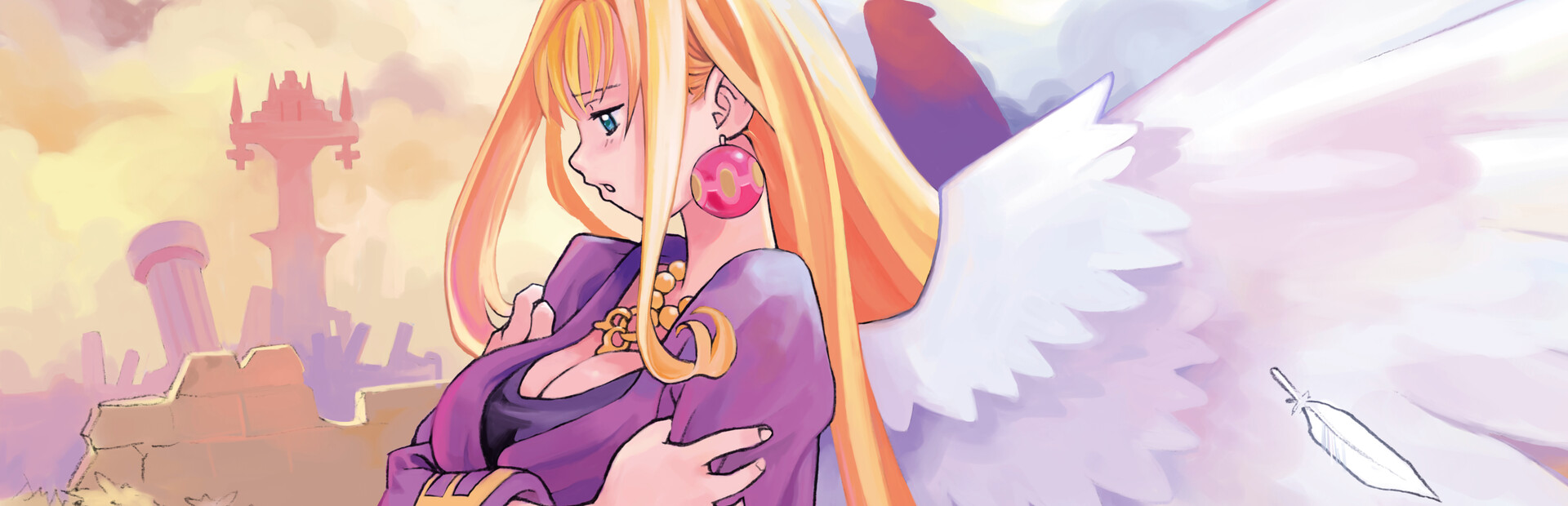
I went into this one with genuine affection for the Marl Kingdom world and came out the other side with complicated feelings. Rhapsody III lands on PC as the long-overdue Western debut of a PS2-era title that originally released in Japan back in 2000, and that history shows in places, but so does a real tenderness for its characters. If you have played the first two games and wondered what happened to Cornet's mother Cherie, or what the Marjoly family was actually up to during the main story, this anthology-style RPG exists specifically to answer those questions. The structure is the most interesting and most frustrating thing about it at the same time. Rather than one continuous adventure, the game is divided into six short chapters that jump around the Marl Kingdom timeline, covering characters like Cornet, her daughter Kururu, the Marjoly family, a pair of star-crossed Nyanko lovers, and others. Think Dragon Quest IV's chapter format, but shorter and with wildly inconsistent quality. The later chapters, especially the arc following Cherie and the material around the Ancient Civilization's fall, genuinely deliver the narrative payoff series fans have waited years for. The early chapters are a different story. A couple of them feel like side content that got folded into the main release, and the Nyanko chapter in particular is largely backtracking and busywork. If you hate filler quests, you will feel the drag. The combat system is where Rhapsody III gets genuinely ambitious in a Nippon Ichi kind of way. Four Leader slots each support three Partner slots, meaning you can theoretically field sixteen combatants at once. Leaders receive stat boosts from their assigned Partners, and only Leaders require direct commands while Partners act on AI unless you intervene manually. Combatants fall into categories including Human, Puppeteer, Puppet, and Monster, and only Puppeteers can direct Puppets, though some Puppets can act as Puppeteers in their own right. On paper this is a fascinating web of interconnected roles. In practice, the party size balloons to a point where battles become slow and chaotic, recruitable monsters tend to arrive underleveled and require grinding to be remotely useful, and the difficulty swings unpredictably between chapters rather than building a consistent curve. For a game about managing sixteen characters, the combat loop never quite finds a satisfying rhythm. What does hold up is the charm that defines the entire series. The writing has genuine wit, the English localization clearly worked hard to keep the comedy landing, and the voice cast commits fully to how over-the-top everyone is. Songs are performed in Japanese with English subtitles, which is a minor disappointment given how much the first game leaned into its musical identity, but the soundtrack itself is warm and whimsical throughout. The 2D sprites on 3D backgrounds look dated by modern standards, though the chibi character art and picture-book aesthetic give it a nostalgic softness that is hard to dislike entirely. Players completing everything can expect roughly fifteen to eighteen hours, more if the monster-recruiting and party-optimization systems pull you in. The honest truth is that Rhapsody III is a game for people who already love Marl Kingdom. It fills in lore gaps, gives closure to threads left dangling since the original, and has moments of genuine heart, particularly in its final acts. But the episodic structure means the experience feels choppy, several chapters would have been better as optional side content, and the combat system carries the seeds of something interesting without ever fully blooming. Anyone walking in without the first two games will be lost and probably bored. Devoted fans of Cornet and Kururu, on the other hand, will find enough here to make the playthrough worthwhile, especially in the back half.

RPGs
Tags
System Requirements
Minimum
- OS
- Windows 10
- Memory
- 2 GB RAM
- DirectX
- Version 11
- Storage
- 2 GB available space
- Graphics
- Radeon HD 5450
- Processor
- Intel Core2 Quad Q9300 2.5 GHz
Recommended
- OS
- Windows 10/11
- Memory
- 4 GB RAM
- DirectX
- Version 11
- Storage
- 2 GB available space
- Graphics
- Geforce GT 640, Radeon HD 6450
- Processor
- Intel Core i5-4670K
Keep exploring
Community Discussion
Be the first to comment on Rhapsody III: Memories of Marl Kingdom.
Reviews & Ratings
No ratings available
Game Info
- Developer
- Nippon Ichi Software, Inc.
- Publisher
- NIS America, Inc.
- Release Date
- Aug 29, 2023