Gravity Spin
A one-person 8-bit metroidvania that asks one genuinely unsettling question: what happens to your movement inputs when the floor becomes the ceiling?
GamerScout Verdict
Worth a look for metroidvania fans with a tolerance for spatial disorientation; too niche and friction-heavy for anyone outside that circle.
Compare Prices(6 stores)
Every store in this table quotes us in euros, so the EUR figure is the price the seller actually set, not our arithmetic — which is why EUR is also the currency we rank in. We only list an offer here when the store gives us its price in euros, so nothing in this table is a number we invented.
Pick USD, PLN, GBP, CAD or AUD in the header and we convert from EUR at the European Central Bank reference rate — converted amounts are prefixed with ~. Your bank or the store may apply a different rate at checkout. We never hide offers based on where you are: everyone sees this whole table.
We may earn a commission when you buy games through links on this page — at no extra cost to you. It never affects our rankings or verdicts.
Price History
Screenshots & Media
About Gravity Spin
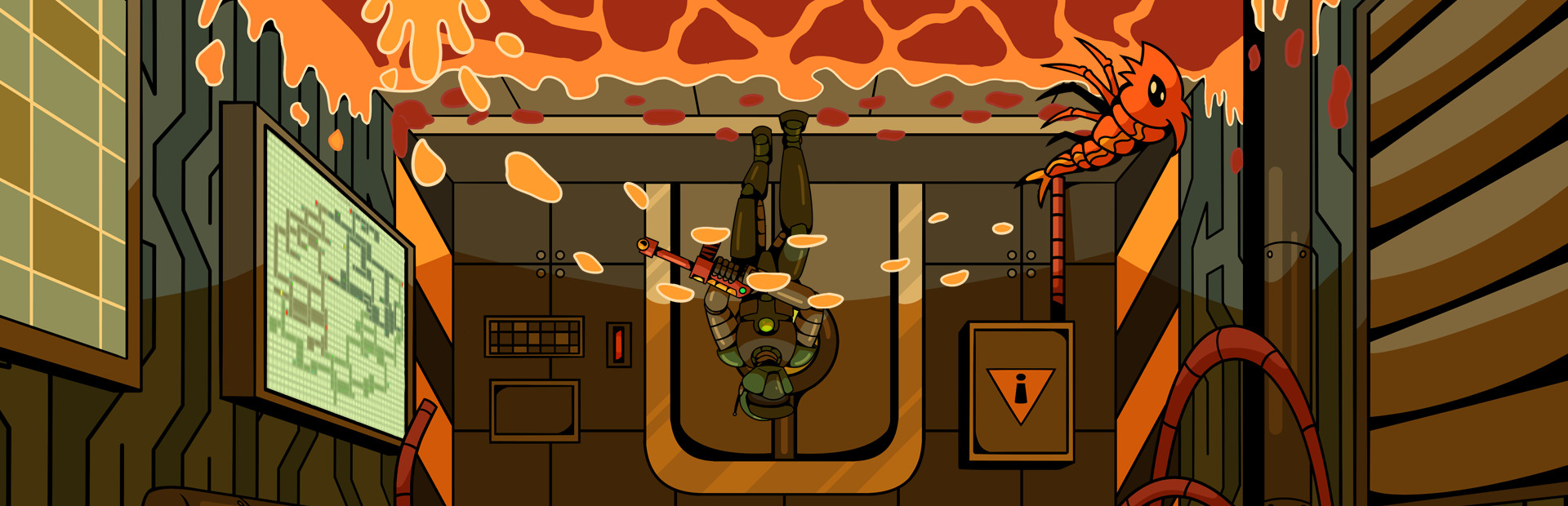
My first thought loading up Gravity Spin was that ERMedia had picked the hardest possible hook to execute in a solo project: a metroidvania where the central gimmick actively fights your muscle memory. The gravity spin module does exactly what it says on the label. Trigger it and the entire screen rotates around you, which means the direction your thumb pushes on a pad is no longer the direction your character moves. Up becomes down, left becomes right. Enemies reorient alongside you. It is, in the best possible way, the kind of mechanic that makes you feel slightly seasick the first time and quietly triumphant the third. The bones underneath are traditional enough. You drop into a damaged asteroid research base with a wrecked powersuit and no weapon, and the loop is classic metroidvania: explore, find an upgrade, reach a door that was blocked before, push deeper. The setting, a science station gone rogue with dangerous caverns threading between its divisions, has a quiet atmosphere that leans into its cramped 8-bit palette rather than fighting it. There is something almost meditative about the early rooms before the challenge ramps, a sense of careful handcraft in how each corridor introduces you to what gravity inversion will ask of you. The developer included an easy mode that strips back enemy aggression for players who want the exploration without the punishment, which is a thoughtful call for a solo release with no tutorial hand-holding. The friction is real and worth naming honestly. The screen-flip approach to gravity inversion, rotating the whole world rather than just flipping the character sprite, is the most disorienting possible interpretation of the concept, and that is both its strength and the thing most likely to push casual players away. Community feedback flagged this exact design choice early on. Whether that disorientation is a feature or a flaw depends entirely on what you want from a 2D platformer. If spatial reorientation puzzles make your brain light up, this is built for you. If you need your directional inputs to feel stable, the nausea will outweigh the novelty. The absence of Steam achievements is a minor annoyance for completionist types, and the controller compatibility comes with caveats straight from the developer: some pads will not cooperate due to engine limitations, and keyboard may end up being the cleaner option. What makes Gravity Spin worth the attention of small-game hunters is the honesty of its ambition. This is not a game pretending to be something bigger than it is. It knows it is a compact, punishing, slightly strange experiment built around a single mechanic, and it commits fully to that premise. The 8-bit aesthetic is not a shortcut; it is the right language for a game that wants you focused on spatial logic rather than visual spectacle. The asteroid base setting has genuine personality in its layout, and the upgrade-gated progression structure respects the genre's rhythms without overcomplicating them. For the asking price at this tier, the risk of disorientation is low enough that curious genre fans can afford to find out which side of that line they land on.

Indie & narrative
Tags
System Requirements
Minimum
- OS
- Windows 7
- Memory
- 512 MB RAM
- Storage
- 250 MB available space
- Processor
- 1GHz
Keep exploring
Community Discussion
Be the first to comment on Gravity Spin.
Reviews & Ratings
No ratings available
Game Info
- Developer
- ERMedia
- Publisher
- Plug In Digital
- Release Date
- Oct 11, 2018