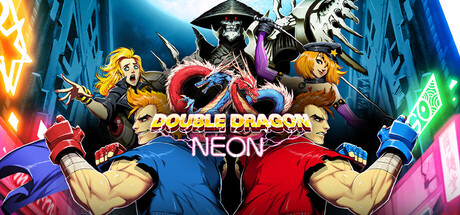
Double Dragon: Neon
WayForward's gloriously stupid love letter to the 80s lands on PC with a mixtape upgrade system, co-op high-fives, and a villain who closes the game with a musical number. Bring a bro or brace for a grind.
GamerScout Verdict
Best for couch co-op fans who can embrace the campy 80s comedy and overlook a stingy checkpoint system.
Compare Prices(3 stores)
Every store in this table quotes us in euros, so the EUR figure is the price the seller actually set, not our arithmetic — which is why EUR is also the currency we rank in. We only list an offer here when the store gives us its price in euros, so nothing in this table is a number we invented.
Pick USD, PLN, GBP, CAD or AUD in the header and we convert from EUR at the European Central Bank reference rate — converted amounts are prefixed with ~. Your bank or the store may apply a different rate at checkout. We never hide offers based on where you are: everyone sees this whole table.
We may earn a commission when you buy games through links on this page — at no extra cost to you. It never affects our rankings or verdicts.
Price History
Screenshots & Media
About Double Dragon: Neon
I want to tell you something that the arcade nostalgia crowd won't: Double Dragon Neon is not the game you remember, and that is mostly a good thing. WayForward did not attempt a faithful reconstruction of the 1987 coin-op. They looked at the source material and decided the most honest tribute was a full-throated 80s parody, complete with a rock-and-roll lich-king villain named Skullmageddon who delivers his backstory via closing musical number. If that sentence makes you want to play this game, you will probably love it. If it makes you roll your eyes, manage your expectations accordingly. The mechanical hook that separates Neon from a straight brawler is the mixtape system. You equip two cassette tapes simultaneously: one Stance tape that adjusts your passive stats (attack focus, defense focus, magic regeneration, health drain on hit) and one Sosetsitsu tape that loads a special attack onto your energy meter, ranging from fireballs and hurricane kicks to a screen-clearing dragon summon. Tapes drop from enemies, appear in chests, and can be purchased at shops. Collecting duplicate copies levels the tape up, and a Tapesmith NPC will push the level cap higher in exchange for Mythril ore harvested from boss fights. On paper this is a neat lightweight RPG layer grafted onto a brawler. In practice it is the game's sharpest double edge: build the right loadout and you feel genuinely powerful; ignore the system or hit bad drop luck and the difficulty spikes become punishing walls. There are no mid-level checkpoints either, so dying near a boss sends you back to the beginning of the stage, which stings more the longer the stage runs. The co-op, whether local or the notoriously laggy online implementation in the PC port, is where Neon earns its reputation. The high-five mechanic lets Billy and Jimmy split health bars evenly, share the Gleam buff (a brief damage boost triggered by perfectly timing a dodge), or pull a treacherous psych-out to steal a sliver of a partner's HP. The Gleam dodge itself is the most satisfying core skill on offer: time it right, glow red, punch harder for a few seconds. It rewards attentiveness without demanding fighting-game precision. Composer Jake Kaufman's soundtrack underlines all of this with a sound that feels like every 80s action movie and arcade cabinet rolled into one continuous fever dream. Each individual tape also gets its own tiny jingle when you hover over it in the menu, which is one of the more quietly brilliant pieces of audio design in recent brawler history. The weaknesses are real and worth naming plainly. Solo play is serviceable but the game is tuned around co-op, and grinding tape levels to overcome difficulty spikes feels like a tax rather than a reward. The PC port adds online co-op, but the implementation at launch was widely reported as laggy and unreliable, so treat local play as the intended mode. Keyboard controls are uncomfortable enough that a controller is effectively mandatory. The runtime on a first clear sits around two to three hours on normal, with higher difficulties gating behind completing the previous one, so repeat runs are the intended model. If you are comparing this to Streets of Rage 4 or Fight N Rage on modern sensibilities alone, those games edge it on fluidity. But Neon is doing something those games are not: it is a comedic, deliberately campy artifact that earns its jokes rather than just wearing 80s clothes.

Indie & narrative
Tags
System Requirements
Minimum
- OS
- Windows 7-32Bit or Windows 8-32Bit
- Memory
- 1 GB RAM
- Network
- Broadband Internet connection
- Storage
- 3 GB available space
- Graphics
- NVIDIA GeForce 9600 GT 512 MB / ATI Radeon HD 4650 1GB or higher | Shader Model 3+
- Processor
- AMD Athlon 64 X2 Dual Core Processor 4600+, 2.4GHz / Intel Pentium D 805 2.66GHz or higher
Recommended
- OS
- Windows 7-64Bit or Windows 8-64Bit
- Memory
- 2 GB RAM
- Network
- Broadband Internet connection
- Storage
- 3 GB available space
- Graphics
- NVIDIA GeForce 9600 GT 1GB / ATI Radeon HD 4650 1GB | Shader Model 3+
- Processor
- AMD Athlon 7850 Dual Core Processor 2.8GHz / Intel Core 2 Duo E7500 2.93 GHz
Keep exploring
Community Discussion
Be the first to comment on Double Dragon: Neon.
Reviews & Ratings
No ratings available
Game Info
- Developer
- WayForward
- Publisher
- Midnight City
- Release Date
- Feb 6, 2014