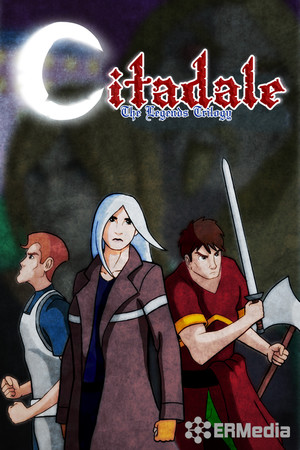
Citadale: The Legends Trilogy
Three chapters of old-school gothic platforming packed into one budget package, but hit detection and a buried save system may try your patience before the atmosphere wins you over.
GamerScout Verdict
Worth it only at a steep discount for NES Castlevania veterans; newcomers to the genre will hit walls the game gives no tools to climb.
Compare Prices(6 stores)
Every store in this table quotes us in euros, so the EUR figure is the price the seller actually set, not our arithmetic — which is why EUR is also the currency we rank in. We only list an offer here when the store gives us its price in euros, so nothing in this table is a number we invented.
Pick USD, PLN, GBP, CAD or AUD in the header and we convert from EUR at the European Central Bank reference rate — converted amounts are prefixed with ~. Your bank or the store may apply a different rate at checkout. We never hide offers based on where you are: everyone sees this whole table.
We may earn a commission when you buy games through links on this page — at no extra cost to you. It never affects our rankings or verdicts.
Price History
Screenshots & Media
About Citadale: The Legends Trilogy
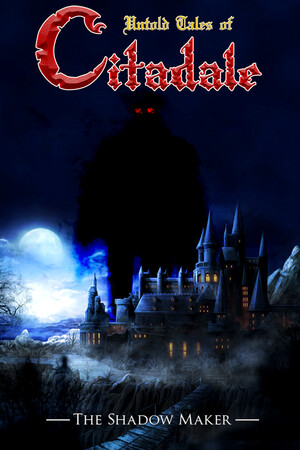
My honest first impression of Citadale: The Legends Trilogy was that someone had looked at the original NES Castlevania, loved it sincerely, and then rebuilt it from memory in a weekend. That is both the charm and the problem. The trilogy bundles three chapters, Gate of Souls, Curse of Darkness, and Legacy of Fate, each following a successive generation of the Dorleac family: Sonja, her son Gabriel, and finally Christopher, her grandson. The through-line of inherited duty and a cursed castle is genuinely evocative on paper, and the chiptune soundtrack carries more atmosphere than the pixel art alone could manage. If you let the music do its work, there are moments where the gothic mood lands properly. Mechanically, this is linear stage-by-stage action platforming stripped to its bones. You swing the Shadow Blade, throw sub-weapons like axes and holy water using a soul-gem system that stands in for mana, and read enemy patterns until muscle memory takes over. The third chapter, Legacy of Fate, opens things up slightly with a stage select screen and a health-gated projectile ability for Christopher, which at least gives the trilogy's final act a different texture. Air control is notably looser and more forgiving than the stiff Castlevania jump it imitates, which actually makes platforming feel more modern than the visuals suggest. The checkpoints are present and appreciated, because the difficulty spikes erratically: a few stages feel completely manageable, then a single boss becomes a wall that will swallow thirty attempts. Here is where honesty demands some hard words. The hit detection is soft in places that matter most, particularly during boss encounters, where swings simply do not register when geometry and hitboxes disagree. The save system is a single save state triggered by F1, with F2 to reload, and nothing in the game tells you that. Close without pressing F1 and you restart from scratch. That is a design choice borrowed from NES cartridge necessity that has no good reason to survive a 2017 PC port. The controls lack any remapping option, and the sub-weapon inputs are inherited directly from Castlevania's muscle memory without any tutorial to bridge the gap for players who did not grow up with the source material. All three chapters share a heavy amount of background and enemy assets, which blunts the sense of progression across the trilogy. Who is this actually for? Genuinely: players who grew up with the original Castlevania on NES and want a short, cheap nostalgia hit with fresh sprite work and a generational story framing. If you can tolerate the rough edges, the atmosphere earns its place, and the alternate endings for the first two chapters give completionists a modest reason to replay. If you are coming in cold, without that 8-bit instinct for pattern memorization and sub-weapon input combinations, the game offers very little scaffolding to help you find your footing. It sits somewhere between a loving tribute and an unpolished clone, and the distance between those two things depends entirely on how forgiving your relationship with retro difficulty already is.

Indie & narrative
Tags
System Requirements
Minimum
- OS
- Windows 7, 8, 10
- Memory
- 512 MB RAM
- Storage
- 250 MB available space
- Processor
- 1Ghz
Keep exploring
Community Discussion
Be the first to comment on Citadale: The Legends Trilogy.
Reviews & Ratings
No ratings available
Game Info
- Developer
- ERMedia
- Publisher
- Plug In Digital
- Release Date
- Sep 13, 2017