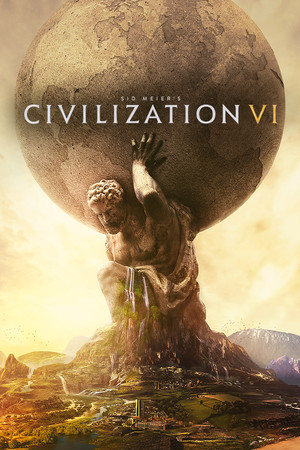
Sid Meier’s Civilization® VI
The 4X genre's gold standard for a reason: Civ VI's district system and split tech/civics trees demand actual spatial thinking, and with two major expansions plus season passes behind it, there are hundreds of hours of tightly layered decisions waiting here.
Veredicto de GamerScout
8.8/10The fully expanded package is the best value in 4X strategy right now, as long as you are not buying it for the AI.
Comparar precios(3 tiendas)
Todas las tiendas de esta tabla nos dan el precio en euros, así que la cifra en EUR es el precio que fijó el vendedor, no un cálculo nuestro, y por eso EUR es también la moneda en la que calculamos el ranking. Solo incluimos aquí una oferta cuando la tienda nos da su precio en euros, de modo que ninguna cifra de esta tabla es inventada por nosotros.
Elige USD, PLN, GBP, CAD o AUD en la cabecera y convertimos desde EUR con el tipo de cambio de referencia del Banco Central Europeo — los importes convertidos llevan el prefijo ~. Tu banco o la tienda pueden aplicar un tipo distinto al pagar. Nunca ocultamos ofertas según dónde estés: todo el mundo ve esta tabla completa.
We may earn a commission when you buy games through links on this page — at no extra cost to you. It never affects our rankings or verdicts.
Historial de precios
Capturas y multimedia
Acerca de Sid Meier’s Civilization® VI
I keep a turn log when I push for Deity difficulty, and Civilization VI is the game that taught me why that habit matters. Every placement decision compounds: drop a Campus district next to a mountain range early and your science output snowballs; misread the terrain and you spend the mid-game patching a city layout that was never going to work. That kind of consequence-forward design is exactly what separates a good 4X from a time-sink, and Civ VI has it in spades. The headline mechanical change over its predecessor is city unstacking. Cities no longer exist as single tiles absorbing buildings invisibly. Instead, each district type (Campus for science, Holy Site for faith, Encampment for military, Commercial Hub for gold, and so on) occupies its own hex on the map, with adjacency bonuses rewarding thoughtful placement next to rivers, natural wonders, or other districts. Wonders also claim tiles, which means that founding a city near the Pyramids' ideal tile but then watching a rival snag it is a genuine gut-punch. The separate Technology and Civics trees, tied to "Eureka" and "Inspiration" bonus triggers respectively, push you toward playing the map you were given rather than executing the same opening every run. The government policy card system layered on top of all this, where your chosen government type determines how many military, economic, diplomatic, and wildcard slots you fill, adds a further layer of per-turn optimization that rewards players who actually read what each card does. Two major expansions (Rise and Fall, Gathering Storm) and the New Frontier and Leader passes extended the game significantly post-launch. Rise and Fall introduced governors, era scores, and loyalty pressure that forces wide empires to actually govern their periphery rather than just park cities there. Gathering Storm added a climate change system and the World Congress, though both are the expansion's weakest elements: sea level rise feels punitive rather than strategic, and the World Congress diplomatic victory is broadly considered the least satisfying win condition in the game. The New Frontier content, split across monthly drops, brought Secret Societies, Monopolies and Corporations, and Barbarian Clans mode, all of which add meaningful decision branches if you enable them. The fully expanded game is a very different and substantially richer experience than the 2016 base release. Now for the honest accounting. The AI is the game's open wound and has been since launch. On lower difficulties it builds weak armies, struggles to prioritize victory conditions, and responds to new expansion mechanics with little coherence. Competitive single-player challenge comes almost entirely from higher-difficulty stat bonuses rather than smarter play from opposing leaders. If your primary measure of a strategy game is a human-feeling opponent, this will frustrate you. The tutorial is functional but shallow; newcomers will likely lose their first two or three full games before the district logic clicks. That is actually fine. Civilization VI is one of those games that repays repeated failure because each run exposes a new inefficiency in your own build order. Stick with smaller map sizes initially, play on Prince difficulty, and lean on the civilopedia. The mod ecosystem on PC is also substantial, with overhauls like the Better Balanced Game mod retuning adjacency bonuses and tech costs for players who find the vanilla balance too loose. With Civ VII drawing mixed reviews for its incomplete launch state, the fully expanded Civ VI currently represents the highest-hours-per-dollar proposition in the 4X genre for anyone who has not yet put serious time into it.

Strategy & simulation
Etiquetas
Requisitos del sistema
Mínimos
- Processor
- Intel Core i3 2.5 Ghz or AMD Phenom II 2.6 Ghz or greater
- Memory
- 4 GB RAM
- Graphics
- 1 GB & AM…
Recomendados
- Processor
- Fourth Generation Intel Core i5 2.5 Ghz or AMD FX8350 4.0 Ghz or greater
- Memory
- 8 GB RAM…
DLC y complementos de Sid Meier’s Civilization® VI12
Expansiones, packs de DLC y contenido adicional de este juego. Haz clic en cualquier elemento para ver las ofertas de las tiendas.
Sigue explorando
Community Discussion
Be the first to comment on Sid Meier’s Civilization® VI.
Reseñas y valoraciones
Información del juego
- Desarrolladora
- Firaxis Games
- Distribuidora
- 2K
- Fecha de lanzamiento
- 20 oct 2016