The Dark Eye: Chains of Satinav
A hand-painted fairy tale from a German tabletop universe that earns its melancholy ending, though it asks genre newcomers to trust a slow first chapter.
GamerScout Verdict
Recommended for point-and-click fans who value mood and character over puzzle difficulty, and who do not mind a bittersweet ending.
Compare Prices(7 stores)
Every store in this table quotes us in euros, so the EUR figure is the price the seller actually set, not our arithmetic — which is why EUR is also the currency we rank in. We only list an offer here when the store gives us its price in euros, so nothing in this table is a number we invented.
Pick USD, PLN, GBP, CAD or AUD in the header and we convert from EUR at the European Central Bank reference rate — converted amounts are prefixed with ~. Your bank or the store may apply a different rate at checkout. We never hide offers based on where you are: everyone sees this whole table.
We may earn a commission when you buy games through links on this page — at no extra cost to you. It never affects our rankings or verdicts.
Price History
Screenshots & Media
About The Dark Eye: Chains of Satinav
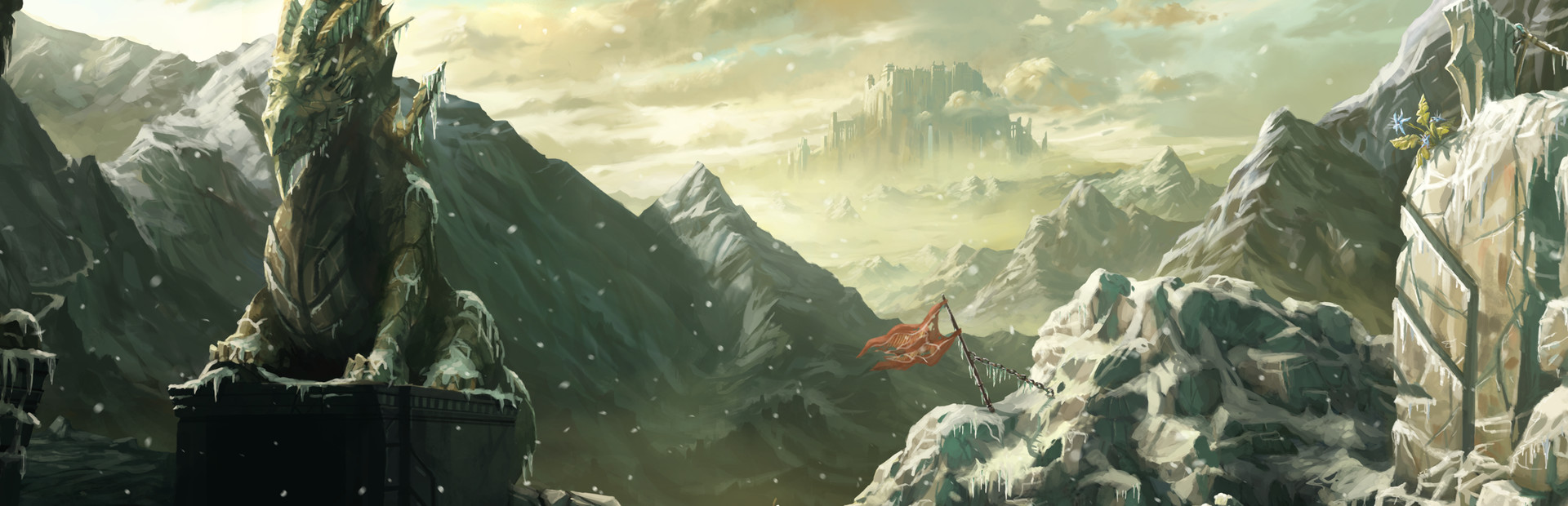
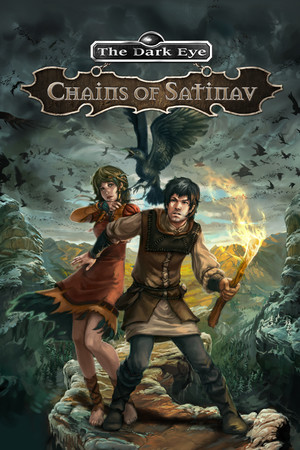
My first hours with Chains of Satinav felt like finding a watercolour illustration tucked inside a book I forgot I owned. Daedalic Entertainment built this around The Dark Eye, a German tabletop RPG that most players outside of Europe have never touched, and that outsider status works in its favour. The world of Andergast feels lived-in and quietly strange, unburdened by the weight of a franchise you're supposed to already love. You play Geron, a birdcatcher who has been shunned since childhood because a dying seer prophesied he would bring ruin to the kingdom. It is exactly the kind of underdog setup that suits a slow-burn point-and-click, and the game knows it. The mechanical heart is classic: left-click to act, right-click to examine, slide the cursor to the screen's bottom edge to open an inventory you can scroll with the mouse wheel. What lifts it above the template are the two spell mechanics that Geron and his fairy companion Nuri share between them. Geron can shatter fragile objects at a distance; Nuri can repair broken things. On paper that sounds gimmicky, but the puzzles that lean into this duo dynamic are the game's best moments, asking you to coordinate between characters in ways that feel genuinely clever rather than arbitrary. The highlight-all-hotspots button and an optional colour-coded hint system keep the pacing generous without eliminating friction entirely. Veterans who enjoy solving without assistance can ignore both. The art deserves its own paragraph. The pre-rendered backgrounds are painterly in a way that static screenshots undersell; scenes in the fairy kingdom in particular have a quality closer to storybook illustration than video game asset. The animations do not match that ambition. Character movement is stilted, and the gap between a gorgeous background and the figure shuffling across it is noticeable, especially in close-up dialogue sequences. The orchestrated score fills the silence these animations leave behind, and the main-menu theme alone sets a haunting tone that the rest of the game works hard to honour. Writing and voice acting land somewhere between warm and slightly awkward. The translation from German is generally strong and occasionally funny, but a handful of pronoun ambiguities and one or two flat line readings slip through. Geron's relationship with Nuri is the emotional core that holds the whole structure up, and when the late-game events arrive, they register because the writing earns the attachment rather than assuming it. The story is predictable in outline but not in texture. You will know roughly where it is going; you will still feel it when it gets there. The ending has a reputation for being abrupt, and that criticism is fair. It is the kind of finish that trusts the player to sit with the feeling rather than tying every thread, which will frustrate some and resonate deeply with others. If you are new to point-and-click adventures, this is an accessible and atmospheric entry point: roughly ten to twelve hours, chapter-scoped puzzles that limit backtracking, and a story that never drowns you in lore. If you are a genre veteran looking for taxing logic puzzles, the difficulty may feel light, though a few late chapters push back harder than the opening suggests. Either way, Chains of Satinav has a sequel, Memoria, which follows Geron directly and is by most accounts even stronger. Starting here is the right call.

Indie & narrative
Tags
System Requirements
Minimum
- OS
- Windows VISTA/7TM
- Sound
- DirectX9.0c-compatible Sound Card
- Memory
- 2 GB
- DirectX®
- 9.0c
- Processor
- 2.5 GHz Single-Core-Processor or 2 GHz Dual-Core-Processor
- Additional
- Broadband Internet Connection, Mouse (third mouse button and Scroll-wheel recommended)
- Video Card
- OpenGL2.0-compatible Graphic Card with 512 MB RAM (Shared-Memory is not recommended)
- Hard Disk Space
- 6 GB
Keep exploring
Community Discussion
Be the first to comment on The Dark Eye: Chains of Satinav.
Reviews & Ratings
Game Info
- Developer
- Daedalic Entertainment
- Publisher
- Daedalic Entertainment
- Release Date
- Jun 22, 2012