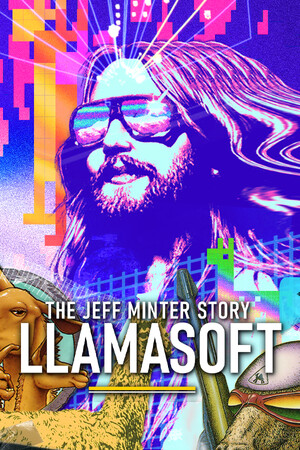
Llamasoft: The Jeff Minter Story
If you've ever wondered who was making psychedelic camel shooters on the VIC-20 while the rest of the world was playing Pac-Man, this interactive documentary has a very specific, very wonderful answer.
GamerScout Verdict
Essential for retro history buffs and anyone who wants to understand where psychedelic arcade games came from, with the caveat that the story ends at 1994.
Compare Prices(7 stores)
Every store in this table quotes us in euros, so the EUR figure is the price the seller actually set, not our arithmetic — which is why EUR is also the currency we rank in. We only list an offer here when the store gives us its price in euros, so nothing in this table is a number we invented.
Pick USD, PLN, GBP, CAD or AUD in the header and we convert from EUR at the European Central Bank reference rate — converted amounts are prefixed with ~. Your bank or the store may apply a different rate at checkout. We never hide offers based on where you are: everyone sees this whole table.
We may earn a commission when you buy games through links on this page — at no extra cost to you. It never affects our rankings or verdicts.
Price History
Screenshots & Media
About Llamasoft: The Jeff Minter Story
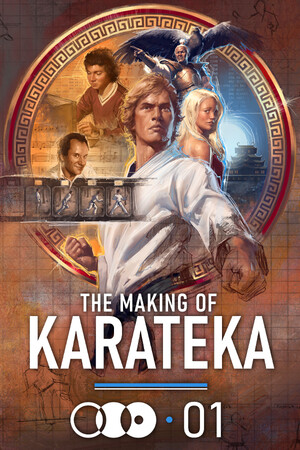
I came into this one knowing Jeff Minter primarily as the person behind Tempest 2000, that hallucinogenic tube-shooter that somehow became the best argument for owning an Atari Jaguar. What Digital Eclipse has assembled here is something closer to a living archive than a game collection, and I mean that as high praise. The Gold Master Series format, established with Atari 50 and sharpened through The Making of Karateka, reaches a genuinely strange and rewarding subject in Minter. The man was coding psychedelic shoot-em-ups out of his parents' house for the ZX81 and Commodore VIC-20 before most of today's players were born, and the four-chapter interactive timeline here walks you through that entire arc, from his earliest bedroom-coder experiments all the way to Tempest 2000 in 1994. The collection spans 42 playable titles across eight platforms, including the ZX Spectrum, C64, Atari 800, Atari ST, Atari Jaguar, and even prototype material from the ill-fated Konix Multisystem that never reached retail. Alongside the games, you get scanned fanzines, Llamasoft newsletters (gloriously long walls of Minter's own rambling prose), concept art, rotatable props, photographs, and over an hour of documentary video footage contributed by filmmaker Paul Docherty from his Heart of Neon project. The standout preserved titles are Gridrunner, a sci-fi twist on Centipede that holds up surprisingly well across its multiple platform versions, and Tempest 2000, which still crackles with the kind of sensory overload that feels ahead of its time. Digital Eclipse also produced Gridrunner: Remastered, which wraps the C64 engine in fresh modern visuals and audio while keeping the original gameplay logic intact. The honest criticism worth flagging: the documentary stops cold at Tempest 2000. Everything Minter made after 1994, including Space Giraffe and his more recent work with partner Ivan Zorzin, is absent from the playable library. Rights issues account for some gaps (Defender 2000 is missing because neither Atari nor Minter holds the rights), and emulating systems like the Nuon was described by Digital Eclipse as a bridge too far. But the cutoff still stings. For newcomers the arc makes sense as a contained story; for people who followed Llamasoft into the 2000s, it can feel like a biography that ends at chapter seven. A minority of critics found the documentary sections thin, arguing that some games appear in the timeline with only packaging art and a Minter quote rather than meaningful contextual framing. That's a fair point, though I found the newsletters and video interviews more than compensated for the lighter moments. What the package does better than almost anything in the retro-compilation space is make you care about someone you might never have heard of. The British microcomputer scene of the early 1980s is chronically underdocumented, and Minter sits right at the centre of it. Watching his sensibility evolve from Centipede clones to full-blown psychedelic animal-themed shooters across successive hardware generations is genuinely fascinating. The emulation quality is solid throughout, display filters and scaling options are well implemented, and flashing-effect warning labels are attached to titles that warrant them. Steam user reception sits at Very Positive, and the broader critical consensus lands in the same place, with most outlets praising the archival depth even when noting the post-1994 gap.

Indie & narrative
Tags
System Requirements
Minimum
- OS
- Windows 10
- Memory
- 8 GB RAM
- Graphics
- ATI Radeon HD 4800 Series, Nvidia GeForce 8800GT or greater
- Processor
- Intel i3 @ 3.0GHz or AMD equivalent
Recommended
Requires a 64-bit processor and operating system
Keep exploring
Community Discussion
Be the first to comment on Llamasoft: The Jeff Minter Story.
Reviews & Ratings
No ratings available
Game Info
- Developer
- Digital Eclipse
- Publisher
- Digital Eclipse
- Release Date
- Mar 13, 2024