Compare Wizardry: Proving Grounds of the Mad Overlord prices across trusted key stores and find the best deal. Developed by Digital Eclipse. Published by Digital Eclipse. Released on 5/23/2024. Available on PC, Xbox. Genres: Action, RPG.

If you ever wondered what gave Final Fantasy and Dragon Quest their bones, here it is - rebuilt in 3D, just as punishing as ever, and not remotely sorry about it.

I went into Proving Grounds of the Mad Overlord expecting a comfortable nostalgia trip. What I got instead was my entire six-person party wiped on the second floor by a group of undead kobolds, all my hard-rolled gear stranded deep in a trap-filled dungeon, and a creeping understanding that this game was not designed to like me. That's the contract Wizardry has always offered, and Digital Eclipse has honored it with unsettling faithfulness. At the mechanical core, you assemble a party of six adventurers from eight classes - four basic (Fighter, Mage, Priest, Thief) and four elite hybrid options (Samurai, Lord, Bishop, Ninja) - assign an alignment of Good, Neutral, or Evil, and descend into a ten-floor labyrinth in first-person, one tile at a time. Good and Evil characters cannot share a party, which means alignment is a genuine roster constraint rather than a cosmetic choice. Combat shifts to a timeline-based system where front-row fighters absorb melee punishment while back-row casters burn through a very finite pool of spell slots. Magic is rationed with a harshness that would make resource-management fans nod slowly: you hike all the way back to the inn at the surface to recover HP and spells, making every encounter a calculation about whether your remaining casts are worth the risk of pressing deeper. Surprise rounds disable spellcasting entirely, and being ambushed by a large mob group when your Mage is dry is its own particular flavor of misery. The multiclass system rewards patience in a way that will appeal to anyone who enjoys long-form build planning. A Thief transitioned into a Ninja becomes a melee threat with rogue utility and a low-probability instant-kill mechanic. A Bishop carries both Mage and Priest spell lists and can identify items in the field, making the class a powerful generalist who levels agonizingly slowly. These are the kinds of build decisions that pay off forty hours in, not four, which is exactly the kind of system I can respect even when it frustrates me. The story, to put it generously, is skeletal: recover an amulet stolen from the Mad Overlord Trebor by the wizard Werdna (both names are the developers' names spelled backwards, a detail charming enough to partially excuse the thin premise). There are no branching dialogue trees, no character arcs, no lore tablets to collect. If narrative payoff is your reason to play RPGs, look elsewhere. Digital Eclipse's presentation work is genuinely impressive. The rebuilt 3D dungeon art has an aesthetic that sits comfortably alongside a Dungeons and Dragons sourcebook illustration. A live thumbnail of the original 1981 Apple II interface runs in the corner of the screen during play, letting you watch the 2024 and 1981 versions of the same moment side by side in real time - an elegant design choice that no other remake has pulled off this cleanly. There is also a full suite of difficulty-adjacent settings: you can opt for the Apple II ruleset, the slightly softer 1990 NES ruleset, or modern quality-of-life options that let you assign attribute points rather than rolling for them. The catch, noted by multiple reviewers, is that even with every modern accommodation enabled, the game remains extremely hard. The difficulty range runs from brutal to historic, not brutal to approachable. The main criticism worth airing is one the game earns honestly: Wizardry's pedigree is enormous, but its moment-to-moment variety is limited. A bad run sends you back to floor one, to the same grind corridor you already know. The shop inventory at Boltac's Trading Post is thin, upgrades are expensive, and high-level resurrections cost more gold than you are likely to have when you need them most. There is no narrative reward waiting at the end of a failed expedition. For players accustomed to modern dungeon crawlers that drip-feed novelty even on death loops, that repetition is going to land differently than it does for old-school fans who consider map memory a skill. Wizardry Proving Grounds is the grandfather of the DRPG genre and the backbone of Final Fantasy, Dragon Quest, and practically every party-based RPG that followed it. That lineage makes it fascinating. It does not make it forgiving. Go in knowing the difference. Monika, Scout Team

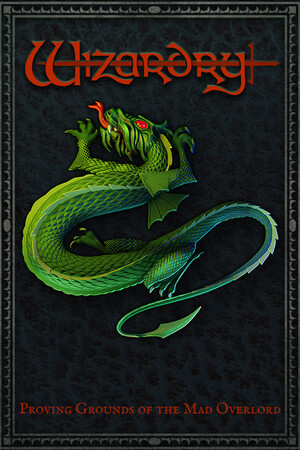
Wizardry: Proving Grounds of the Mad Overlord

Wizardry: Proving Grounds of the Mad Overlord

May 23, 2024Digital Eclipse
GamerScout Says

If you ever wondered what gave Final Fantasy and Dragon Quest their bones, here it is - rebuilt in 3D, just as punishing as ever, and not remotely sorry about it.

PCXbox
Steam Deck PlayableProtonDB Platinum
Best Price Available
€0.00
at N/A
Historical low: €8.06

GamerScout Verdict

Worth it for hardcore dungeon-crawler fans who respect the grind; newcomers expecting modern RPG comforts will bounce off hard.

Compare Prices(0 stores)

Loading prices...

We may earn a commission when you buy games through links on this page — at no extra cost to you. It never affects our rankings or verdicts.

Price History

Historical low
€8.0626 Jun 2026
Keyshops
€7.51€7.95€8.38€8.825 Jun16 Jun26 Jun7 Jul17 Jul
5 Jun — 17 Jul
Create alert

Screenshots & Media

About Wizardry: Proving Grounds of the Mad Overlord

I went into Proving Grounds of the Mad Overlord expecting a comfortable nostalgia trip. What I got instead was my entire six-person party wiped on the second floor by a group of undead kobolds, all my hard-rolled gear stranded deep in a trap-filled dungeon, and a creeping understanding that this game was not designed to like me. That's the contract Wizardry has always offered, and Digital Eclipse has honored it with unsettling faithfulness. At the mechanical core, you assemble a party of six adventurers from eight classes - four basic (Fighter, Mage, Priest, Thief) and four elite hybrid options (Samurai, Lord, Bishop, Ninja) - assign an alignment of Good, Neutral, or Evil, and descend into a ten-floor labyrinth in first-person, one tile at a time. Good and Evil characters cannot share a party, which means alignment is a genuine roster constraint rather than a cosmetic choice. Combat shifts to a timeline-based system where front-row fighters absorb melee punishment while back-row casters burn through a very finite pool of spell slots. Magic is rationed with a harshness that would make resource-management fans nod slowly: you hike all the way back to the inn at the surface to recover HP and spells, making every encounter a calculation about whether your remaining casts are worth the risk of pressing deeper. Surprise rounds disable spellcasting entirely, and being ambushed by a large mob group when your Mage is dry is its own particular flavor of misery. The multiclass system rewards patience in a way that will appeal to anyone who enjoys long-form build planning. A Thief transitioned into a Ninja becomes a melee threat with rogue utility and a low-probability instant-kill mechanic. A Bishop carries both Mage and Priest spell lists and can identify items in the field, making the class a powerful generalist who levels agonizingly slowly. These are the kinds of build decisions that pay off forty hours in, not four, which is exactly the kind of system I can respect even when it frustrates me. The story, to put it generously, is skeletal: recover an amulet stolen from the Mad Overlord Trebor by the wizard Werdna (both names are the developers' names spelled backwards, a detail charming enough to partially excuse the thin premise). There are no branching dialogue trees, no character arcs, no lore tablets to collect. If narrative payoff is your reason to play RPGs, look elsewhere. Digital Eclipse's presentation work is genuinely impressive. The rebuilt 3D dungeon art has an aesthetic that sits comfortably alongside a Dungeons and Dragons sourcebook illustration. A live thumbnail of the original 1981 Apple II interface runs in the corner of the screen during play, letting you watch the 2024 and 1981 versions of the same moment side by side in real time - an elegant design choice that no other remake has pulled off this cleanly. There is also a full suite of difficulty-adjacent settings: you can opt for the Apple II ruleset, the slightly softer 1990 NES ruleset, or modern quality-of-life options that let you assign attribute points rather than rolling for them. The catch, noted by multiple reviewers, is that even with every modern accommodation enabled, the game remains extremely hard. The difficulty range runs from brutal to historic, not brutal to approachable. The main criticism worth airing is one the game earns honestly: Wizardry's pedigree is enormous, but its moment-to-moment variety is limited. A bad run sends you back to floor one, to the same grind corridor you already know. The shop inventory at Boltac's Trading Post is thin, upgrades are expensive, and high-level resurrections cost more gold than you are likely to have when you need them most. There is no narrative reward waiting at the end of a failed expedition. For players accustomed to modern dungeon crawlers that drip-feed novelty even on death loops, that repetition is going to land differently than it does for old-school fans who consider map memory a skill. Wizardry Proving Grounds is the grandfather of the DRPG genre and the backbone of Final Fantasy, Dragon Quest, and practically every party-based RPG that followed it. That lineage makes it fascinating. It does not make it forgiving. Go in knowing the difference.

Monika
Monika · Scout Team

RPGs

Tags

singleplayercloud-savestier:aaaOld-School RPGFirst-Person Dungeon CrawlerParty BuildingMulticlassingTile-Based MovementPermadeath RiskResource ManagementAlignment SystemHigh Difficulty

System Requirements

Minimum

OS
Windows 10
Memory
8 GB RAM
Storage
2 GB available space
Graphics
AMD Radeon RX Vega 10 GPU
Processor
AMD Ryzen 7 3750H

Recommended

OS
Windows 10
Memory
16 GB RAM
Storage
2 GB available space
Graphics
GeForce GTX 970
Processor
Intel Core i5-6400 CPU @ 2.70GHz

Keep exploring

Community Discussion

Be the first to comment on Wizardry: Proving Grounds of the Mad Overlord.

Reviews & Ratings

No ratings available

Game Info

Developer
Digital Eclipse
Publisher
Digital Eclipse
Release Date
May 23, 2024

Price Alert

Get notified when the price drops below your target!

Create Alert

No card? Pay another way

Top up your Steam Wallet or buy crypto with any card — instant delivery, no bank account needed.

More from Digital Eclipse

Buy smarter: helpful guides

Looking for more? See games like Wizardry: Proving Grounds of the Mad Overlord →

Frequently asked questions about Wizardry: Proving Grounds of the Mad Overlord

How much does Wizardry: Proving Grounds of the Mad Overlord cost?

Wizardry: Proving Grounds of the Mad Overlord pricing changes often and varies by store, edition and region. The live price table on this page compares the cheapest in-stock offers from trusted key stores like Eneba and Kinguin, so you always see the current lowest price before you buy.

Where can I buy Wizardry: Proving Grounds of the Mad Overlord cheapest?

Compare Wizardry: Proving Grounds of the Mad Overlord prices across every verified store in the price table on this page. We list the cheapest in-stock key and store offers, updated regularly, so you always see the best current deal before you buy.

What platforms is Wizardry: Proving Grounds of the Mad Overlord available on?

Wizardry: Proving Grounds of the Mad Overlord is available on PC, Xbox.

When was Wizardry: Proving Grounds of the Mad Overlord released?

Wizardry: Proving Grounds of the Mad Overlord was released on 23 May 2024.

Who developed Wizardry: Proving Grounds of the Mad Overlord?

Wizardry: Proving Grounds of the Mad Overlord was developed by Digital Eclipse.