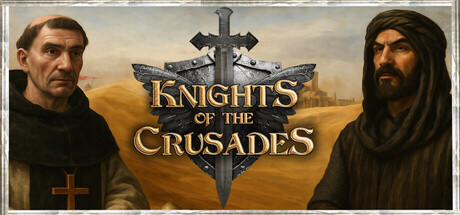
Knights of the Crusades
Three genres crammed into one medieval sandbox: if managing silver shortfalls, piety crises, and siege lines simultaneously sounds like a good Friday night, this one is built for you, rough edges and all.
GamerScout Verdict
Worth it for Kingdom Wars fans and Crusades-setting enthusiasts who can tolerate ongoing stability fixes in exchange for genuine economic depth.
Compare Prices(7 stores)
Every store in this table quotes us in euros, so the EUR figure is the price the seller actually set, not our arithmetic — which is why EUR is also the currency we rank in. We only list an offer here when the store gives us its price in euros, so nothing in this table is a number we invented.
Pick USD, PLN, GBP, CAD or AUD in the header and we convert from EUR at the European Central Bank reference rate — converted amounts are prefixed with ~. Your bank or the store may apply a different rate at checkout. We never hide offers based on where you are: everyone sees this whole table.
We may earn a commission when you buy games through links on this page — at no extra cost to you. It never affects our rankings or verdicts.
Price History
Screenshots & Media
About Knights of the Crusades
I pulled up Knights of the Crusades expecting a fairly narrow Crusades-themed RTS and instead found myself three hours deep in a resource spreadsheet, rationing stone income and watching my piety meter creep toward excommunication because I over-funded my cavalry. That dual-currency economy, silver for armies, piety for legitimacy and divine blessings, is the mechanical backbone of the whole game, and it has genuine teeth. Let either slip and the cascade effects are real: starved armies abandon sieges, and a piety collapse can lock you out of blessings entirely while rival factions sense weakness and pile in. That tension is where Knights of the Crusades earns its hours. The structure splits cleanly across two layers. On the world map you handle hamlet development, diplomacy, resource management, and faction interactions at a strategic pace. Drop into a contested territory and the game shifts to direct RTS control, unit formations, siege engines including rams and ranged siege weapons, and naval engagements on top of the standard land battles. The city-building layer feeding that RTS is not cosmetic filler: hamlets need farms, barracks, marketplaces, and religious structures to sustain armies and resist incoming sieges, and early-campaign build decisions carry weight because threats arrive before your economy is comfortable. Pilgrimage routes cross the map and function as both narrative connectors and strategic objectives worth contesting. The scripted campaign covers historically grounded scenarios including the Reconquista, the defense of Edessa, and operations across North Africa and Eastern Europe, and you can play them from the Muslim or Slavic pagan side, not just the Western crusader perspective. After the campaign concludes, the sandbox removes the guardrails: capture territories, build or shatter alliances, and watch Christian, Muslim, and Slavic AI factions compete dynamically for regional control. The honest concern here is build quality at launch. Player reports flagged persistent crash-to-desktop issues, particularly when transitioning to the world map and after certain scripted battles like Nicaea. The developer has been active with patches, over ten numbered updates post-launch addressed exit crashes, late-game balance, unit portrait readability, and AI behavior in late-game RTS battles, but stability was clearly not fully solved at release. RTS combat itself draws a split verdict from the community: fans of the Kingdom Wars lineage accept the somewhat basic unit collision and clunky battle feedback as a known quantity, while players coming from Total War or Age of Empires will notice the gap in tactical polish. Unit group portraits now reflect actual faction culture, Slavic, Western, and Muslim armies look distinct, but animations and overall visual fidelity feel behind where a 2025 release should sit. The AI in sandbox mode is reactive enough to make expansion non-trivial, though veteran grand strategy players will want the diplomacy to go deeper. For genre newcomers, the barrier is lower than it looks. The campaign provides a structured on-ramp, the piety and silver systems are legible once you spend thirty minutes reading the economy panel, and the sandbox only opens after you have a working mental model of the resource loop. Reverie World Studios has six games of medieval strategy lineage behind this one, and that experience shows in the economy design even where the presentation is rough. If you are the kind of player who genuinely enjoys the Kingdom Wars series, or who wants a historically broad Crusades sandbox that sits somewhere between Total War's battle layer and a light Crusader Kings political model, this delivers that combination. Go in knowing it is an indie release with ongoing patch work rather than a fully polished triple-A product, and the depth underneath rewards the patience.

Strategy & simulation
Tags
System Requirements
Minimum
- OS
- Windows 7
- Memory
- 3 GB RAM
- DirectX
- Version 11
- Storage
- 5 GB available space
- Graphics
- NVIDIA GeForce GT 530 / ATI Radeon HD 6570
- Processor
- 2.4 GHz Dual Core
- Sound Card
- DirectX Compatible
Recommended
- OS
- Windows 10
- Memory
- 5 GB RAM
- DirectX
- Version 11
- Storage
- 7 GB available space
- Graphics
- NVIDIA GeForce GTX 550 Ti / Radeon HD 6790
- Processor
- 2.4 GHz Dual Core
- Sound Card
- DirectX Compatible
Keep exploring
Community Discussion
Be the first to comment on Knights of the Crusades.
Reviews & Ratings
No ratings available
Game Info
- Developer
- Reverie World Studios
- Publisher
- indie.io
- Release Date
- Sep 6, 2025