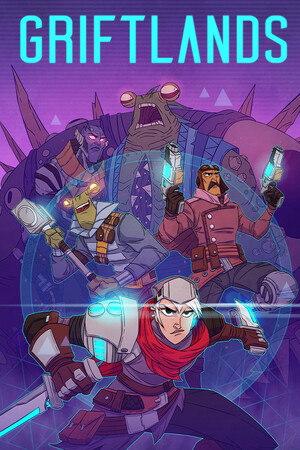
Griftlands
Two decks, three scoundrels, one world that lies to your face - Griftlands is the rare roguelite where talking your way out of trouble feels as satisfying as winning a fight.
GamerScout Verdict
Best for narrative roguelite fans who want a talking-and-fighting system with real story weight behind both halves.
Compare Prices(7 stores)
Every store in this table quotes us in euros, so the EUR figure is the price the seller actually set, not our arithmetic — which is why EUR is also the currency we rank in. We only list an offer here when the store gives us its price in euros, so nothing in this table is a number we invented.
Pick USD, PLN, GBP, CAD or AUD in the header and we convert from EUR at the European Central Bank reference rate — converted amounts are prefixed with ~. Your bank or the store may apply a different rate at checkout. We never hide offers based on where you are: everyone sees this whole table.
We may earn a commission when you buy games through links on this page — at no extra cost to you. It never affects our rankings or verdicts.
Price History
Screenshots & Media
About Griftlands
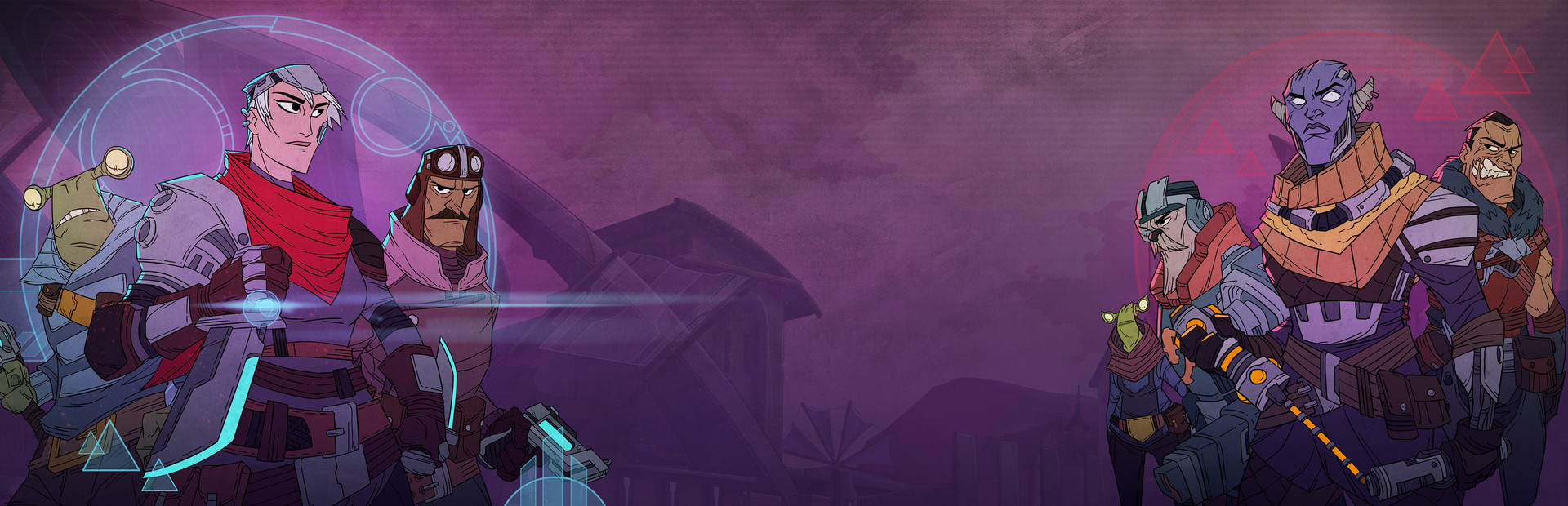
I came into Griftlands skeptical. The deckbuilder shelf is crowded, and a negotiation mechanic that sits alongside a combat system sounds like the kind of ambitious feature that quietly collapses into a gimmick. It does not collapse. What Klei has built here is genuinely one of the more inventive designs the genre has seen: two completely separate decks, one for fighting and one for talking, each with its own resource economy and its own upgrade path. Your Battle deck handles the hits and blocks and status stacking you would expect. Your Negotiation deck runs on Resolve - a persistent resource that carries between encounters - and tasks you with demolishing an opponent's core Argument before they break yours. Diplomacy cards, Hostility cards, Composure buffs, deployable sub-Arguments: it is a whole secondary card game sitting inside the primary one, and it earns its own tutorials. The three playable grifters - Sal, Rook, and Smith - are not interchangeable skins. Sal fights with twin daggers and leans into a Combo-and-Finisher rhythm, building stacks before cashing them out for big damage, or alternatively leaning into Bleed for a slower-burn attrition approach. Rook is an ex-military spy whose entire combat style orbits a lucky coin, managing charge levels on his custom blaster and exploiting coin-flip manipulation for negotiation combos that feel genuinely degenerate in the best way. Smith is the disgraced rich kid who uses Renown as a negotiation weapon and absorbs punishment through self-harm-powered regeneration - if you can thread that needle, he becomes nearly unkillable. All three stories take place in distinct regions of the continent of Havaria, and each campaign runs roughly five hours per attempt, far longer than a Slay the Spire run, because the story is doing real work. That writing is the reason to be here. The world is a grimy sci-fi-fantasy mashup of mercenaries, anthropomorphic animals, corrupt factions, and desperate opportunists, and the prose that describes it is economy of the sharpest kind: a single sentence sketches a place, one detail makes a character memorable. The dark humor lands. The choices land harder. Killing an enemy yields loot; sparing them leaves a live piece on the board who remembers what you did. Faction allegiances shift, alliances form and dissolve, and the same story beats play out differently depending on who you befriended or double-crossed that run. The Mettle meta-progression system means wins and losses both bank points toward permanent unlocks, which softens the sting of failure and keeps the momentum up across multiple attempts. Seven Prestige tiers per character push veteran players into genuinely different strategic territory. The caveats are real, though. Players who want the wild build-breaking escalation of Slay the Spire may find the combat deck variety feels comparatively bounded across a given run. Committing hard to a Negotiation build creates vulnerability in the handful of mandatory combat encounters where you cannot talk your way out. Some community voices have flagged that combat depth plateaus once you have internalized the two or three central mechanics per character - the story keeps you coming back more than the pursuit of a broken build. The visual world is intentionally eclectic, mixing sci-fi, fantasy, and animal people in a way that one reviewer accurately described as hard to call cohesive - though I find Klei's hand-illustrated environments and character animations too charming to hold that against it. The soundtrack is worth noting separately: each grifter carries their own set of tracks, with synth-driven battle themes and quieter ambient pieces for dialogue, and the whole soundscape does real atmospheric lifting. For players who are drawn to narrative roguelites - who finished Hades for the dialogue as much as the combat - Griftlands occupies a niche that very few games fill. It is the closest thing to an RPG that the deckbuilder format has produced, and it knows when to let a scene breathe.

Indie & narrative
Tags
System Requirements
Minimum
- OS
- Windows 7 (64 bit)
- Memory
- 4 GB RAM
- DirectX
- Version 11
- Storage
- 4 GB available space
- Graphics
- Intel HD 4600 (AMD or NVIDIA equivalent)
- Processor
- Dual Core 2 GHz (64 bit)
Recommended
- OS
- Windows 7 (64 bit)
- Memory
- 4 GB RAM
- DirectX
- Version 11
- Storage
- 4 GB available space
- Graphics
- GTX 970 (Dedicated 4GB AMD or NVIDIA equivalent)
- Processor
- Dual Core 2 GHz (64 bit)
Keep exploring
Community Discussion
Be the first to comment on Griftlands.
Reviews & Ratings
Game Info
- Developer
- Klei Entertainment
- Publisher
- Klei Entertainment
- Release Date
- Jun 1, 2021