Fire: Ungh’s Quest
A wordless Stone Age point-and-click that tells its whole goofy story through grunts, slapstick, and ten increasingly unhinged puzzle rooms. Short, charming, divisive - know what you're walking into.
GamerScout Verdict
Best for casual puzzle newcomers and younger players who want a gentle, wordless adventure they can finish in one sitting.
Compare Prices(7 stores)
Every store in this table quotes us in euros, so the EUR figure is the price the seller actually set, not our arithmetic — which is why EUR is also the currency we rank in. We only list an offer here when the store gives us its price in euros, so nothing in this table is a number we invented.
Pick USD, PLN, GBP, CAD or AUD in the header and we convert from EUR at the European Central Bank reference rate — converted amounts are prefixed with ~. Your bank or the store may apply a different rate at checkout. We never hide offers based on where you are: everyone sees this whole table.
We may earn a commission when you buy games through links on this page — at no extra cost to you. It never affects our rankings or verdicts.
Price History
Screenshots & Media
About Fire: Ungh’s Quest
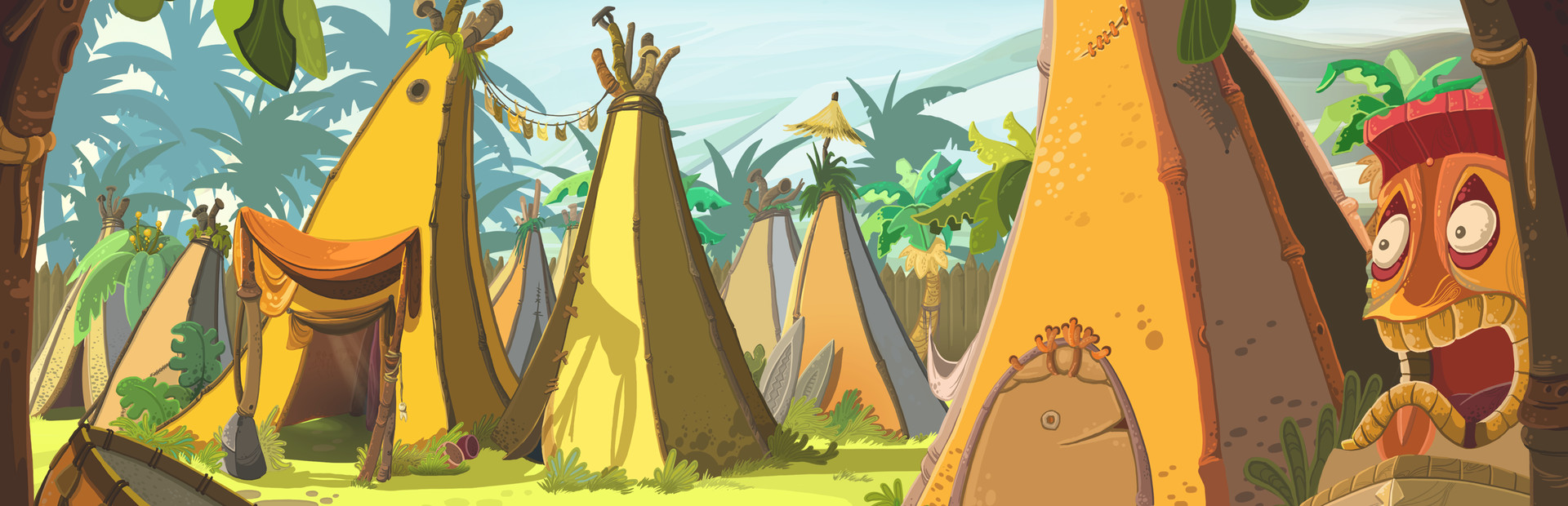
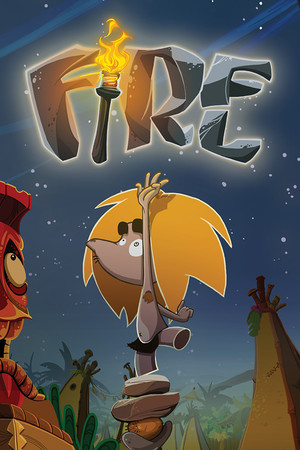
I have a soft spot for games that strip language out of the equation entirely and dare their visuals to carry the weight. Fire: Ungh's Quest is that kind of experiment, and for stretches it pulls it off beautifully. You play as Ungh, a Neanderthal who falls asleep on fire-watch duty and gets booted from his village as punishment. No cutscene explains this in words. No tutorial text walks you through the controls. You are simply dropped into a prehistoric tableau and left to poke at things until the world responds. For players who trust that instinct, the opening moments have a real warmth to them. The structure is ten self-contained puzzle rooms, each one a different biome or scenario ripped from somewhere far stranger than the Stone Age premise suggests. One level has you shape-shifting between a bear and a mouse to reach otherwise inaccessible spots. Another drops Ungh into an H.G. Wells-style time machine and asks you to manipulate butterfly effects and prehistoric paradoxes to collect the glowing firefly that opens the portal to the next stage. There is even a moon level and an encounter with what can only be described as monkey professors. The game commits to its absurdism without apology, and the best rooms feel like tiny hand-drawn comedy sketches where the punchline is a puzzle solution. Ungh himself is a genuinely expressive protagonist - his oversized underbite and rubbery animations communicate frustration, delight, and confusion without a single spoken syllable, which is a harder craft achievement than it looks. The cracks, though, are real. The puzzle logic swings between pleasantly intuitive and flatly arbitrary. A few solutions require a kind of lateral leap that reads less as clever design and more as guesswork, and with no hint system to soften the wall, trial-and-error becomes the de facto strategy in the harder rooms. Pacing occasionally stumbles when longer animations have to play out in full before you can retry an interaction - a small thing, but it accumulates. The PC version sidesteps the control frustrations that plagued the console ports, so mouse-and-click is genuinely the cleanest way to experience it. The total runtime sits somewhere between two and five hours depending on your puzzle tolerance, and the community consensus on Steam skews positive at a notable margin, though critics landing around the Metacritic mid-sixties tend to flag the brevity as the chief offence. The soundtrack is worth a separate mention because it does something quietly special. Musical themes shift by environment in ways that feel genuinely scored rather than looped - adventurous percussion in the open plains, something more unsettled and odd in the deeper levels. Because the game has no dialogue at all, the audio and the animation share the entire storytelling burden, and they mostly earn it. This is the kind of intentional craft I find myself lingering on: a small team building a coherent world-feel out of grunts, colour, and rhythm alone. It does not always succeed, but when it does, the result has a specific kind of handmade gentleness that studio-polished games rarely get close to. Bring it to a younger player or pick it up on a lazy afternoon when you want something that ends cleanly and does not demand a second session. Hardcore point-and-click veterans may find the puzzle depth too thin to satisfy. But for anyone who has never touched the genre, or who wants a no-text, no-pressure adventure that clocks out before dinner, Ungh's clumsy quest earns its place on the shelf.

Indie & narrative
Tags
System Requirements
Minimum
- OS
- Windows Vista/7
- Memory
- 2 GB RAM
- DirectX
- Version 9.0c
- Storage
- 5500 MB available space
- Graphics
- nVidia GeForce 9600, Radeon HD 6570
- Processor
- 2,7 GHz Dual Core
- Sound Card
- DirectX 9.0c Compatible Sound Card with Latest Drivers
Keep exploring
Community Discussion
Be the first to comment on Fire: Ungh’s Quest.
Reviews & Ratings
Game Info
- Developer
- Daedalic Entertainment
- Publisher
- Daedalic Entertainment
- Release Date
- Apr 9, 2015