Compare Etherlords prices across 50+ stores and find the best deal. Developed by Nival. Published by Nival. Released on 2/13/2014. Available on PC. Genres: Strategy. Metacritic score: 77/100.

If you ever wished Heroes of Might and Magic had a Magic: The Gathering engine bolted to its combat layer, this early-2000s Nival oddity is exactly that hybrid - and it holds up better in battles than on the strategy map.

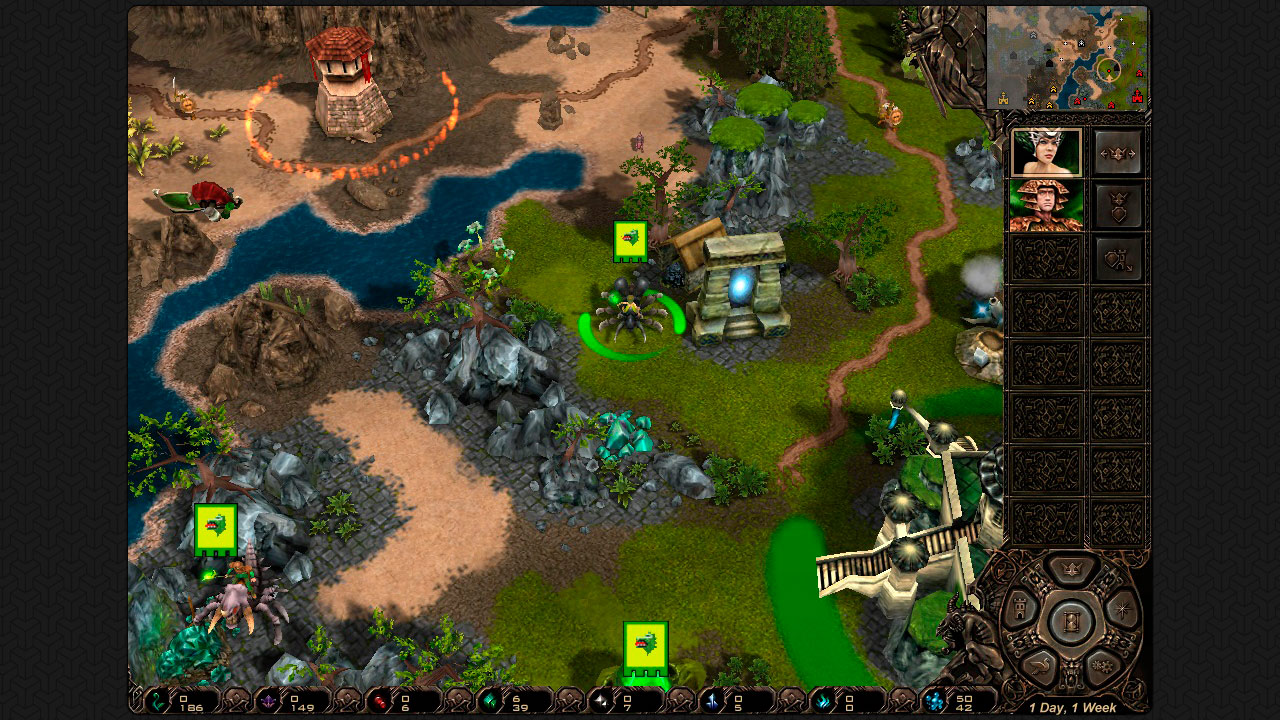
I went back into Etherlords expecting a nostalgia hit and came out with a more complicated opinion than that. This is a 2001 PC strategy title that Nival re-released on Steam in 2014, and the age shows in specific, painful ways - but the core card-dueling system underneath all that period roughness still has genuine mechanical teeth. Understanding the gap between what this game does brilliantly and where it falls flat is the entire purchase decision. The structure is Heroes of Might and Magic on the surface: you move heroes across a resource map, capture territory, and recruit reinforcements. Four factions - Kinets, Chaots, Vitals, and Synthets - each play distinctly. The Vitals lean on druidic life-gain and swarm creatures like treants and bees; the Synthets field biomechanical monstrosities, Wurms and Cutters, backed by damage-over-time spells; the Chaots hit hard and fast with chaos magic; the Kinets play a more technical, resource-efficient game. Picking a faction is a genuine strategic commitment, not a cosmetic choice. Where things get interesting is when a battle triggers: the overworld pauses and you fight with a fifteen-card spell deck, summoning creatures to absorb damage for your hero while you build up enough mana each turn to land your bigger threats. Combat resolves in discrete phases - no opponent-turn interruptions - which makes the rule set cleaner than Magic: The Gathering proper and much easier to learn, while still rewarding tight deck construction. With over 300 spells across all factions, each hero's specialization adding passive bonuses, and spell synergies that are genuinely worth theorycrafting, the battle side of this game punches well above its release year. Here is the honest counterweight. The strategic-map AI is weak, to the point where experienced players will find it exploitable well before the mid-game. Missions are long - critics at release flagged that some run for hours - and the game resets your hero progress between certain levels, which kills the sense of building toward a dominant late-game deck. Steam's current user review score sits at 42% positive across 148 reviews, and the most consistent complaint is technical: crash and hang issues on modern hardware that require community-documented fixes to resolve. That is a real friction point in 2025. No mod ecosystem to speak of, and the tutorial is functional but sparse on explaining why certain spell combinations work. So who should actually care about this? Card-strategy players who want something that predates Hearthstone and plays nothing like it. If you appreciate the deckbuilding loop of selecting a lean spell set, adjusting it mission by mission as enemy compositions change, and finding the combo that makes a seemingly tougher opponent fold - that loop is intact and satisfying here. Newcomers to the genre can also get traction faster than you might expect: because each faction has a coherent identity and the combat phase structure is clean, reading what your opponent is doing and countering it does not require encyclopedic knowledge. The steeper barrier is getting the game to run stably, which requires a small amount of forum-diving before your first session. Treat that as a one-time setup cost and the underlying game is genuinely worth the time for the right audience. Diego, Scout Team

Etherlords
Strategy

Etherlords

Feb 13, 2014Nival
GamerScout Says

If you ever wished Heroes of Might and Magic had a Magic: The Gathering engine bolted to its combat layer, this early-2000s Nival oddity is exactly that hybrid - and it holds up better in battles than on the strategy map.

PC
Best Price Available
0.00
at N/A
Historical low: $2.59

Compare Prices(0 stores)

Loading prices...

We may earn a commission when you buy games through links on this page — at no extra cost to you. It never affects our rankings or verdicts.

Screenshots & Media

Screenshot

About Etherlords

I went back into Etherlords expecting a nostalgia hit and came out with a more complicated opinion than that. This is a 2001 PC strategy title that Nival re-released on Steam in 2014, and the age shows in specific, painful ways - but the core card-dueling system underneath all that period roughness still has genuine mechanical teeth. Understanding the gap between what this game does brilliantly and where it falls flat is the entire purchase decision. The structure is Heroes of Might and Magic on the surface: you move heroes across a resource map, capture territory, and recruit reinforcements. Four factions - Kinets, Chaots, Vitals, and Synthets - each play distinctly. The Vitals lean on druidic life-gain and swarm creatures like treants and bees; the Synthets field biomechanical monstrosities, Wurms and Cutters, backed by damage-over-time spells; the Chaots hit hard and fast with chaos magic; the Kinets play a more technical, resource-efficient game. Picking a faction is a genuine strategic commitment, not a cosmetic choice. Where things get interesting is when a battle triggers: the overworld pauses and you fight with a fifteen-card spell deck, summoning creatures to absorb damage for your hero while you build up enough mana each turn to land your bigger threats. Combat resolves in discrete phases - no opponent-turn interruptions - which makes the rule set cleaner than Magic: The Gathering proper and much easier to learn, while still rewarding tight deck construction. With over 300 spells across all factions, each hero's specialization adding passive bonuses, and spell synergies that are genuinely worth theorycrafting, the battle side of this game punches well above its release year. Here is the honest counterweight. The strategic-map AI is weak, to the point where experienced players will find it exploitable well before the mid-game. Missions are long - critics at release flagged that some run for hours - and the game resets your hero progress between certain levels, which kills the sense of building toward a dominant late-game deck. Steam's current user review score sits at 42% positive across 148 reviews, and the most consistent complaint is technical: crash and hang issues on modern hardware that require community-documented fixes to resolve. That is a real friction point in 2025. No mod ecosystem to speak of, and the tutorial is functional but sparse on explaining why certain spell combinations work. So who should actually care about this? Card-strategy players who want something that predates Hearthstone and plays nothing like it. If you appreciate the deckbuilding loop of selecting a lean spell set, adjusting it mission by mission as enemy compositions change, and finding the combo that makes a seemingly tougher opponent fold - that loop is intact and satisfying here. Newcomers to the genre can also get traction faster than you might expect: because each faction has a coherent identity and the combat phase structure is clean, reading what your opponent is doing and countering it does not require encyclopedic knowledge. The steeper barrier is getting the game to run stably, which requires a small amount of forum-diving before your first session. Treat that as a one-time setup cost and the underlying game is genuinely worth the time for the right audience. Diego, Scout Team

Tags

singleplayermultiplayertier:aaaCCG-Strategy HybridFaction AsymmetryDeck ConstructionMana Curve ManagementHero SpecializationMission-Based CampaignOverworld ExplorationOld-School PC Strategy

Steam Deck & Linux

ProtonDB Platinum

Runs flawlessly on Linux out of the box. Based on 7 ProtonDB community reports.

System Requirements

Minimum

OS
Windows
Memory
64 MB RAM
DirectX
Version 7.0
Storage
1500 MB available space
Processor
Pentium II 266 MHz

Recommended

OS
Windows
Memory
128 MB RAM
DirectX
Version 7.0
Storage
1500 MB available space
Processor
Pentium II 450 MHz

Community Discussion

Be the first to comment on Etherlords.

Reviews & Ratings

Metacritic
77

Game Info

Developer
Nival
Publisher
Nival
Release Date
Feb 13, 2014

Price Alert

Get notified when the price drops below your target!

Create Alert

Price History

2026-06-102.59(lowest)

More from Nival

Buy smarter: helpful guides

Looking for more? See games like Etherlords

Frequently asked questions about Etherlords

How much does Etherlords cost?

Etherlords pricing changes often and varies by store, edition and region. The live price table on this page compares the cheapest in-stock key and store offers across 50+ verified shops, so you always see the current lowest price before you buy.

Where can I buy Etherlords cheapest?

Compare Etherlords prices across every verified store in the price table on this page. We list the cheapest in-stock key and store offers, updated regularly, so you always see the best current deal before you buy.

What platforms is Etherlords available on?

Etherlords is available on PC.

When was Etherlords released?

Etherlords was released on 13 February 2014.

Who developed Etherlords?

Etherlords was developed by Nival.

Is Etherlords worth buying?

Etherlords holds a Metacritic score of 77/100, making it one of the standout Strategy titles. See the full reviews, ratings and how-long-to-beat times on this page to decide.