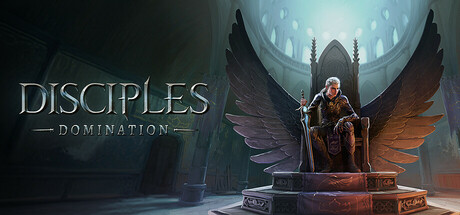
Disciples: Domination
Forty-plus hours of hex-grid tactics, faction politics, and a crumbling dark-fantasy kingdom that punishes passive play but rewards players who actually read the formation screen.
GamerScout Verdict
Best for strategy-RPG fans who prioritize tactical positioning over narrative polish and can tolerate mid-game difficulty spikes.
Compare Prices(10 stores)
Every store in this table quotes us in euros, so the EUR figure is the price the seller actually set, not our arithmetic — which is why EUR is also the currency we rank in. We only list an offer here when the store gives us its price in euros, so nothing in this table is a number we invented.
Pick USD, PLN, GBP, CAD or AUD in the header and we convert from EUR at the European Central Bank reference rate — converted amounts are prefixed with ~. Your bank or the store may apply a different rate at checkout. We never hide offers based on where you are: everyone sees this whole table.
We may earn a commission when you buy games through links on this page — at no extra cost to you. It never affects our rankings or verdicts.
Price History
Screenshots & Media
About Disciples: Domination
I have a soft spot for strategy RPGs that treat positioning as a first-class mechanic, and Disciples: Domination earns its place on my radar by building a genuinely layered tactical loop around its hex battlefield. The combat is the strongest pillar here. Armies cap at ten units with three dedicated back-row support slots, and the frontline-collapse rule means a single bad placement can end a fight before your mages get a turn. Action points govern movement, attacks, and abilities simultaneously, so the decision of whether to hold and bait the enemy into wasting their AP budget, or push aggressively and risk overextension, is live every single round. Secondary battle objectives add extra texture by sometimes imposing spell-usage restrictions that force you to solve encounters with positioning and unit synergies alone rather than leaning on a reliable nuke. Avyanna herself is built around four distinct classes: Warmaster, Primordial Ruler, Holy Regent, and Witch Queen. Each wires into a separate skill tree and changes how she interacts with the five recruitable factions (the Empire, Legion of the Damned, Undead Hordes, Elven Alliance, and returning Mountain Clans, the Dwarves finally back in the fold). The Primordial Ruler class lets you fling enemies into each other for collision damage; the Witch Queen resurrects fallen foes as temporary thralls or sacrifices her own units for power. Class swaps cost gold rather than a full respec, which is good design for a 40-plus-hour campaign. The catch is that progression within each tree moves slowly, with many nodes delivering minor percentage bumps rather than the build-defining pivots you might want by mid-campaign. The throne system is where Domination distinguishes itself from its predecessor. Back at the capital Yllian, you resolve faction grievances that arrive as you explore Nevendaar's five regions. These choices are not cosmetic: granting favor to a faction delivers tangible stat boosts to units recruited from that group, so every throne decision carries real downstream weight in combat. It is a light ruling-sim layer, not a full Paradox-style diplomacy engine, but it integrates cleanly with the tactical loop rather than sitting beside it. Multiple endings and faction-reputation branching give replayability a genuine reason to exist beyond class experimentation. Where the game struggles is in two well-documented areas. First, difficulty consistency: standard skirmishes flow fine, but dungeon and boss encounters spike hard enough that some players will find themselves grinding side content purely to level-gate their way through a checkpoint. The custom difficulty slider helps, with granular control over enemy health, damage, resistances, and even end-of-combat healing rates, but the underlying balance design still shows its rough edges. Second, narrative delivery. The world-building is rich and the dark-fantasy tone is maintained throughout ruined farmland and cursed mountain hellscapes alike, but Avyanna's voice performance and some tonally inconsistent dialogue undermine scenes that should hit harder. Face animation during heavy moments is also noticeably flat. Combat in the late game can tip into repetition as the mechanical ceiling of each unit type gets reached, and a handful of small bugs including looping conversations and occasional menu-lock quirks appeared in launch-period reports, though the technical foundation is otherwise stable. For series newcomers, the game does enough through cinematics and lore snippets to onboard without requiring Liberation as homework, though returning players will get more out of the character arcs. If you approach it as a 40-50 hour tactical campaign with meaningful class and faction decisions rather than a narrative-first RPG, the ledger tilts positive. Comparable touchstones are King's Bounty II and older Heroes of Might and Magic entries, but with a darker tone and a tighter combat grid. The mod ecosystem appears minimal at launch, and there is no multiplayer mode at all, so the replay ask rests entirely on class variety and branching choices.

Strategy & simulation
Tags
System Requirements
Minimum
- OS
- Windows 11
- Memory
- 16 GB RAM
- DirectX
- Version 11
- Storage
- 18 GB available space
- Graphics
- GeForce GTX 1060 / Radeon RX 580
- Processor
- Core i5-8600K / Ryzen 5 1600
- Sound Card
- Integrated or dedicated compatible soundcard
Recommended
- OS
- Windows 11
- Memory
- 16 GB RAM
- DirectX
- Version 11
- Storage
- 18 GB available space
- Graphics
- GeForce RTX 2060 / Radeon RX 6600XT
- Processor
- Core i3-12100 / Ryzen 5 3600X
- Sound Card
- Integrated or dedicated compatible soundcard
DLC & Add-ons for Disciples: Domination1
Expansions, DLC packs and add-on content for this game. Click any item to see store offers.
Keep exploring
Community Discussion
Be the first to comment on Disciples: Domination.
Reviews & Ratings
No ratings available
Game Info
- Developer
- Artefacts Studio
- Publisher
- Kalypso Media
- Release Date
- Feb 12, 2026