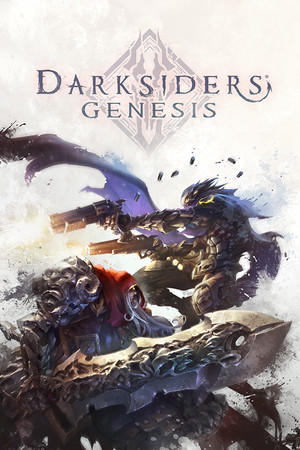
Darksiders Genesis Steam key
Airship Syndicate took the Darksiders franchise sideways into isometric territory, and somehow that gamble lands harder than Darksiders 3 ever did. Bring a co-op partner and you have one of the better apocalypse-flavored dungeon crawlers of recent years.
GamerScout Verdict
Best for co-op action fans and Darksiders faithful willing to overlook a frustrating camera and repetitive enemy design.
Compare Prices(0 stores)
Loading prices...
We may earn a commission when you buy games through links on this page — at no extra cost to you. It never affects our rankings or verdicts.
Price History
Screenshots & Media
About Darksiders Genesis Steam key
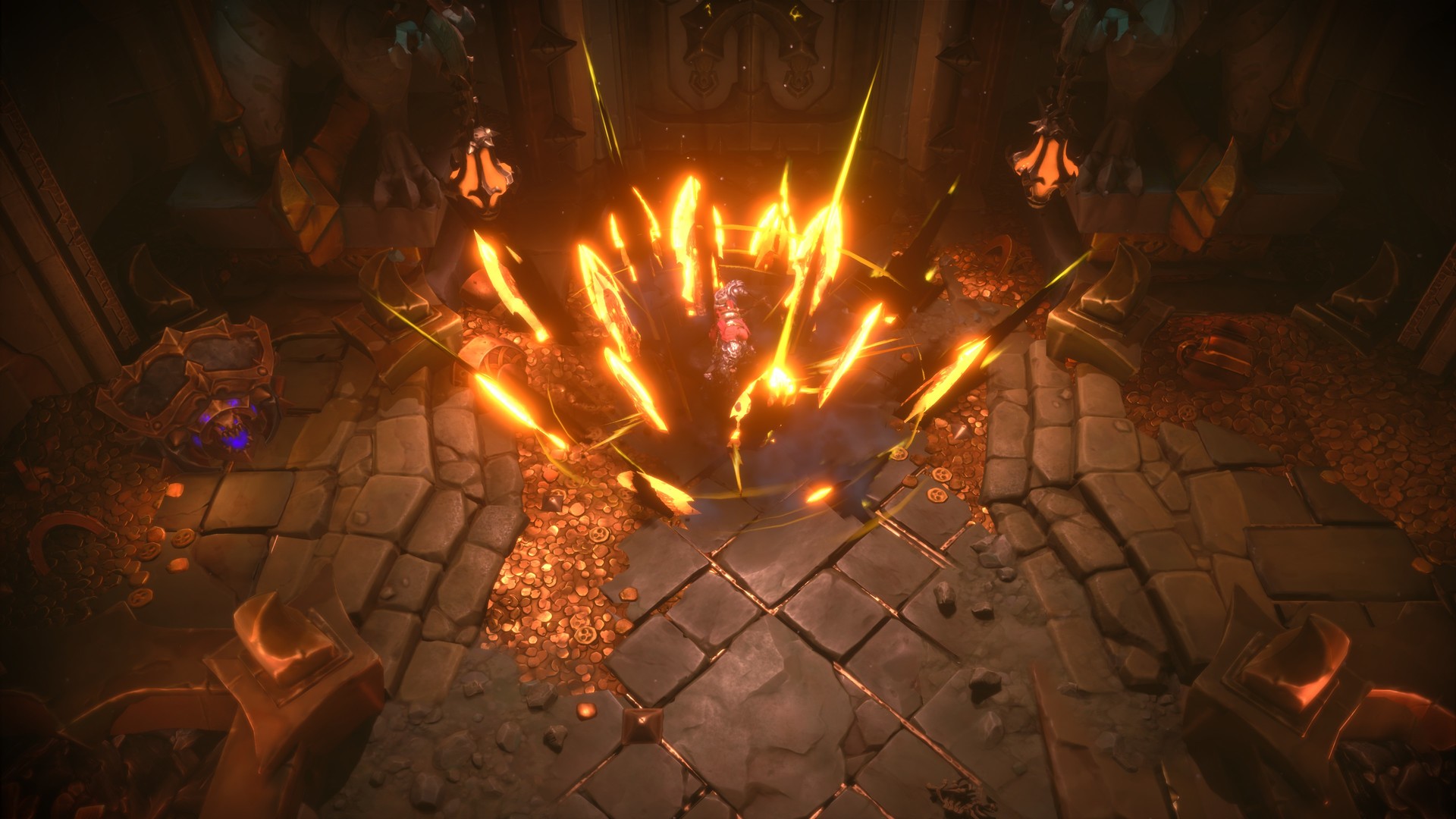
My first hour with Darksiders Genesis had me genuinely skeptical. The series went from Zelda-inspired third-person action, to Prince of Persia wallrunning, to Souls-adjacent combat, and now here we are looking down at War and Strife from a top-down camera like some kind of hellish Diablo. It feels like a stretch on paper. In practice, though, Airship Syndicate, a studio formed partly by ex-Vigil Games developers, clearly understands what makes Darksiders tick, and that institutional memory shows in nearly every design decision. The core loop is a chapter-based campaign that runs around 15 hours for the main story and closer to 30 if you want to max out everything. Each chapter drops you into a level packed with combat arenas, light puzzles, and platforming sections. You switch freely between War and Strife in solo play, or hand one character off to a friend in two-player co-op, available both online and in split-screen. War controls like the melee bruiser fans remember from the original game, Chaoseater sword and all, complete with his Vorpal Blade and a grab ability that pulls objects from across the room. Strife is a twin-stick shooter in everything but name, dual-wielding his pistols Mercy and Redemption while managing two ammo types on the right shoulder buttons. The contrast between the two is the game's single strongest asset. Puzzle rooms regularly demand you use both kits in tandem, like having Strife place a Void Bomb portal while War smashes a crystal with his gauntlet, and those moments of combined problem-solving are when the co-op really sings. Progression runs through a Creature Core system where killed enemies drop slottable upgrade pieces in three types: Attack, Wrath, and Health. These stack across both characters and give you a reason to revisit chapters even after clearing them. The rough edges are real and worth knowing about before you commit. The fixed overhead camera is the most consistently criticized element across reviews, and fairly so. During platforming segments in particular, the perspective fights you, and it is easy to walk off a ledge you could not see clearly. The base movement speed for both characters feels slow outside of combat, making backtracking across larger levels a chore. Enemy variety within individual chapters is also limited: each mission tends to rotate the same enemy types on a loop, and after the first few hours the combat starts to feel like muscle memory rather than active decision-making. The story is a prequel set before the original Darksiders, following War and Strife as they investigate Lucifer's plans at the Charred Council's request. Returning characters like Samael and Vulgrim show up, which franchise fans will appreciate, but the narrative is thin enough that new players are not missing much without prior context. The buddy dynamic between Strife's wisecracking and War's permanent scowl is genuinely entertaining, though, and goes a long way. One thing Genesis does exceptionally well is scalability. The difficulty and grind scale are both flexible in ways that the mainline games rarely managed. Casual difficulty lets you push through the 16-chapter campaign without touching the upgrade systems in any serious way. Hard mode and the post-credits Apocalypse difficulty are there for players who want a real test, though the latter largely achieves challenge by making enemies absorb more damage rather than adding mechanical complexity, which is a missed opportunity. An arena mode sits alongside the campaign and adds some extra content for players who want more combat after the credits roll. For Darksiders veterans, Genesis is a worthwhile detour that actually respects the franchise's puzzle-forward DNA. For co-op players who want a dungeon crawler with more personality than most, it overdelivers. Solo players who need tight platforming and a rich story might find the camera and the thin narrative harder to forgive.

Catch-all
Tags
System Requirements
Minimum
- Processor
- AMD FX-8320 (3.5 GHz) / Intel i5-4690K (3.5 GHz) or better
- Memory
- 4 GB RAM
- Graphics
- NVIDIA GeForce GTX 960
- DirectX
- Version 11
- Storage
- 15 GB available space Additional Not…
Keep exploring
Community Discussion
Be the first to comment on Darksiders Genesis Steam key.
Reviews & Ratings
Game Info
- Developer
- Airship Syndicate
- Publisher
- THQ Nordic
- Release Date
- Dec 5, 2019