GamerScout Verdict
Buy it for the combat system alone if you own a Switch - just accept the story and gimmick stages as the tax you pay.
Compare Prices(4 stores)
We may earn a commission when you buy games through links on this page — at no extra cost to you. It never affects our rankings or verdicts.
Screenshots & Media
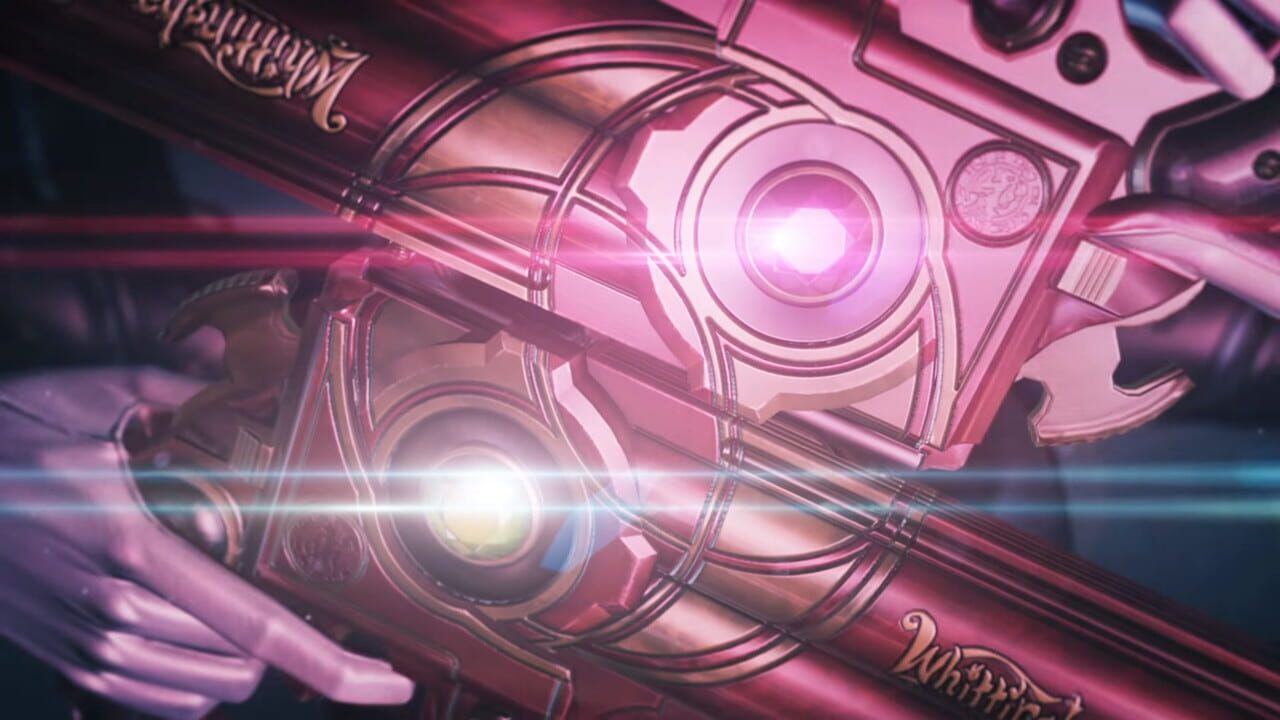
About Bayonetta 3
I went into Bayonetta 3 expecting the series to coast on its established tricks, and the combat alone proved me wrong almost immediately. PlatinumGames built what is arguably the sharpest character-action system in the trilogy, layering the classic Witch Time dodge mechanic - a perfectly timed dodge that freezes enemies and opens them up for punishment - on top of a wildly expanded weapon roster and a brand-new Demon Slave system that lets you summon enormous creatures mid-fight. Weapons like the Dead End Express, a chainsaw that briefly converts Bayonetta into a locomotive, show how creative the designers got: each one meaningfully changes your rhythm and range rather than just tweaking damage numbers. The combo grade system, scored on time, damage taken, and combo consistency, gives skilled players something real to chase on repeat playthroughs. The Demon Slave summons are the headline addition and they land about seventy percent of the time. Directing a kaiju-scaled creature at an equally giant boss produces the kind of spectacle that makes you stop and stare for a moment before you remember you still need to dodge. The problem is that Bayonetta has to stay mostly stationary while the demon is active, which cuts against the series' whole identity of kinetic, always-moving play. The trade-off works in big arena fights and collapses in tighter spaces. Where the game genuinely struggles is in its non-Bayonetta segments. Viola, the new punk-aesthetic witch who wields a sword and her demon cat Cheshire, plays noticeably rougher than the lead - her parry timing is unforgiving in a way that feels undertuned rather than intentionally hard. Jeanne's side chapters are 2D stealth-action breaks styled after classic arcade games, charming for the first one and increasingly tedious by the third. The game also throws in driving sections, shmup segments, and gimmick stages at a pace that reads less like variety and more like the team trying to prove the engine could do everything. Some of these land. Many do not. On the Switch hardware, performance is the other honest conversation. The game strains the console visibly, with resolution dropping in portable mode and frame pacing inconsistency during the densest fights - exactly when you need clarity the most. Four difficulty levels, from Casual to Infinite Climax, mean new players can experience the story and series veterans can self-punish at will. The Naive Angel Mode toggle, which dials back the game's more explicit content, is a welcome accessibility option that opens the game to a wider audience without touching the mechanics. If you have never played a Bayonetta game, this is a surprisingly reasonable entry point mechanically - tutorials are patient, the Casual setting removes most punishment, and the spectacle is front-loaded enough to hook you early. Series veterans will find the core the most refined it has ever been, but will also feel the places where the multiverse story structure and the sheer volume of content work against the focused, mean energy that made the original special. It is a game doing one thing at an extraordinary level, surrounded by a lot of content that ranges from fine to forgettable.

Catch-all
Tags
System Requirements
Keep exploring
Community Discussion
Be the first to comment on Bayonetta 3.
Reviews & Ratings
No ratings available
Game Info
- Developer
- Nintendo
- Publisher
- Unknown
- Release Date
- TBA
