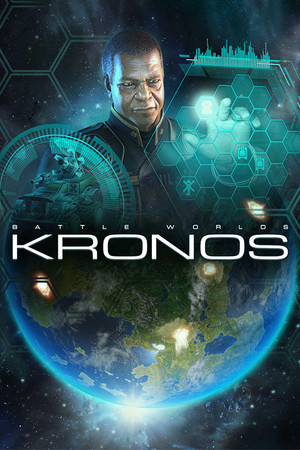
Battle Worlds: Kronos
Hex-grid wargaming for players who miss the Battle Isle era and don't mind missions that demand a full afternoon and a willingness to restart from scratch.
GamerScout Verdict
Rewarding for dedicated hex-wargame fans willing to grind through slow missions; a frustrating slog for anyone else.
Compare Prices(9 stores)
Every store in this table quotes us in euros, so the EUR figure is the price the seller actually set, not our arithmetic — which is why EUR is also the currency we rank in. We only list an offer here when the store gives us its price in euros, so nothing in this table is a number we invented.
Pick USD, PLN, GBP, CAD or AUD in the header and we convert from EUR at the European Central Bank reference rate — converted amounts are prefixed with ~. Your bank or the store may apply a different rate at checkout. We never hide offers based on where you are: everyone sees this whole table.
We may earn a commission when you buy games through links on this page — at no extra cost to you. It never affects our rankings or verdicts.
Price History
Screenshots & Media
About Battle Worlds: Kronos
My spreadsheet instincts lit up within the first hour of Battle Worlds: Kronos, and not entirely in a good way. KING Art built this from a Kickstarter promise to resurrect the hex-based, phase-turn wargame formula that peaked with Battle Isle and Panzer General in the 1990s, and they largely delivered on that promise. The question is whether the formula's rough edges are charming throwbacks or genuine friction, and the answer depends almost entirely on who you are as a player. The core loop is tighter than you might expect given the genre. Combat is deterministic: position Unit A next to Unit B under the same conditions and you get the same damage number every time. No percentage rolls hiding behind tooltips, no hidden dice. That design choice turns every engagement into a pure calculation problem, which is exactly what fans of this style want. Each unit carries action points that can be split between movement and attacks, and placing a unit in an adjacent hex to a friendly grants a firepower bonus, so formation geometry actually matters. The roster covers soldiers, tanks, artillery, robots, ships, and aircraft, with two tiered upgrade slots per unit offering branching options. Carry veteran units across missions and those upgrades compound into something you actually care about protecting. Resource depots feed factories, factories produce reinforcements, and the whole logistical chain rewards players who think three turns ahead. Now the friction. Missions are long, and individually commanding every unit in a twenty-piece army turn after turn produces real cognitive fatigue. There is no bulk-select, no move-all-idle command, so patience is a prerequisite rather than a suggestion. The AI is competent at the unit-to-unit level, punishing sloppy positioning, but at the campaign scale it leans on scripted reinforcement waves to generate difficulty rather than smarter decision-making. Experienced players will start to read its patterns quickly. The tutorial front-loads a somewhat patronizing message about difficulty rather than actually teaching positioning theory, and the UI needs a few hours of acclimation before it stops getting in the way. Steam's mixed review score (around 66 percent positive from 250 reviews) reflects exactly this split: players who clicked with the formula gave it strong marks, players expecting a more fluid or forgiving experience bounced. For newcomers to hex-strategy, the learning curve is real but manageable. The underlying mechanics are not complicated. Move, attack, position for cover and flanking, manage your supply line. What takes time is internalizing the correct threat assessment for each unit type and reading the map before committing pieces forward. Treat the first campaign as an extended tutorial, accept that early missions will kill you for poor positioning, and the system opens up into something genuinely satisfying. The two campaigns together with the Trains DLC promise north of fifty hours, and asynchronous cross-platform multiplayer means you can run a slow-burn online match against a friend without coordinating schedules. Hot-seat local multiplayer is also present for anyone who wants head-to-head on the same machine. The story involving rival houses vying for an imperial throne every 200 years is serviceable backdrop, not a narrative draw. Music is orchestral and grand when it shows up, though reviewers note it drops out during long stretches of unopposed movement. Visuals have a slightly dated quality that suits the retro DNA more than it hurts it. Mac players should note the game is not compatible with macOS 10.15 Catalina or later, which is a meaningful platform caveat in 2025.

Strategy & simulation
Tags
System Requirements
Minimum
- OS
- Windows Vista, 7 or 8
- Memory
- 2 GB RAM
- DirectX
- Version 9.0c
- Storage
- 3 GB available space
- Graphics
- DirectX 9c compatible with 256 MB RAM, Pixelshader 2.0
- Processor
- 2.0 Ghz Dual-Core
- Sound Card
- Integrated audio interface
Keep exploring
Community Discussion
Be the first to comment on Battle Worlds: Kronos.
Reviews & Ratings
Game Info
- Developer
- KING Art
- Publisher
- KING Art
- Release Date
- Nov 4, 2013