The Lamplighters League
A slept-on pulp tactics gem that deserved a bigger audience: tight turn-based squad combat wrapped in 1930s alternate-history swagger, let down by a shaky real-time stealth layer and some mission repetition.
Veredicto de GamerScout
Best for XCOM-adjacent tactics fans who can tolerate rough stealth and want a charming, underplayed pulp adventure with strong agent variety.
Comparar precios(8 tiendas)
Todas las tiendas de esta tabla nos dan el precio en euros, así que la cifra en EUR es el precio que fijó el vendedor, no un cálculo nuestro, y por eso EUR es también la moneda en la que calculamos el ranking. Solo incluimos aquí una oferta cuando la tienda nos da su precio en euros, de modo que ninguna cifra de esta tabla es inventada por nosotros.
Elige USD, PLN, GBP, CAD o AUD en la cabecera y convertimos desde EUR con el tipo de cambio de referencia del Banco Central Europeo — los importes convertidos llevan el prefijo ~. Tu banco o la tienda pueden aplicar un tipo distinto al pagar. Nunca ocultamos ofertas según dónde estés: todo el mundo ve esta tabla completa.
We may earn a commission when you buy games through links on this page — at no extra cost to you. It never affects our rankings or verdicts.
Historial de precios
Capturas y multimedia
Acerca de The Lamplighters League
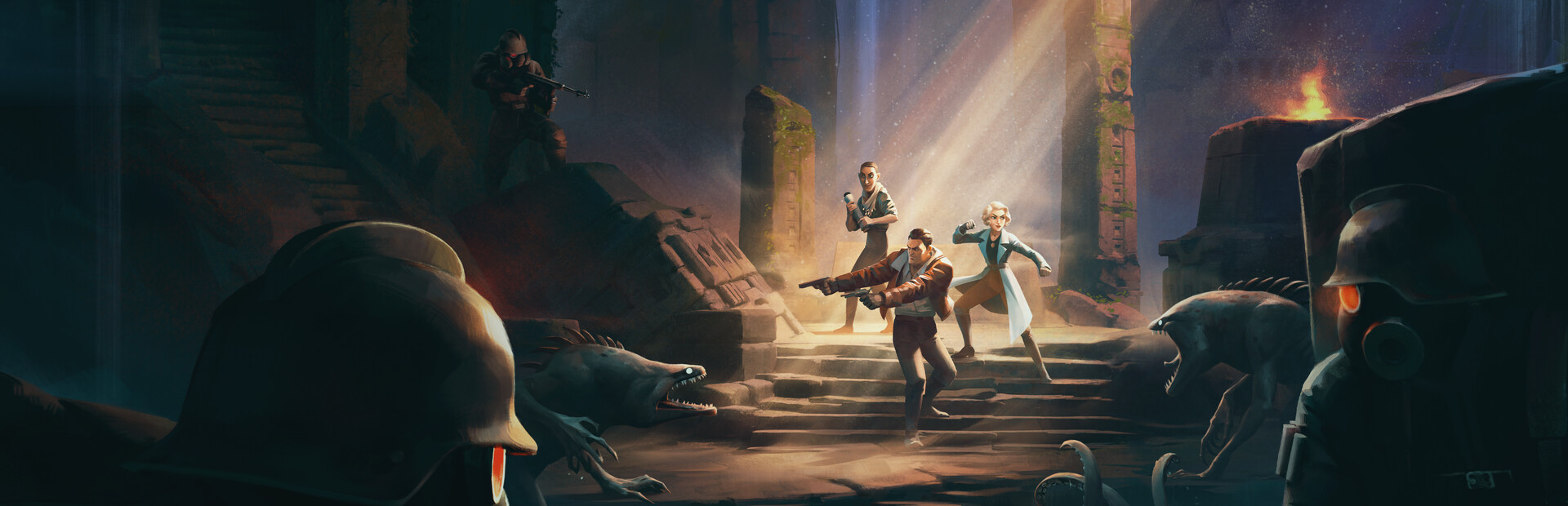
I went into The Lamplighters League expecting a competent-but-forgettable XCOM clone and came out genuinely annoyed it didn't find the audience it deserved. Harebrained Schemes, the studio behind the Shadowrun trilogy and BattleTech, set this one in an alternate 1933 where a fanatical cult called the Banished Court is racing toward world domination, and the only people standing in their way are a roster of loveable scoundrels, grifters, and outcasts. The pulp adventure aesthetic is fully committed: art deco locations, occult Scions with nasty powers like mind control and eldritch abilities, and a tone that sits somewhere between Indiana Jones and a hardboiled short story you'd find at the back of a '30s magazine. The worldbuilding is genuinely charming, even if the narrative doesn't quite reach the heights of Harebrained's best writing. The core loop is where the game earns its keep. Each mission opens in real-time infiltration mode, where you scout patrol routes, pick off isolated guards with class-specific takedowns, and set up your position before combat erupts. Saboteurs can disable traps and lay shock snares; Sneaks ghost past patrols and execute instant silent kills; Bruisers go loud, knock down crumbling walls to find secrets, and refund Action Points on kills, enabling satisfying multi-enemy chain turns. Most missions let you bring three agents, with special heist operations bumping that up to four. The turn-based combat that follows is the highlight of the package: swapping between characters at will to maximize the Action Point system, stacking a smoke cloud with a defensive field, or setting up an Ingrid kill-chain after whittling enemies down with ranged characters feels clever and earned. Synergy between the ten recruitable agents is the game's best design feature. The problems are real, though, and worth being upfront about. The real-time stealth layer never fully delivers on its promise. Detection feels inconsistent, enemy AI has a tendency to run aimlessly in the wrong direction when alerted, and the camera during action sequences clips into geometry far too often. Later in the campaign, the game starts throwing enemy types immune to takedowns and able to see through stealth, which effectively breaks the infiltration phase and forces you into straight tactical combat whether you want it or not. Mission variety also wears thin across the runtime: level layouts reuse tilesets noticeably, and objectives can blur into one another. There is also a card-based perk system layered on top of skill trees, with cards granting buffs or negative traits depending on whether your agents accumulated Stress or injuries during a mission. RNG influences both the card pool and Phenomena modifiers that shift mission difficulty, which will frustrate players who prefer deterministic progression. At launch, save-wiping bugs and performance drops on high-end PC hardware were legitimate complaints, though patches addressed the worst of it. The context around the game is worth knowing: Paradox wrote off the development costs shortly after release and significant studio layoffs occurred before the game even shipped. That turbulence shows in places, particularly in the rougher technical edges and a final act that feels slightly compressed. But it also makes the coherence of what did ship more impressive. The characters have distinct voiced personalities, the world has real texture, and the turn-based combat system holds up well past the midgame. Players who like the Shadowrun Returns formula, enjoy XCOM-adjacent tactical depth without the full base-management overhead, and can tolerate some jank in the stealth sections will find a game worth their time here.

RPGs
Etiquetas
Requisitos del sistema
Mínimos
- OS
- Windows® 10 Home 64 Bit
- Processor
- Intel® Core™ i5-3570K or AMD® Ryzen™ 3 2300X
- Memory
- 8 GB RAM
- Graphics
- AMD® Radeon™ R9 380 (4GB) or Nvidia® GeForce™ GTX 950 (2GB)
Recomendados
- OS
- Windows® 10 Home 64 Bit or Windows® 11
- Processor
- Intel® Core™ i5-8600K or AMD® Ryzen™ 5 3600X
- Memory
- 16 GB RAM
- Graphics
- Nvidia® GeForce™ GTX 1660…
Sigue explorando
Community Discussion
Be the first to comment on The Lamplighters League.
Reseñas y valoraciones
No hay valoraciones disponibles
Información del juego
- Desarrolladora
- Harebrained Schemes
- Distribuidora
- Paradox Interactive
- Fecha de lanzamiento
- 3 oct 2023
