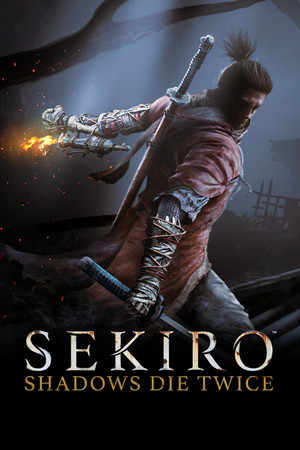
Compara los precios de Sekiro: Shadows Die Twice en tiendas de claves de confianza y encuentra la mejor oferta. Desarrollado por FromSoftware, Inc.. Publicado por Activision. Lanzado el 21/3/2019. Disponible en PC, Xbox. Géneros: Action, Adventure. Puntuación Metacritic: 88/100.

FromSoftware stripped out the build variety and handed you one katana. If you can handle that trade, what remains might be the sharpest action combat ever put in a video game.

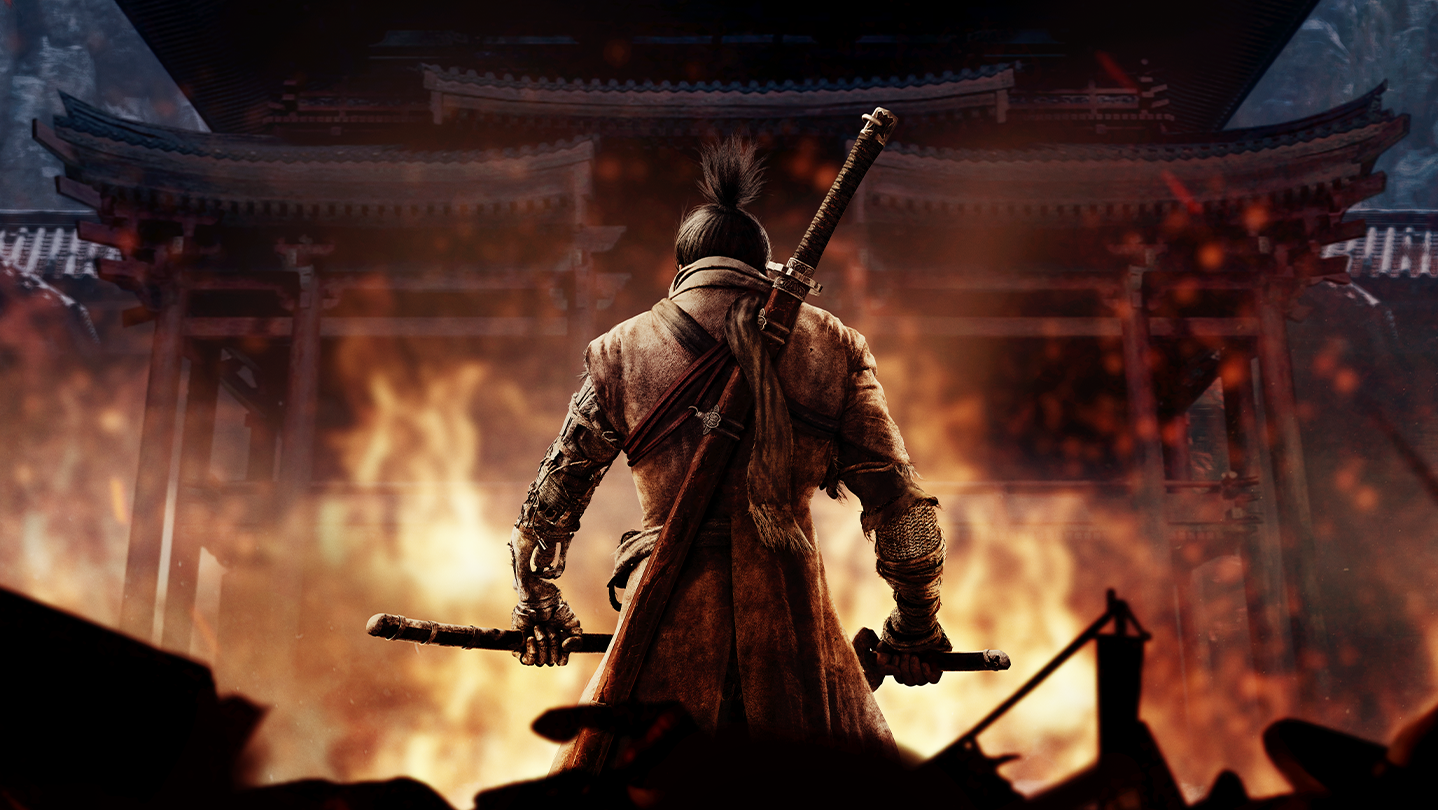
My first few hours with Sekiro felt like being handed a manual transmission after years of automatics. The controls were familiar enough to be deceiving, and then a mid-level samurai killed me a dozen times before it clicked that this is not Dark Souls wearing a kimono. It is something genuinely different, and the sooner you accept that, the better your time with it will be. The core of the game sits on a posture system rather than a traditional health-drain loop. You and every enemy share both a health bar and a posture meter. Pressure an enemy with relentless strikes and deflections, break their posture, and finish them with a deathblow. Let them pressure you, and the same happens in reverse. There is no stamina bar to manage, no build to fall back on if you hit a wall. The prosthetic arm carries interchangeable tools, from the Loaded Shuriken to the Spring-Loaded Axe to Firecrackers that can stagger beasts and horses, and there is a skill tree for shinobi combat arts and passive upgrades. But none of that changes the fundamental reality: you will learn to deflect and counter perilous attacks, or you will not progress. The Mikiri Counter alone, which lets Wolf stomp down on a thrusting blade to punish the attacker, is one of the most satisfying moves FromSoftware has ever designed. Mastering it feels like leveling up your actual hands. The game also wraps real stealth mechanics around all of that swordplay. A grappling hook turns the level geometry vertical in ways the Souls series never attempted. You can scout rooftops, pick off isolated enemies with backstab deathblows, and choose how many problems to bring to a boss fight. The world itself, set in a fictionalized Sengoku-period Japan built around Buddhist mythology, is gorgeous and layered, with secrets tucked above every courtyard and behind every paper screen. The story, unusually for FromSoftware, is told with some directness: Wolf is a shinobi tasked with protecting the young lord Kuro, who carries an immortal bloodline, and the narrative branches toward multiple endings depending on your choices and the secrets you find. Resurrection is woven into both the lore and the mechanics. You can revive once mid-fight before a full cooldown, and dying without that charge triggers Dragonrot, a spreading sickness that affects NPC questlines and reduces your Unseen Aid odds. The criticisms are real and worth naming. There is exactly one weapon. If you came from Elden Ring expecting to theory-craft a build, Sekiro will feel like a closed fist. Some optional bosses deploy a Terror status effect that instantly kills you if it maxes out, which cuts against everything the posture system trains you to do and feels like a design hiccup in an otherwise coherent ruleset. A handful of mini-bosses get reused across the world in ways that wear out their welcome. And the lack of any co-op or multiplayer means every wall you hit is yours alone to climb. For some players that is the appeal. For others it is a dealbreaker. For anyone willing to meet it on its own terms, the payoff is real. Boss fights like Genichiro, the Guardian Ape, and the late-game encounters around Isshin are the kind of multi-phase showdowns that other games spend years trying to replicate. The sound design alone, the clatter of a clean deflect versus the thud of a blocked hit, does real mechanical work. When the whole system clicks, it stops feeling like a game and starts feeling like a swordfight. That is a rare thing to pull off. Alex, Scout Team

Sekiro: Shadows Die Twice

Sekiro: Shadows Die Twice

21 mar 2019FromSoftware, Inc.Activision
GamerScout opina

FromSoftware stripped out the build variety and handed you one katana. If you can handle that trade, what remains might be the sharpest action combat ever put in a video game.

PCXbox
Steam Deck VerifiedProtonDB Platinum
Mejor precio disponible
€0.00
en N/A
Mínimo histórico: €9.07

Comparar precios(0 tiendas)

Cargando precios...

We may earn a commission when you buy games through links on this page — at no extra cost to you. It never affects our rankings or verdicts.

Historial de precios

Historical low
€9.0719 Jun 2026
Keyshops
€8.50€8.99€9.48€9.975 Jun11 Jun17 Jun22 Jun28 Jun
Tracking prices since 5 Jun 2026
Create alert

Capturas y multimedia

Acerca de Sekiro: Shadows Die Twice

My first few hours with Sekiro felt like being handed a manual transmission after years of automatics. The controls were familiar enough to be deceiving, and then a mid-level samurai killed me a dozen times before it clicked that this is not Dark Souls wearing a kimono. It is something genuinely different, and the sooner you accept that, the better your time with it will be. The core of the game sits on a posture system rather than a traditional health-drain loop. You and every enemy share both a health bar and a posture meter. Pressure an enemy with relentless strikes and deflections, break their posture, and finish them with a deathblow. Let them pressure you, and the same happens in reverse. There is no stamina bar to manage, no build to fall back on if you hit a wall. The prosthetic arm carries interchangeable tools, from the Loaded Shuriken to the Spring-Loaded Axe to Firecrackers that can stagger beasts and horses, and there is a skill tree for shinobi combat arts and passive upgrades. But none of that changes the fundamental reality: you will learn to deflect and counter perilous attacks, or you will not progress. The Mikiri Counter alone, which lets Wolf stomp down on a thrusting blade to punish the attacker, is one of the most satisfying moves FromSoftware has ever designed. Mastering it feels like leveling up your actual hands. The game also wraps real stealth mechanics around all of that swordplay. A grappling hook turns the level geometry vertical in ways the Souls series never attempted. You can scout rooftops, pick off isolated enemies with backstab deathblows, and choose how many problems to bring to a boss fight. The world itself, set in a fictionalized Sengoku-period Japan built around Buddhist mythology, is gorgeous and layered, with secrets tucked above every courtyard and behind every paper screen. The story, unusually for FromSoftware, is told with some directness: Wolf is a shinobi tasked with protecting the young lord Kuro, who carries an immortal bloodline, and the narrative branches toward multiple endings depending on your choices and the secrets you find. Resurrection is woven into both the lore and the mechanics. You can revive once mid-fight before a full cooldown, and dying without that charge triggers Dragonrot, a spreading sickness that affects NPC questlines and reduces your Unseen Aid odds. The criticisms are real and worth naming. There is exactly one weapon. If you came from Elden Ring expecting to theory-craft a build, Sekiro will feel like a closed fist. Some optional bosses deploy a Terror status effect that instantly kills you if it maxes out, which cuts against everything the posture system trains you to do and feels like a design hiccup in an otherwise coherent ruleset. A handful of mini-bosses get reused across the world in ways that wear out their welcome. And the lack of any co-op or multiplayer means every wall you hit is yours alone to climb. For some players that is the appeal. For others it is a dealbreaker. For anyone willing to meet it on its own terms, the payoff is real. Boss fights like Genichiro, the Guardian Ape, and the late-game encounters around Isshin are the kind of multi-phase showdowns that other games spend years trying to replicate. The sound design alone, the clatter of a clean deflect versus the thud of a blocked hit, does real mechanical work. When the whole system clicks, it stops feeling like a game and starts feeling like a swordfight. That is a rare thing to pull off.

Alex
Alex · Scout Team

Catch-all

Etiquetas

steamsingleplayerachievementscontroller-supporttrading-cardscloud-savesPosture SystemParry-FocusedShinobi StealthGrappling Hook TraversalSingle Weapon CombatMultiple EndingsNew Game PlusResurrection MechanicBoss Pattern Mastery

Requisitos del sistema

Mínimos

DirectX
11 HDD: 25 GB
Sound card
DirectX 11 Compatible

Recomendados

Processor
Intel Core i5-2500K | AMD Ryzen 5 1400
Memory
8 GB RAM
Graphics
NVIDIA GeForce GTX 970 | AMD Radeon RX 570
DirectX
Version 11…

Sigue explorando

Community Discussion

Be the first to comment on Sekiro: Shadows Die Twice.

Reseñas y valoraciones

Metacritic
88
Steam
95%(348,049)

Información del juego

Desarrolladora
FromSoftware, Inc.
Distribuidora
Activision
Fecha de lanzamiento
21 mar 2019

Alerta de precio

¡Recibe un aviso cuando el precio baje de tu objetivo!

Crear alerta

Más de FromSoftware, Inc.

Compra mejor: guías útiles

¿Buscas más? Mira juegos como Sekiro: Shadows Die Twice →

Preguntas frecuentes sobre Sekiro: Shadows Die Twice

¿Cuánto cuesta Sekiro: Shadows Die Twice?

El precio de Sekiro: Shadows Die Twice cambia a menudo y varía según la tienda, la edición y la región. La tabla de precios en vivo de esta página compara las ofertas más baratas en stock de tiendas de claves de confianza como Eneba y Kinguin, para que siempre veas el precio más bajo actual antes de comprar.

¿Dónde puedo comprar Sekiro: Shadows Die Twice más barato?

Compara los precios de Sekiro: Shadows Die Twice en todas las tiendas verificadas en la tabla de precios de esta página. Listamos las ofertas de claves y tiendas más baratas en stock, actualizadas con frecuencia, para que siempre veas la mejor oferta actual antes de comprar.

¿En qué plataformas está disponible Sekiro: Shadows Die Twice?

Sekiro: Shadows Die Twice está disponible en PC, Xbox.

¿Cuándo se lanzó Sekiro: Shadows Die Twice?

Sekiro: Shadows Die Twice se lanzó el 21 de marzo de 2019.

¿Quién desarrolló Sekiro: Shadows Die Twice?

Sekiro: Shadows Die Twice fue desarrollado por FromSoftware, Inc. y publicado por Activision.

¿Merece la pena comprar Sekiro: Shadows Die Twice?

Sekiro: Shadows Die Twice tiene una puntuación Metacritic de 88/100, lo que lo convierte en uno de los títulos destacados de Action. Mira las reseñas completas, las valoraciones y los tiempos de duración en esta página para decidir.