
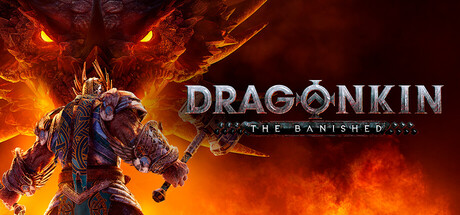
Dragonkin: The Banished
If Diablo's loot loop always felt like homework, Dragonkin: The Banished might be the leaner, meaner alternative you've been waiting for - assuming you can tolerate its storytelling.
Veredicto de GamerScout
Best for ARPG fans who want a build-crafting sandbox without live-service pressure and don't mind a weak story along for the ride.
Comparar precios(8 tiendas)
Todas las tiendas de esta tabla nos dan el precio en euros, así que la cifra en EUR es el precio que fijó el vendedor, no un cálculo nuestro, y por eso EUR es también la moneda en la que calculamos el ranking. Solo incluimos aquí una oferta cuando la tienda nos da su precio en euros, de modo que ninguna cifra de esta tabla es inventada por nosotros.
Elige USD, PLN, GBP, CAD o AUD en la cabecera y convertimos desde EUR con el tipo de cambio de referencia del Banco Central Europeo — los importes convertidos llevan el prefijo ~. Tu banco o la tienda pueden aplicar un tipo distinto al pagar. Nunca ocultamos ofertas según dónde estés: todo el mundo ve esta tabla completa.
We may earn a commission when you buy games through links on this page — at no extra cost to you. It never affects our rankings or verdicts.
Historial de precios
Capturas y multimedia
Acerca de Dragonkin: The Banished
My first instinct when booting Dragonkin: The Banished was skepticism. The ARPG genre is crowded with Diablo descendants, and Eko Software - the team behind Warhammer: Chaosbane - is not exactly a household name. What I didn't expect was a prologue that hands you a fully maxed-out version of each of the four classes before you commit to one. You get to see the endgame Barbarian, Oracle, Knight, and Tracker in their final form, which is a genuinely smart onboarding trick that almost no other game in the genre bothers to attempt. It sets accurate expectations, and it immediately communicates what each class actually feels like at full power rather than making you guess from a tooltip. The real reason to pay attention here is the Ancestral Grid. Forget skill trees with fixed paths. Skills drop from enemies like gear, and you slot them into a hexagonal grid where physical adjacency matters: modifier fragments placed next to skill fragments can amplify, alter, or chain those abilities together. The result is a build system that plays more like a spatial puzzle than a spreadsheet. Swapping in a new skill fragment isn't just a damage upgrade - it can shift the whole geometry of your current build. Free respecs mean experimentation is never punished, which removes a lot of the frustration that tends to calcify in loot-based ARPGs. The second progression layer is Montescail, the city hub that levels alongside your character. Upgrades here unlock perks affecting combat, crafting, and your wyrmling companion - a small dragon that tags along and contributes passive bonuses and abilities of its own. Up to 16 players can share the city space in multiplayer, and the full campaign supports online co-op for up to four. The city progression is lighter than it sounds - there's no building placement or resource juggling, just upgrade choices at a menu - but the perks it provides feed back meaningfully into character power, so it never feels decorative. Where Dragonkin stumbles is mostly well-documented by now. The story drowns you in proper nouns, place names, and faction politics without giving you enough context to care about any of it. Voice acting ranges from serviceable to rough, and the environments, while visually varied across jungles, frozen mountains, toxic swamps, and volcanic regions, can stretch too thin - maps sometimes feel padded, and enemy variety within a single biome gets repetitive before you're ready to leave it. There's also no character customization beyond armor visuals; your hero is a preset with a fixed appearance, which will bother some players more than others. These are real friction points, not nitpicks. For genre veterans already deep in Path of Exile 2 or grinding Diablo 4 seasons, the pull here might not be strong enough for a permanent switch. But for players who want a complete, offline-capable ARPG with no seasonal pressure, a genuinely novel skill system, and solid co-op that works without forcing a persistent connection, Dragonkin punches above its AA weight class. The Ancestral Grid alone is worth a session to understand. Everything else is rough around the edges but honest about what it is.

Catch-all
Etiquetas
Requisitos del sistema
Mínimos
- OS
- TBD
- Processor
- TBD
- Graphics
- TBD
Recomendados
- OS
- Windows 10-11
- Processor
- Intel® Core™ i5-10500 ou AMD™ Ryzen 5 3700X
- Memory
- 16 GB RAM
- Graphics
- NVIDIA® GeForce® RTX 2070 ou ATI Radeon™ RX 5700XT…
Sigue explorando
Community Discussion
Be the first to comment on Dragonkin: The Banished.
Reseñas y valoraciones
No hay valoraciones disponibles
Información del juego
- Desarrolladora
- Eko Software
- Distribuidora
- Nacon
- Fecha de lanzamiento
- 16 mar 2026